

The Local Government Association (LGA) has highlighted the staff shortages currently faced by councils in the face of record Covid cases, with several local waste collection services being scaled back or suspended as a result.
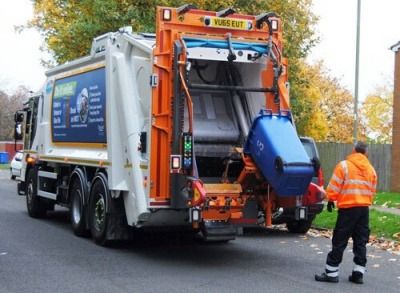
A spokesperson for LGA said: “Councils are entering this period with existing staff shortages. A recent LGA survey indicated that around half of all councils had seen disruption to services due to lack of staff, with this being particularly acute in adult social care, children’s services and waste collection services.
“Like other employers, councils are affected by the rising numbers of staff having to isolate due to COVID-19. While local authorities will do their best to protect the delivery of vital services including by redeployment, it is possible that access to some services may be reduced.”
“We want to work with Government to address these issues to ensure councils can be resilient in supporting their communities through this wave of the Omicron variant. This includes prioritising council employees for lateral flow testing to ensure that they can continue to deliver the services people rely upon.”
Reviewing Covid-19’s impact on the council workforce in October, LGA found that just over nine out of ten councils reported at least one staff member being unavailable to work. Of these councils, 12 per cent reported that staff were unavailable due to a suspected/confirmed Covid case, representing one per cent of the total workforce. At this time, the seven-day average for Covid infections was 34,239.
Infections have since more than quadrupled, exacerbating the existing staff shortages in local councils. Collection services have been scaled back in London, Somerset, Buckinghamshire, and Gloucestershire, with significant numbers of staff isolating after contracting Covid. Despite the isolation period being reduced to seven days, contingent on two negative lateral flow results, local authorities are still experiencing absence rates as high as 25 per cent, LARAC confirms.
John Coates, Interim CEO at LARAC, told Resource: “Our member authorities are experiencing different levels of disruption. Some are seeing absence rates as high as 25 per cent. This means that other frontline services have to be robbed of staff to keep waste and recycling services going.
“Thankfully, the suspension of garden waste collections over the winter period by some councils helps to provide resilience in these situations. Others are monitoring absence levels this week and warning that other collections may have to be scaled back or suspended if the situation worsens.
“Some have reported difficulties in obtaining supplies of test kits to enable home testing to be undertaken. The worst affected are battling competition for HGV drivers from haulage firms and delivery companies, particularly in busy transport corridors. The situation seems to have worsened over the last fortnight and LARAC will be surveying its members this week to obtain up to date information on the impact on local councils.”


Get our weekly digest
resource.co article ai

How will the government and DMOs address the challenges of including glass in DRS while ensuring a level playing field across the UK?
There's no easy solution to include glass in the DRS while maintaining a level playing field. Potential approaches include a phased introduction of glass, potentially with higher deposits to reflect its logistical challenges. The government and DMOs could incentivise innovation in glass packaging design and subsidise dedicated return points for glass-handling. Exemptions for smaller businesses unable to handle glass might also be necessary. Any successful solution will likely blend several approaches. It must address the differing priorities of devolved administrations, balance environmental benefits with logistical and cost implications, and be supported by robust consumer education campaigns emphasizing the importance of glass recycling.