

Belfast sees the lowest household waste per capita and largest increase in household recycling, while Antrim and Newtownabbey reaches 62 per cent diversion.
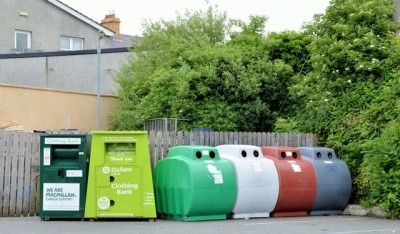
The Department of Agriculture, Environment and Rural Affairs (DAERA) has released its annual Northern Ireland Local Authority Collected Municipal Waste Management Statistics for 2023/4, revealing encouraging trends in recycling and waste management.
Recycling efforts showed a positive trend, with 50.5 per cent of municipal waste being recycled, up from 49/7 per cent in 2022/23. Household waste performed even better, achieving a recycling rate of 51.1 per cent, placing the country second to Wales among the UK nations’ recycling rates.
During the 2023/4 period, Northern Ireland’s councils collected over 1 million tonnes of waste, reflecting a 3 per cent increase from last year. Of this, household waste accounted for the majority at 87.5 per cent.
Whilst the longer term trend has seen a reduction in municipal and household waste since 2020, waste rates are yet to fall back to the low rates achieved in 2012/13.
Regional performance
Waste collection rates varied across councils, with Belfast achieving the lowest household waste per capita at 405 kg and Antrim & Newtownabbey reporting the highest at 545 kg.
Belfast also recorded the largest increase in household recycling, driven by enhanced composting efforts. Despite the increase, Belfast’s recycling rate still remains lower than other councils' rates.
Councils such as Derry City & Strabane, Mid Ulster, and Ards & North Down also reported gains in recycling rates. However, three councils reported that the household recycling rate decreased, with the largest decrease reported in Fermanagh & Omagh council.
| Authority | Prepared for Reuse/Dry Recycling/Composting | Municipal Waste Arisings | Reuse/Composting Rate (%) |
|---|---|---|---|
| Antrim & Newtownabbey | 66005.53 | 106040.46 | 62.25 |
| Ards & North Down | 46462.67 | 83894.89 | 55.38 |
| Armagh City, Banbridge & Craigavon | 61670.83 | 112334.88 | 54.90 |
| Belfast | 62451.98 | 161097.39 | 38.77 |
| Causeway Coast & Glens | 39105.79 | 80596.44 | 48.52 |
| Derry City & Strabane | 40367.90 | 81026.65 | 49.82 |
| Fermanagh & Omagh | 25076.23 | 56520.95 | 44.37 |
| Lisburn & Castlereagh | 39804.80 | 77616.64 | 51.28 |
| Mid & East Antrim | 36759.21 | 74842.13 | 49.12 |
| Mid Ulster | 46570.36 | 82074.58 | 56.74 |
| Newry, Mourne & Down | 41372.04 | 84636.00 | 48.88 |
| Northern Ireland | 505647.35 | 1000681.02 | 50.53 |
Table 1: Northern Ireland municipal waste management 2023/24
The introduction of initiatives like the Deposit Return Scheme for drinks containers indicate the N.Ireland Government's commitment to continue raising rates, though it looks like it will not hit its previous 55 per cent recycling rate for municipal waste by 2025.


Get our weekly digest
resource.co article ai

How will the government and DMOs address the challenges of including glass in DRS while ensuring a level playing field across the UK?
There's no easy solution to include glass in the DRS while maintaining a level playing field. Potential approaches include a phased introduction of glass, potentially with higher deposits to reflect its logistical challenges. The government and DMOs could incentivise innovation in glass packaging design and subsidise dedicated return points for glass-handling. Exemptions for smaller businesses unable to handle glass might also be necessary. Any successful solution will likely blend several approaches. It must address the differing priorities of devolved administrations, balance environmental benefits with logistical and cost implications, and be supported by robust consumer education campaigns emphasizing the importance of glass recycling.