

The National Infrastructure Commission (NIC) has called for ‘more action’ from the UK Government to deliver a ‘low-cost, low-carbon waste sector’. In its annual Infrastructure Progress Review, the body has pointed to a disparity between ambitions outlined in government strategy and recycling rates, which ‘have remained flat since the mid-2010s’.
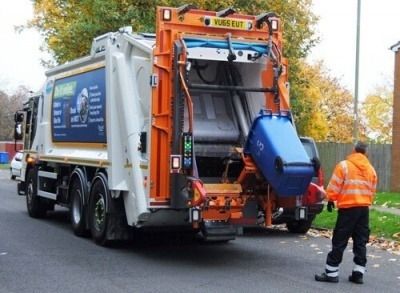
The report outlines delivering increased recycling rates as a priority action for the Government in 2022, asserting that this can be achieved by ‘finalising policy on key areas such as extended producer responsibility, deposit return schemes, recycling consistency, and bans on certain types of plastic’.
The NIC notes that the performance of the waste sector has ‘remained stable’. Recycling rates for local authority collected waste are around 43 per cent, with the UK ‘continuing to lag behind the best international performers in recycling.’ Meanwhile, NIC says, greenhouse gas (GHG) emissions from waste have continued to increase, with rates rising since the mid-2010s by around 15 per cent. The report links this to an increase in waste arisings, the use of energy-from-waste (EfW) plants, and the stagnation of recycling rates.
Although municipal waste recycling rates have plateaued over the last decade at just above 40 per cent, plastic packaging recycling rates have risen significantly – in 2020-21, the municipal recycling rate and plastic packaging recycling rate remained stable at around 42 and 47 per cent, respectively. The report states that ‘it is not clear if this represents a change in infrastructure, or is due to disruptions caused by the Covid-19 pandemic’.
NIC asserts that whilst the Government has outlined a strategy for improving England’s recycling sector, ‘more progress across clear goals and plans are needed’. Establishing a clear target for plastic packaging recycling and firm funding for both municipal and plastic recycling are highlighted as examples of this. NIC adds that ‘the municipal waste recycling rate is far too low, and has not increased in recent year. Urgent action is needed to address this.’
Writing in the report’s foreword, NIC Chair Sir John Armitt said: “At a time of significant global volatility alongside concerns about rising living costs, we appreciate that sticking to a long term strategy is not easy.
“But it is the only way to address the stubbornly difficult problems that will not become any easier or cheaper to solve by delaying action – and the quicker we tackle them, the quicker society and our environment will reap the benefits.”


Get our weekly digest
resource.co article ai

How will the government and DMOs address the challenges of including glass in DRS while ensuring a level playing field across the UK?
There's no easy solution to include glass in the DRS while maintaining a level playing field. Potential approaches include a phased introduction of glass, potentially with higher deposits to reflect its logistical challenges. The government and DMOs could incentivise innovation in glass packaging design and subsidise dedicated return points for glass-handling. Exemptions for smaller businesses unable to handle glass might also be necessary. Any successful solution will likely blend several approaches. It must address the differing priorities of devolved administrations, balance environmental benefits with logistical and cost implications, and be supported by robust consumer education campaigns emphasizing the importance of glass recycling.