

Coffee shop launches at HRC reuse shop
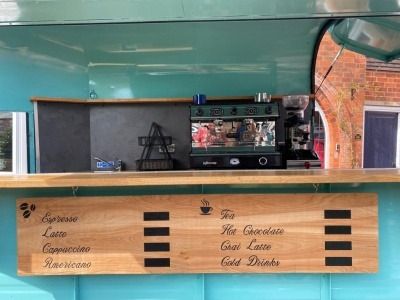
Community Reuse, an organisation focused on reuse at recycling sites, is opening a coffee shop in a Household Recycling Centre (HRC), believed to be the UK’s first. The coffee shop is set to be open from Thursday, April 14 at the Tyseley HRC.
With a coffee shop, Community Reuse hopes it will play an important role in changing the old image of a ‘tip’, which disposes waste, into a community hub with a focus on reuse and environmental education.
In line with this aim, Community Reuse has created the coffee shop from a converted, old horsebox. The organisation has also said the shop has been constructed using as many second-hand materials as possible, ‘to demonstrate reuse’. Now a coffee shop, it will be open seven days a week.
Proceeds from the coffee truck will also support the developing range of training and repair services such as bike workshops and upcycling.
Steve Bell from Community Reuse said: “It’s great to be opening a coffee shop in Tyseley to support the recycling centre and reuse shop. We want to create circular economy hubs at reuse and recycling centres where the public can have items repaired, learn how to repair and browse our shops for good quality reuse items.
“It is all part of developing reuse as the clear priority over recycling and disposal, whilst also supporting low-income families in the community. It’s exciting to work with Veolia and Birmingham City Council to share this opportunity with Birmingham residents.”
Darren Share, Assistant Director for Street Scene at Birmingham City Council, said: “The use of a horsebox as a coffee shop is taking the reuse and repurposing of items to a whole different level.
“It perfectly captures the spirit and essence of what Community Reuse are doing at the Tyseley site and I congratulate everyone involved with the delivery of the idea. I hope the coffee shop is a great success.”
Avonmouth Energy Recovery Facility to supply heat for Bristol decarbonisation project
A new partnership between Bristol City Council and the private sector aims to deliver low carbon energy infrastructure, such as solar PV, heat networks, heat pumps and energy efficiency measures at scale, all of which could help Bristol meet its target of becoming carbon neutral by 2030.
The partners will invest in the council’s estate to deliver low carbon energy infrastructure and support others, such as residents, community energy groups and businesses, to deliver local carbon reducing projects.
A Viridor spokesperson said: “We very much welcome the news that Bristol City Council has chosen Ameresco Limited as a strategic partner to form the City LEAP partnership, helping Bristol to meet its 2030 carbon neutral target.
“Through Viridor’s partnership with Vattenfall Heat, we will support this vital project by exploring heat network opportunities, providing a reliable supply of baseload clean heat from our Avonmouth Energy Recovery Facility. Decarbonising heat is one of the most challenging aspects of the domestic energy decarbonisation agenda, and we want our clean heat to be used in full effect.
“Supplying more homes and businesses with clean heat is an important step in Viridor’s decarbonisation roadmap in which we committed to being Net Zero by 2040 and to becoming the UK’s first net negative emissions waste management company by 2045.”
M&S Kidswear joins dotte Resale Collective as platform’s first major high street brand
M&S Kidswear has announced a trial with Dotte to produce a circular kidswear peer-to-peer marketplace, where parents will be able to buy, sell, donate, and recycle outgrown clothing. The trial will launch in the Easter holidays.
Founded in 2020, Dotte is made up of 16 independent and ‘sustainably-minded’ kidswear brands – M&S Kids being the first major retailer to join. The process aims to allow Dotte users to sell pre-loved M&S items and in turn receive a £5 off M&S voucher, usable when they spend at least £25 at M&S online.
Alice Duggan, Head of M&S Kidswear said: “We design and make our products so that the M&S label means quality – product that can be handed down – because we believe style shouldn’t cost the earth.
“Pre-loved selling is a growing market and through joining the dotte resale collective we’re looking forward to learning more from an agile start up and supporting the circular economy. Through the platform we also hope to extend our customer reach as we continue make M&S kidswear more relevant more often for customers and the ‘go to’ destination store and website not just for uniform but for everyday style & value too.”
Samantha Valentine, Co-founder at Dotte added: “As any parent knows, children just don’t stop growing. And all those growth spurts make kidswear one of the fastest areas of fashion, with 183 million items of kids' clothing going to landfill every year in the UK alone.
“That’s why we set up Dotte. We wanted to give parents a simple way to pass on their clothes to other families, and at the same time recoup some of the money they originally spent and reduce their carbon footprint all in one go.
“Having a trusted kidswear retailer like M&S onboard signals a huge step change in the industry itself, and the fact that they are rewarding their customers for selling M&S kidswear will encourage so many more families to get involved in the circular economy. We’re so pleased to welcome them.”


Get our weekly digest
resource.co article ai

How will the government and DMOs address the challenges of including glass in DRS while ensuring a level playing field across the UK?
There's no easy solution to include glass in the DRS while maintaining a level playing field. Potential approaches include a phased introduction of glass, potentially with higher deposits to reflect its logistical challenges. The government and DMOs could incentivise innovation in glass packaging design and subsidise dedicated return points for glass-handling. Exemptions for smaller businesses unable to handle glass might also be necessary. Any successful solution will likely blend several approaches. It must address the differing priorities of devolved administrations, balance environmental benefits with logistical and cost implications, and be supported by robust consumer education campaigns emphasizing the importance of glass recycling.