

Newport City Council has become the first Welsh local authority to roll out an electric-powered refuse collection vehicle (RCV).
The vehicle, which became operational today (10 March), will be used to collect waste from areas that have been highlighted as priority areas by the council in terms of reducing carbon emissions.
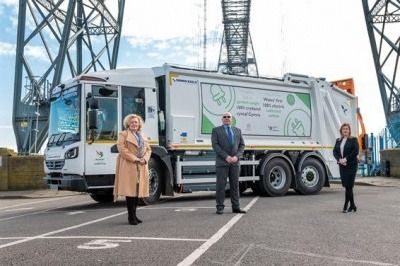
The RCV was manufactured by Dennis Eagle and funded by the Welsh Government’s Circular Economy Fund and Newport City Council, with each body paying half of the total costs.
As the electric vehicle is expected to reduce carbon emissions by up to 35 tonnes per year, Newport City Council will be one step closer to becoming a carbon-neutral organisation by 2030, as well as its goal of replacing all of its existing vehicles with electric-powered vehicles.
Cllr Roger Jeavons, Deputy Leader of the council, said: “I’m delighted that Newport is the first local authority in the country to launch an electric refuse collection vehicle.
“This launch demonstrates our commitment as a council to improving our city’s environment and green credentials, and I look forward to us taking further action to decarbonise our fleet and make Newport a greener place to live.”
Cllr Deb Davies, Cabinet Member for sustainable development, added: “This sustainable vehicle will not only help us meet our aim of becoming a carbon neutral organisation, but will also benefit many of our residents by reducing emissions and improving the air quality in their wards.
“Actions such as this deliver sustainable benefits across the city, and have a positive impact for both current and future generations, so I’m really pleased to see the vehicle go into service and start delivering those benefits to our residents.”
In its Beyond Recycling strategy, which was published last week, the Welsh Government outlined a commitment to become a net-zero carbon nation by 2050.
Thanks to ongoing government investment in improved waste collection regimes and supporting infrastructure, such as electric-powered vehicles, the report stated Welsh local authorities have already seen significant reductions in carbon emissions as well as financial savings.


Get our weekly digest
resource.co article ai

How will the government and DMOs address the challenges of including glass in DRS while ensuring a level playing field across the UK?
There's no easy solution to include glass in the DRS while maintaining a level playing field. Potential approaches include a phased introduction of glass, potentially with higher deposits to reflect its logistical challenges. The government and DMOs could incentivise innovation in glass packaging design and subsidise dedicated return points for glass-handling. Exemptions for smaller businesses unable to handle glass might also be necessary. Any successful solution will likely blend several approaches. It must address the differing priorities of devolved administrations, balance environmental benefits with logistical and cost implications, and be supported by robust consumer education campaigns emphasizing the importance of glass recycling.