

Industrial waste processor introduces new shredding technology to handle specialised waste streams, achieving significant volume reduction and processing efficiency gains.
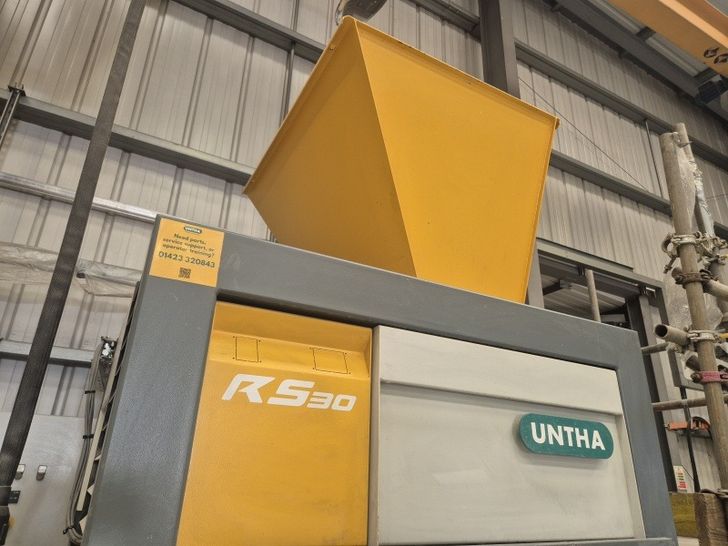
Barrier Fire Protection, an industrial waste processor, has achieved a fourfold reduction in industrial waste volumes and doubled processing speeds to 1.1 tonnes per hour after installing an UNTHA RS30 shredder at its Teesside facility.
The investment marks a significant advance in managing specialised waste streams from industrial fireproofing and insulation processes, including epoxy-based coatings and spent abrasive materials.
"UNTHA worked closely with us to understand the complexities of our shredding needs, particularly the challenges posed by the residual liquids and solidified materials in the tins," said Tony Mouter, site manager at Barrier Fire Protection.
RS30 technical specifications
The new system replaces a hydraulic arm process previously used to empty and compress tins into Intermediate Bulk Containers (IBCs). A custom-raised frame allows direct IBC positioning under the shredder, optimizing storage capacity and reducing collection frequency.
The RS30 shredder, equipped with a 40mm screen, processes 1.1 tonnes per hour, compared to the previous system's 600kg capacity. This enhancement has led to significant operational efficiencies in managing hazardous and non-hazardous waste materials generated during industrial fireproofing processes.
Operational improvements
The technology has demonstrated particular effectiveness in processing epoxy-based coatings and residues from fireproofing applications, materials traditionally classified as difficult-to-dispose due to their chemical composition.
Lewis Horne, internal sales lead at UNTHA UK, said: "With only minor adjustments needed, such as customising the frame for IBC compatibility, we were able to accelerate the commissioning process. The RS30 has significantly streamlined the company's operations and reduced waste management challenges."
The implementation includes detailed maintenance protocols to manage residual liquids and solidified materials, ensuring consistent performance in processing these specialized waste streams.
UNTHA UK has also released a free Buyer’s Guide to Shredding Technology, designed to help businesses investing in shredding equipment or upgrading outdated systems.


Get our weekly digest
resource.co article ai

How will the government and DMOs address the challenges of including glass in DRS while ensuring a level playing field across the UK?
There's no easy solution to include glass in the DRS while maintaining a level playing field. Potential approaches include a phased introduction of glass, potentially with higher deposits to reflect its logistical challenges. The government and DMOs could incentivise innovation in glass packaging design and subsidise dedicated return points for glass-handling. Exemptions for smaller businesses unable to handle glass might also be necessary. Any successful solution will likely blend several approaches. It must address the differing priorities of devolved administrations, balance environmental benefits with logistical and cost implications, and be supported by robust consumer education campaigns emphasizing the importance of glass recycling.