

Manchester Metropolitan University and road sweeper hire company, UBU Environmental Limited, have partnered to explore recycling possibilities for soil gathered in road sweeping waste.
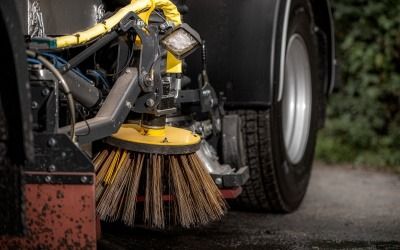
The 26-month collaboration could open up a market for waste soil and divert waste from landfill, through industries such as urban tree planting, landscaping and green spaces.
By assessing the level of organic pollutants and metals found within the waste soil – known as ‘cake’ – the study aims to understand the possible risks associated with its use. The impact of the cake on rates of plant growth will also be measured.
Funding for the project comes through Innovate UK’s government-funded ‘Knowledge Transfer Partnership’.
Dr David Megson, Senior Lecturer in Chemistry and Environmental Forensics at Manchester Metropolitan, said: “We are really excited to work with UBU on this first of its kind project.
“Each year thousands of tonnes of road sweepings are sent to landfill. This is not sustainable or cost-effective, which is why we are keen to establish if this material can be turned from a waste into a valuable resource and recycled.
“If successful there are large benefits for UBU and the project could help to establish road sweeping recycling operations all across the UK.
“The project will be scientifically challenging to undertake as the cake is a complex material that can change over time. We need to develop robust analytical methods to identify a wide range of pollutants that may be present in the cake.
“To do this we will use state-of-the-art technology at Manchester Met, which will enable us to perform human health risk assessments to see if the material may be safe for reuse.”
Group Manager of UBU, Rebecca Murphy-Peers added: “I am delighted that the company’s proposal was successfully selected as part of the KTP application innovation process.
“Achieving end-of-waste status for the filter cake will represent a giant leap forward for the industry.
“With the support of the Knowledge Transfer Partnership and Manchester Metropolitan University, we hope to achieve a more environmental solution which avoids landfill and achieves a more desirable priority within the hierarchy of waste.”


Get our weekly digest
resource.co article ai

How will the government and DMOs address the challenges of including glass in DRS while ensuring a level playing field across the UK?
There's no easy solution to include glass in the DRS while maintaining a level playing field. Potential approaches include a phased introduction of glass, potentially with higher deposits to reflect its logistical challenges. The government and DMOs could incentivise innovation in glass packaging design and subsidise dedicated return points for glass-handling. Exemptions for smaller businesses unable to handle glass might also be necessary. Any successful solution will likely blend several approaches. It must address the differing priorities of devolved administrations, balance environmental benefits with logistical and cost implications, and be supported by robust consumer education campaigns emphasizing the importance of glass recycling.