

Government publication of illustrative Year 2 costs for materials covered by extended producer responsibility scheme marks first application of recyclability-based pricing from April 2026, with red-rated packaging paying 20 per cent more than the amber base rate.
The Government has published illustrative Year 2 disposal fees for packaging EPR, revealing that 45 per cent of plastic packaging currently placed on the UK market fails recyclability criteria under the Recyclability Assessment Methodology (RAM).
The publication marks the first application of RAM ratings to disposal fees. In Year 1 (2025/26), all packaging within a material category pays the same base rate regardless of recyclability. From Year 2, red-rated packaging (difficult to recycle) pays 20 per cent more than amber (the new base rate), while green-rated packaging (widely recyclable) has been confirmed as receiving a nine per cent discount.
The resulting differentials vary by material. Fibre-based composites show the largest gap at £155 per tonne between red and green, followed by plastic and wood at £130. Glass and paper – materials with established recycling infrastructure and lower base fees – show differentials of £60 per tonne.
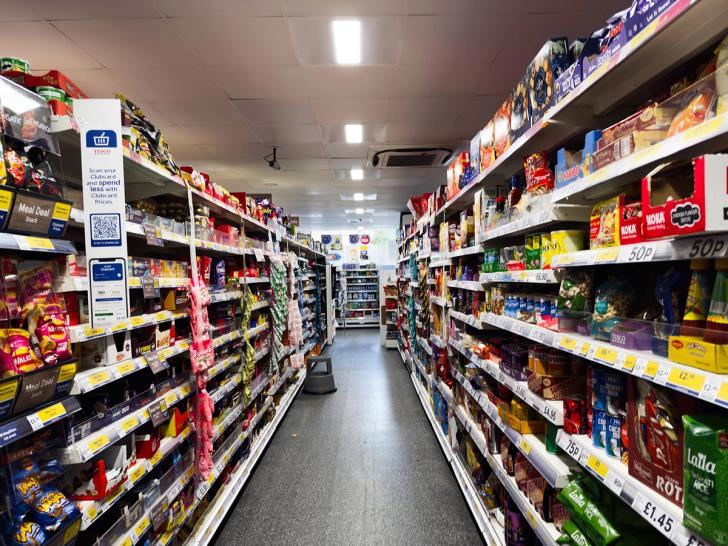
For lightweight flexible packaging, however, these per-tonne differentials translate to fractions of a penny per unit. A crisp packet weighing two grams faces a red-green differential of around 0.03p; a sauce sachet at five grams, 0.06p; a pet food pouch at 15 grams, 0.20p.
Year 2 illustrative fees by material and RAM rating
The illustrative fees show significant changes from Year 1, with amber fees (the new base rate) recalculated upward for most materials. The following table reproduces PackUK's published Year 2 illustrative fees:
| Material | Year 1 base | Year 2 green | Year 2 amber | Year 2 red |
|---|---|---|---|---|
| Aluminium | £266 | £245 | £270 | £325 |
| Fibre-based composite | £461 | £475 | £525 | £630 |
| Glass | £192 | £185 | £205 | £245 |
| Paper and card | £196 | £190 | £210 | £250 |
| Plastic | £423 | £415 | £455 | £545 |
| Steel | £259 | £260 | £290 | £345 |
| Wood | £280 | £410 | £450 | £540 |
| Other | £259 | £205 | £225 | £270 |
Fees in bold represent the category charged to more than 50 per cent of that material's tonnage.
This shows that most aluminium, glass, paper and card, and steel packaging qualifies for the green rate, while most wood and 'other' materials attract the red rate. For plastic and fibre-based composites, no single RAM category represents more than half of reported tonnage.
British Glass noted that most glass packaging qualifies for the green rating of £185 per tonne, reflecting what the trade body described as recognition of glass's "strong recyclability performance" and closed-loop credentials.
How modulation escalates over three years
The modulation framework increases the differential between red and green packaging progressively. Red fees are set as a fixed multiplier of amber fees, while green discounts depend on the proportion of red, amber and green packaging reported:
| Year | Red factor | Amber factor | Green discount |
|---|---|---|---|
| 2025/26 (Year 1) | 1.0× | 1.0× | None |
| 2026/27 (Year 2) | 1.2× | 1.0× | 9% (illustrative) |
| 2027/28 (Year 3) | 1.6× | 1.0× | TBC |
| 2028/29 (Year 4) | 2.0× | 1.0× | TBC |
The scheme operates on a revenue-neutral basis – total fees remain constant while costs redistribute between producers. Additional revenue from red-rated packaging funds discounts for green-rated material. Medical packaging that is red-rated due to regulatory requirements is treated as amber for fee purposes.
Current RAM proportions by material
PackUK published the current breakdown of RAM ratings reported by producers, showing how packaging tonnage splits across the three categories:
| Material | Red | Amber | Green | Average fee |
|---|---|---|---|---|
| Aluminium | 23% | 5% | 72% | £265 |
| Fibre-based composite | 32% | 50% | 18% | £550 |
| Glass | 8% | 1% | 91% | £190 |
| Paper and card | 21% | 3% | 76% | £205 |
| Plastic | 45% | 24% | 31% | £485 |
| Steel | 20% | 1% | 79% | £280 |
| Wood | 59% | 24% | 17% | £495 |
| Other | 84% | 6% | 10% | £260 |
The figures reveal that 45 per cent of plastic packaging currently reported is red-rated – meaning it fails recyclability criteria – while only 31 per cent achieves a green rating. Glass shows the strongest recyclability profile, with 91 per cent rated green.
Plastic fees in detail
Plastic attracts the second-highest amber fee at £455 per tonne in Year 2, up from £423 in Year 1. The increase reflects reduced placed-on-market tonnages in the latest reporting data.
| RAM rating | Year 2 fee | Change from Year 1 |
|---|---|---|
| Red | £545 | +29% |
| Amber | £455 | +8% |
| Green | £415 | -2% |
| Red-green differential | £130 | – |
The red-green differential of £130 per tonne represents the financial incentive for producers to switch from unrecyclable to recyclable plastic packaging in Year 2. This will widen as modulation factors increase in subsequent years.
What determines a red, amber or green rating
The RAM assesses packaging through five stages: classification, collection, sortation, reprocessing, and end markets. A single red result at any stage produces an overall red rating.
Several plastic formats receive automatic red classification regardless of other characteristics: packaging using carbon black pigment, which prevents near-infrared sorting; PVC in any form; polystyrene including expanded and extruded forms; oxo-degradable, biodegradable or compostable plastics; and multi-material laminates containing aluminium foil layers.
Flexible plastic packaging faces a particularly stringent threshold. Films, pouches and sachets must contain at least 80 per cent polyethylene (PE) or polypropylene (PP) by weight to avoid automatic red classification. This effectively renders most multi-layer flexible laminates red-rated by default – including crisp packets, which use metallised plastic film combining multiple polymer layers to maintain freshness. Sauce sachets, coffee pouches and pet food packaging face similar challenges.
Green ratings are achievable for clear PET bottles, natural HDPE containers, and clear PP pots and tubs – formats widely collected at kerbside and compatible with existing UK reprocessing infrastructure. Packaging that has not been assessed defaults to red.
Per-unit cost analysis
Whether modulation will drive packaging redesign depends on per-unit cost differentials. The impact varies significantly by format and weight.
Crisp packets – made from metallised multi-layer film that fails the 80 per cent polyolefin threshold for flexible plastics – are red-rated by default. A typical packet weighs around two grams, meaning one tonne contains 500,000 units:
| Format | Weight | Units/tonne | Red fee/unit | Green fee/unit | Differential |
|---|---|---|---|---|---|
| Crisp packet | 2g | 500,000 | 0.11p | 0.08p | 0.03p |
| Sauce sachet | 5g | 200,000 | 0.27p | 0.21p | 0.06p |
| Pet food pouch | 15g | 66,667 | 0.82p | 0.62p | 0.20p |
For comparison, a clear (non-beverage) PET bottle – green-rated due to wide kerbside collection and established recycling infrastructure – would pay the lower fee. A 500ml bottle weighing around 25 grams works out at 40,000 units per tonne, with a fee of approximately 1.04 pence per bottle at the green rate.
The differential of £130 per tonne translates to fractions of a penny for lightweight flexible packaging. A producer placing one billion crisp packets annually on the UK market would face additional costs of approximately £260,000 per year if red-rated rather than green – though switching to recyclable alternatives may involve more substantial reformulation costs.
As modulation intensifies to Year 4, with red fees reaching 2.0 times amber, the per-unit differential will widen. However, for lightweight flexible formats, even doubled fees may prove insufficient to offset the technical and commercial challenges of redesigning multi-layer barrier packaging.
Comparison with Year 1 baseline
The Year 2 amber fees represent increases from Year 1 base fees for most materials, ranging from one per cent for aluminium to 60 per cent for wood. The exception is the 'other' category, which decreased by 15 per cent.
| Material | Year 1 base | Year 2 amber | Change |
|---|---|---|---|
| Aluminium | £266 | £270 | +1% |
| Fibre-based composite | £461 | £525 | +14% |
| Glass | £192 | £205 | +7% |
| Paper and card | £196 | £210 | +7% |
| Plastic | £423 | £455 | +8% |
| Steel | £259 | £290 | +12% |
| Wood | £280 | £450 | +60% |
| Other | £259 | £225 | -15% |
PackUK attributed the increases to a combination of 1.9 per cent CPI inflation applied to local authority costs, and reduced overall tonnages reported for Year 2 compared with Year 1 data. The sharp increase for wood reflects a significant reduction in reported tonnages, with some material previously classified as wood now being reported under different categories.
The Year 1 confirmed base fees themselves dropped substantially from earlier illustrative figures, falling by between 27 and 59 per cent from the initial August 2024 estimates. Year 2 final fees may similarly change from these illustrative rates when confirmed in June 2026.
Industry response
Robbie Staniforth, Innovation and Policy Director at Ecosurety, said the fees are "a step in the right direction" but "far from the finished article", adding that they signify "the Government are serious about punishing badly designed packaging". He noted that packaging data from producers will become more accurate over time, with the RAM expected to evolve in line with the roadmap published earlier this year.
The British Retail Consortium has indicated that over 80 per cent of EPR costs will likely pass through to consumers rather than drive supply-chain changes. Bank of England estimates suggest full pass-through could add approximately 0.5 per cent to food prices.
A December 2024 policy brief from the Ellen MacArthur Foundation argued that recyclability-focused EPR schemes have historically failed to reduce packaging volumes, pointing to Germany's 30-year scheme which achieved high recycling rates without curbing material use. The Foundation called for fees modulated by reusability, not just recyclability.
Weight-based methodology questioned
British Glass welcomed the modulation framework's recognition of glass recyclability but warned that the weight-based fee structure continues to disadvantage heavier materials regardless of their environmental credentials.
Dr Nick Kirk, Director of the British Glass Federation, said: "Glass is infinitely recyclable and plays a crucial role in supporting a circular economy. Since packaging is bought in units, pEPR costs should be calculated on a per-unit basis rather than by weight. This would provide a fairer system that rewards packaging materials that are recycled in closed-loop systems within the UK, such as glass packaging."
The trade body also criticised the Government's decision to retain material values at 2022/23 prices for Year 2, arguing that this fails to reflect improved MRF glass values which have risen from minus £5 per tonne to plus £18 per tonne over the period. British Glass has lodged a formal complaint with Defra regarding this methodology.
The organisation warned that reduced demand for UK-made glass packaging is already evident, with imported glass – which can more easily absorb EPR costs – gaining market share. PackUK has indicated that major systemic reforms will not be introduced until Year 3, citing the need for stability.
PackUK has committed to reviewing the modulation framework after three years, with potential to incorporate additional sustainability factors including carbon impact and reuse.


Get our weekly digest
resource.co article ai

How will the government and DMOs address the challenges of including glass in DRS while ensuring a level playing field across the UK?
There's no easy solution to include glass in the DRS while maintaining a level playing field. Potential approaches include a phased introduction of glass, potentially with higher deposits to reflect its logistical challenges. The government and DMOs could incentivise innovation in glass packaging design and subsidise dedicated return points for glass-handling. Exemptions for smaller businesses unable to handle glass might also be necessary. Any successful solution will likely blend several approaches. It must address the differing priorities of devolved administrations, balance environmental benefits with logistical and cost implications, and be supported by robust consumer education campaigns emphasizing the importance of glass recycling.