

Resale platform launches digital tracking system for luxury childrenswear as EU prepares to extend product passport rules to textiles.
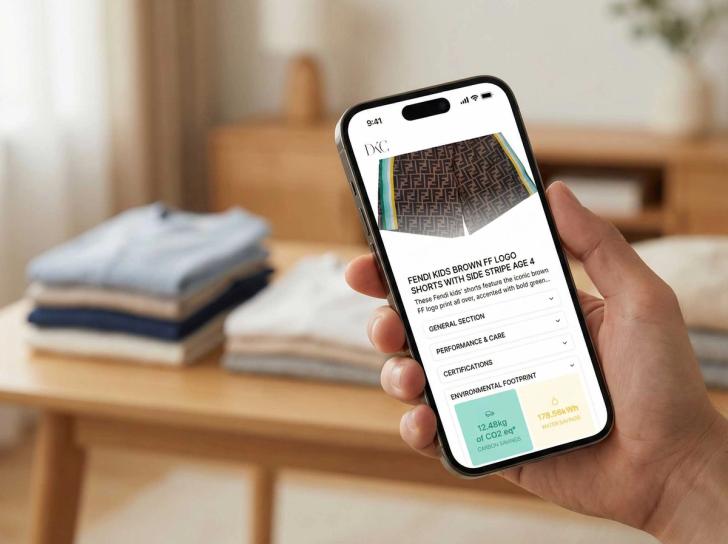
A circular fashion platform specialising in luxury childrenswear has become one of the first in its sector to introduce Digital Product Passports (DPPs), giving each garment a digital record that tracks its ownership, care history and environmental footprint.
Designer Kids Club, a resale and rental marketplace for high-end children's clothing, has launched what it describes as a "complete loop" system that combines provenance verification, sustainability data and resale-readiness in a single connected record. The platform, which carries brands including Gucci, Burberry and Fendi, states that each item now has a corresponding passport accessible via QR code.
The move comes as the EU's Ecodesign for Sustainable Products Regulation (ESPR), which entered into force in July 2024, sets the framework for DPPs across multiple product categories. Textiles have been identified as a priority sector, with a European Parliament study proposing that a simplified DPP for garments could be expected by 2027, progressing to a full circular passport by 2033.
What the rules will mean
The DPP forms part of the EU's broader Circular Economy Action Plan, which aims to address the environmental impact of the textile industry through greater supply chain transparency. Under the ESPR, products placed on the EU market will need to carry digital records detailing material composition, manufacturing processes, environmental impact data and end-of-life guidance, regardless of where they were manufactured.
A study commissioned by the European Parliament's Panel for the Future of Science and Technology outlined how a textiles DPP would differ from static product labels. According to the research, conducted by the ESTIA Institute of Technology and Belharra: "The main advantage of the DPP is that it goes beyond a simple label. Thanks to the information it contains, this tool has the power to overcome the lack of data associated with a product, an obstacle that has so far hampered repair, recycling and reuse processes."
The research proposes a three-phase rollout: a minimal passport focusing on essential product information by 2027; an advanced version incorporating supply chain data and circularity metrics by 2030; and a full circular DPP integrating complete lifecycle data by 2033.
Resale applications
For the children's fashion sector, where garments are frequently outgrown before reaching end of life, DPPs could support the resale market by providing authentication and condition tracking. The Designer Kids Club system, developed in partnership with DPP technology provider Provenant, records each item's journey from initial purchase through subsequent ownership changes.
"DPPs are not a project, they represent a permanent operational shift," said Lars Rensing, CEO of Provenant. "While some businesses are considering them purely as a compliance tool, others have understood their potential to power innovation, build entirely new customer experiences, and drive real sustainability impact."
The platform states it can also apply passports to new products through its pre-order service, creating digital records before items reach customers. This approach could support luxury brands seeking to enter the resale market without developing their own circular infrastructure.
Ve'Ronika Pandya, founder and CEO of Designer Kids Club, said the system was designed to support both families and brands in participating in circular fashion. The company reports that future updates will enable customers to add their own information to a garment's record, including previous ownership details.
Industry preparation
The launch reflects growing activity in the DPP market as businesses get ready for the new rules. Research cited by supply chain traceability firm TrusTrace projects the DPP market will grow at 24 per cent annually from 2025 to 2034.
However, industry consultations have raised concerns about the administrative burden of DPP compliance, particularly for smaller businesses, as well as questions around data privacy and the protection of commercially sensitive supply chain information. Technical challenges include ensuring data authenticity, potentially through technologies such as blockchain, and developing standardised formats for data exchange across the industry.
For UK businesses selling into the EU market, the ESPR will apply regardless of where products are manufactured. While specific delegated acts detailing exact requirements for textile products have not yet been announced, companies have been advised to begin mapping their supply chains and identifying data sources that will be needed to support passport requirements.


Get our weekly digest
resource.co article ai

How will the government and DMOs address the challenges of including glass in DRS while ensuring a level playing field across the UK?
There's no easy solution to include glass in the DRS while maintaining a level playing field. Potential approaches include a phased introduction of glass, potentially with higher deposits to reflect its logistical challenges. The government and DMOs could incentivise innovation in glass packaging design and subsidise dedicated return points for glass-handling. Exemptions for smaller businesses unable to handle glass might also be necessary. Any successful solution will likely blend several approaches. It must address the differing priorities of devolved administrations, balance environmental benefits with logistical and cost implications, and be supported by robust consumer education campaigns emphasizing the importance of glass recycling.