

Leafield Environmental, designer and manufacturer of litter and recycling bins, has launched a new external recycling bin.
The EcoArc is a compact unit, originally designed for a retail forecourt environment but is also suitable for shopping centres, leisure centres, high-streets, parks, beaches and schools.
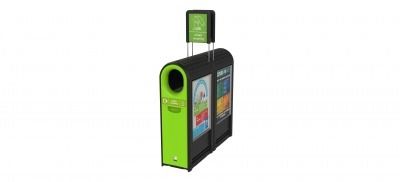
The EcoArc recycling bin can be used in groups as part of a recycling station, side-by-side or back-to-back. The slimline curved design has an anti-flyposting dimpled hood surface and rainwater drainage.
The unit features space for two optional A2 poster frames on each side and an optional A4 signage kit. The standard black base is made from recycled material (subject to availability) and can feature traditional banding.
The unit can hold up to 80 litres of waste, with a steel or plastic liner. The double-sided oval aperture can accommodate a 4-litre washer bottle. The moulded double skin pull-out door has an integral moulded handle for ease of opening on one side.
The door has a smooth surface, allowing an optional recycling label to be applied to identify the type of waste collected. The standard pull-out door and recycling label will be in WRAP-compliant colours.
The bin’s dimensions are 1100 mm in height, 333 mm in width and 600mm in depth. Optional features include a lock, ground fixing kit, bin linking kit, pivoting litter flap or seagull flap and anti-microbial additive.


Get our weekly digest
resource.co article ai

How will the government and DMOs address the challenges of including glass in DRS while ensuring a level playing field across the UK?
There's no easy solution to include glass in the DRS while maintaining a level playing field. Potential approaches include a phased introduction of glass, potentially with higher deposits to reflect its logistical challenges. The government and DMOs could incentivise innovation in glass packaging design and subsidise dedicated return points for glass-handling. Exemptions for smaller businesses unable to handle glass might also be necessary. Any successful solution will likely blend several approaches. It must address the differing priorities of devolved administrations, balance environmental benefits with logistical and cost implications, and be supported by robust consumer education campaigns emphasizing the importance of glass recycling.