

Award-winning manufacturer and designer of recycling and litter bins, Leafield Environmental have announced a brand-new Heritage XL Food Waste Litter Bin. It is designed to assist local authorities with food waste collection in residential areas and residents taking food waste out to communal recycling areas.
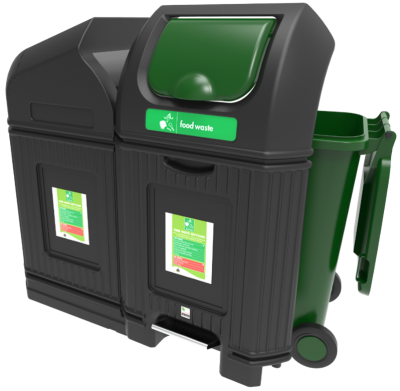
The standard black version of the bin fits a 120/140 L or 240 L two-wheeled bin. The green aperture flap and foot pedal are designed to keep out vermin, reduce odours and for the hands-free depositing of food waste bags. Lifting by hand is also possible due to a lid handle.
The entirety of the bin is made from a rotationally moulded double-skin construction. The front-facing access door is lockable and the bin has anti-fly-posting ribs on all four sides to deter unwanted posters and graffiti. There is space for customisable A3 posters on all four sides of the bin.
Made from up to 100 per cent recycled medium-density polyethylene (MDPE), the bin is maintenance-free – unlike metal products. They require no treatment or repainting and are easily cleaned. There is also a moulded-in chute to ensure all waste is fed into the bin liner and to prevent waste build-up around the wheeled bin.


Get our weekly digest
resource.co article ai

How will the government and DMOs address the challenges of including glass in DRS while ensuring a level playing field across the UK?
There's no easy solution to include glass in the DRS while maintaining a level playing field. Potential approaches include a phased introduction of glass, potentially with higher deposits to reflect its logistical challenges. The government and DMOs could incentivise innovation in glass packaging design and subsidise dedicated return points for glass-handling. Exemptions for smaller businesses unable to handle glass might also be necessary. Any successful solution will likely blend several approaches. It must address the differing priorities of devolved administrations, balance environmental benefits with logistical and cost implications, and be supported by robust consumer education campaigns emphasizing the importance of glass recycling.