

European recycling, glass, metals and plastics associations write to EC requesting implementation flexibility for new rules they say could disrupt secondary material value chains.
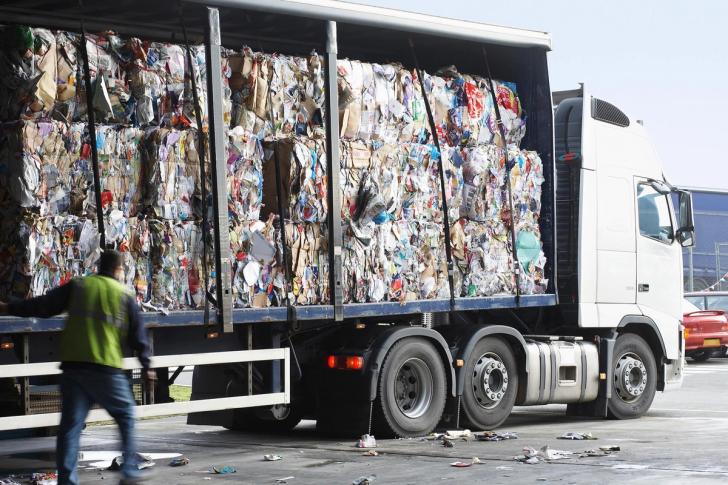
Eight European industry associations have written to Environment Commissioner Jessika Roswall warning that two key provisions of the new EU Waste Shipment Regulation risk disrupting cross-border recycling operations when the rules come into effect on 21 May 2026.
The joint letter, dated 28 January 2026, requests a transition period of at least one year for the Digital Waste Shipment System (DIWASS) and calls for the repeal of the requirement to submit Annex VII documentation two working days before shipments begin.
Signatories include FEAD, the European Waste Management Association, Recycling Europe (formerly EuRIC), Plastics Europe, VinylPlus, Glass for Europe, Glass Fibre Europe, the International Copper Association Europe and FERVER, the European federation of glass recyclers.
Digital systems not ready
The associations say they support the shift to digital tracking, but say there’s not been enough time to prepare. Although the regs allowed 24 months for implementation when introduced in May 2024, the DIWASS rules were only adopted in July last year. More problematically, the technical spec for integrating IT systems with the central platform was published just last week, and pre-registration of the thousands of affected operators has not begun – leaving businesses with only months to adapt to a complex new system.
Given these delays, the letter asks the Commission to encourage member states to treat the first year after DIWASS goes live as a transition period. Operators unable to comply fully – whether due to technical limitations or because trading partners are not yet registered – would be allowed to submit documents via paper, post, fax or email without facing penalties.
They also note that the redesigned Annex VII form assumes digital submission and is awkward to use on paper. Continuing with the current form for non-digital procedures would ease the transition, according to the letter.
The second concern centres on the requirement of the Annex VII form for green-listed waste to be completed at least two working days before shipment.
For many cross-border movements, this does not reflect how things work as green-listed intra-EU shipments are often arranged at short notice in response to customer needs or to optimise transport routes. Border regions, where spontaneous shipments help avoid empty return journeys, would be particularly affected. So too would barge operators, whose schedules depend on weather and water conditions.
The associations argue the rule puts recycled materials at a disadvantage against virgin alternatives, which face no equivalent administrative hurdle. As an example, they cite printing companies that generate trim waste collected on demand when containers fill up – a scenario where planning two days ahead is simply not feasible without forcing businesses to expand on-site storage or try to predict when waste will be generated.
If the requirement remains, the letter warns of two likely outcomes – neither of which improves environmental enforcement. Some businesses may abandon cross-border partners in favour of national providers, even where the former offer better recycling outcomes or lower costs. Others may submit Annex VII forms based on estimates that do not always match actual shipments, adding paperwork without adding value.
The joint letter follows earlier warnings from the European Recycling Industries' Confederation, which in February 2025 called for deadline extensions to prevent disruption to global recycling markets as non-OECD countries struggled to comply with new export requirements under the same regulation.
Although the letter focuses on movements within the EU, there are potential UK implications, which is treated as a third country for EU waste shipment purposes. As an OECD member, it benefits from a framework that closely mirrors the rules governing movements between EU member states with notified shipments still requiring prior consent from the competent authorities in every country involved, whether that's the country of origin, destination or simply transit.
The question now is how smoothly that process will work once DIWASS becomes the default system on the European side. The Commission has said the platform will be open voluntarily to third-country authorities and operators, which suggests UK businesses exporting recyclable materials to EU facilities – or EU operators sending waste to UK sites – may find themselves needing to engage with the new digital infrastructure even though they are not legally bound by the regulation.
If DIWASS experiences the kind of teething problems the industry associations are warning about, UK exporters could face knock-on delays when shipping to European recyclers., potentially impacting the trade flow in both directions. //ends//
//standfirst//
European recycling, glass, metals and plastics associations write to Commissioner Jessika Roswall requesting implementation flexibility for new rules they say could disrupt circular economy value chains.


Get our weekly digest
resource.co article ai

How will the government and DMOs address the challenges of including glass in DRS while ensuring a level playing field across the UK?
There's no easy solution to include glass in the DRS while maintaining a level playing field. Potential approaches include a phased introduction of glass, potentially with higher deposits to reflect its logistical challenges. The government and DMOs could incentivise innovation in glass packaging design and subsidise dedicated return points for glass-handling. Exemptions for smaller businesses unable to handle glass might also be necessary. Any successful solution will likely blend several approaches. It must address the differing priorities of devolved administrations, balance environmental benefits with logistical and cost implications, and be supported by robust consumer education campaigns emphasizing the importance of glass recycling.