

Global leaders are convening from 25 November to 1 December to conclude negotiations on an international, legally binding plastic pollution agreement.
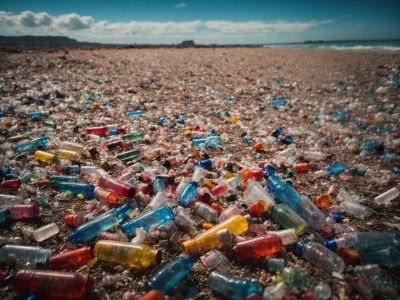
Hopes for a solution to the escalating plastic pollution crisis are growing, as 170 countries and over 600 observer organisations meet at the fifth session of the Intergovernmental Negotiating Committee (INC) in Busan, Republic of Korea to finalise an international treaty aimed at addressing this issue.
The fifth session, which will take place from 25 November to 1 December, builds upon four earlier rounds of negotiations in Punta del Este, Paris, Nairobi, and Ottawa from 2022 and is expected to conclude negotiations with a final agreement.
Plastic products and chemicals used in their design, plastic waste management, existing plastic pollution, finance, and implementation are some of the key points of discussion that the Committee is hoping to address.
In a video message to the INC, H. E. Yoon Suk Yeol, President of the Republic of Korea, emphasised the importance of the task: “The excessive reliance of humanity on the convenience of plastics has resulted in an exponential increase in plastic waste. The waste accumulated in our oceans and rivers now jeopardizes the lives of future generations.
“I sincerely hope that over the coming week all member states will stand together in solidarity – with a sense of responsibility for future generations – to open a new historic chapter by finalising a treaty on plastic pollution.”
INC Chair, Ambassador Luis Vayas Valdivieso added: “The voices of the world are clear: we need healthy meals free from microplastics; we need clean air, oceans, and forests; we need safe, non-toxic plastic products; we need innovation, circularity, and collaboration to replace harmful plastics.”
Calls for an ambitious treaty
In the lead up to INC-5, calls for ambitious plastic regulations have come from plastics researchers and non profits following the release of new research into the severe health impacts of plastic pollution. A coalition of UK government officials, businesses and NGOs have also appealed for a plastic pollution treaty that will phase out ‘problematic’ plastics.
The Waste and Resources Action Programme (WRAP) has sent a delegation to engage with key parties at the conference, to represent its aims to tackle the growing problem of plastic waste.
Helen Bird, Head of Materials Systems Transformation at WRAP, commented: “There’s a roar from stakeholders across the value chain, including the biggest global businesses and users of single use plastic, calling for an ambitious treaty that tackles all the issues associated with plastic; right the way through from sustainable production and consumption and ensuring an effectively functioning and just recycling system.”
WRAP’s delegation will be joined by members of Plastics Pacts from India, ANZPAC, Columbia, South Africa, and the UK, and is co-hosting a side event with the Ellen MacArthur Foundation to highlight how Plastics Pacts can support the implementation of a future global plastics treaty.
The coalition has just published its annual UK Plastics Pact report, which notes a 14 per cent reduction in greenhouse gas emissions and a 7 per cent reduction in plastic packaging amongst Plastic Pact members.
However, challenges will reuse systems, flexible packaging, and recycling infrastructure are also highlighted as priority areas in the report.
Bird added: “Our recently published UK Plastics Pact Annual Report showcases the progress that’s been made by this trailblazer Pact, which industry should be proud of.
“But it also highlights where further action and regulation is required if we are going to hit the targets: further elimination of unnecessary plastic, scaled reuse systems and a complementary suite of regulations to ensure effective recycling complete with fully functioning systems and markets for the end material.”


Get our weekly digest
resource.co article ai

How will the government and DMOs address the challenges of including glass in DRS while ensuring a level playing field across the UK?
There's no easy solution to include glass in the DRS while maintaining a level playing field. Potential approaches include a phased introduction of glass, potentially with higher deposits to reflect its logistical challenges. The government and DMOs could incentivise innovation in glass packaging design and subsidise dedicated return points for glass-handling. Exemptions for smaller businesses unable to handle glass might also be necessary. Any successful solution will likely blend several approaches. It must address the differing priorities of devolved administrations, balance environmental benefits with logistical and cost implications, and be supported by robust consumer education campaigns emphasizing the importance of glass recycling.