

Firth of Forth survey identifies bricks, concrete and glass fragments comprising up to 49 per cent of beach sediments, prompting researchers to propose new classification for modified coastal environments.
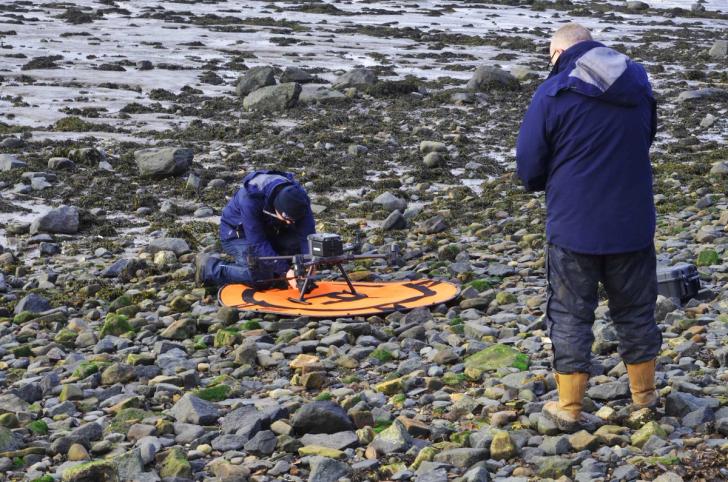
Bricks, concrete, glass and industrial waste now make up nearly half of the coarse sediments on some Scottish beaches, according to research published in the journal Sedimentology that provides the first detailed assessment of human-made materials accumulating on the Firth of Forth coastline.
A team from the University of Glasgow surveyed six beaches along the estuary and found that anthropogenic geomaterials — mineral-based materials of human origin — comprise an average of 22 per cent of pebble-sized sediments across the sites. At Granton Beach near Edinburgh, the figure rose to nearly 49 per cent in the mid-tide zone, with concrete fragments dominating the sample.
The research team suggests the modification is significant enough to warrant a new scientific classification, proposing that such sites be termed "Anthropogenic Mixed Sand and Gravel" or MSG-A beaches.
Coastal erosion releasing historic waste
The materials have entered the beach systems through erosion of coastal industrial sites and infrastructure, as well as historic dumping of waste. The researchers note that much of the world's urbanised coastline is composed of unconsolidated post-industrial and landfill materials, which are increasingly vulnerable to mobilisation as climate change intensifies coastal storm activity.
"As climate change increases the frequency and magnitude of coastal storms, more human-made waste materials are likely to be mobilised and enter beach systems," said John MacDonald of the University of Glasgow's School of Geographical & Earth Sciences, a co-author of the study.
The team used a combination of physical surveys and aerial drone imaging to examine beaches representing different coastal conditions on both sides of the Forth. On the north side, they surveyed Torryburn, Ravenscraig and Fife Path; on the south, Carriden, Granton and Prestonpans.
Samples collected at low, mid and high tide points revealed anthropogenic content ranging from 2 per cent at Ravenscraig to the 49 per cent recorded at Granton. Brick fragments were the most common material at five of the six sites.
Limited previous research
The study authors note that urban beaches have received far less scientific attention than natural beach systems. When the team began their research, they identified only 44 previous papers worldwide examining this type of modified beach environment.
"We expect more and more anthropogenic materials to reach our beaches in the years ahead," said Professor Larissa Naylor, a co-author of the study. "Research like this casts new light on how human activity is affecting the natural world. It is vital in helping us to understand how our beaches are changing and better enabling us to manage our changing coasts."
The study found that few anthropogenic fragments appeared in the fine fraction below 11mm, suggesting that materials are deposited into the Forth as larger fragments and have not yet been worn down by wave action. This conclusion was supported by observations that smaller fragments were more common on beaches with higher wave energy.
Yuchen Wang, a postgraduate researcher who carried out the fieldwork as part of her PhD at the University of Glasgow, said the findings are likely indicative of conditions at other coastal sites. "It's very likely that if these six beaches have accumulated so much coarse sediment through human activity, others around the country and indeed around the world are likely to be similarly affected," she said.
The team has already conducted repeat surveys of the sites to track how sediment composition changes over time and how that variation differs between more and less exposed locations.


Get our weekly digest
resource.co article ai

How will the government and DMOs address the challenges of including glass in DRS while ensuring a level playing field across the UK?
There's no easy solution to include glass in the DRS while maintaining a level playing field. Potential approaches include a phased introduction of glass, potentially with higher deposits to reflect its logistical challenges. The government and DMOs could incentivise innovation in glass packaging design and subsidise dedicated return points for glass-handling. Exemptions for smaller businesses unable to handle glass might also be necessary. Any successful solution will likely blend several approaches. It must address the differing priorities of devolved administrations, balance environmental benefits with logistical and cost implications, and be supported by robust consumer education campaigns emphasizing the importance of glass recycling.