

Food waste from Scottish households causes more biodiversity loss and land use damage than any other waste category.
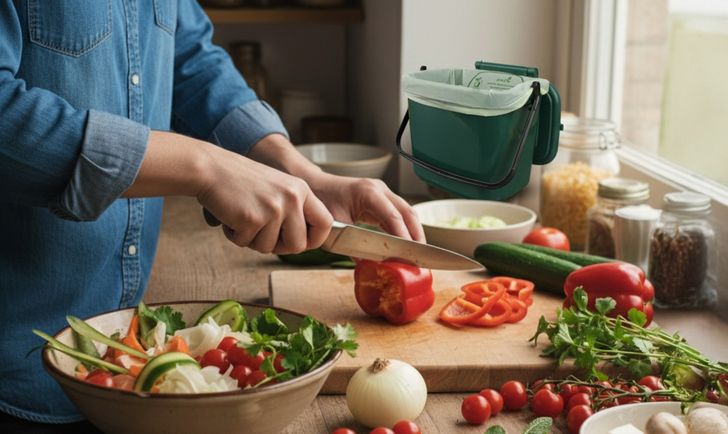
Household food waste has emerged as the most significant contributor to biodiversity loss and land use change in Scotland, according to new research published by Zero Waste Scotland, the circular economy public body.
The organisation's Scottish Waste Environmental Footprint Tool found that food waste ranked second only to textiles for climate change impacts and water consumption among all categories of household waste. The findings will inform Zero Waste Scotland focus in developing a Household Intervention Plan for Food Waste Reduction on behalf of the Scottish Government.
Scottish households disposed of 460,000 tonnes of food in 2021/22, equivalent to 86kg per person. Nearly three quarters of this waste was edible food intended for human consumption.
The financial burden of discarded food reached £1.3 billion across Scottish households in 2021/22, representing £480 per household annually. Wasted edible food and drink accounted for approximately 1.3 million tonnes of CO2 equivalent in the same period.
Commenting on the new research, Iain Gulland, Chief Executive at Zero Waste Scotland, said: "These findings really bring home the staggering impact our food system has, not just on climate change, but on the environment as a whole."
“More specifically, they reinforce how important it is that we reduce food waste from our homes, making the most of the food we love and reaping the benefits of smarter food behaviours for our budgets and lifestyles as well as for the planet.”
Environmental costs
Research identified that 40 per cent of food waste occurred because items were not used in time, either past the date on the label or because they appeared spoiled. A further 40 per cent of all food waste was disposed of during evening meals, with fridge clear outs accounting for 28 per cent of disposal occasions.
Fresh vegetables and salads represented the largest category by weight at 120,000 tonnes, with potatoes the most commonly discarded individual food type. Meat and fish waste, whilst lower by volume, generated higher greenhouse gas emissions per unit weight.
Zero Waste Scotland notes that food waste causes environmental damage through wasted production resources including water, land and energy, alongside methane emissions when sent to landfill. Although the organisation observes that even recycled food waste generates carbon emissions, these remain lower than landfill or incineration disposal.
Policy response
Qualitative research conducted by Zero Waste Scotland found that people in Scotland do not generally view food waste as an environmental issue. Respondents, including those concerned about climate change, typically considered food waste a moral issue related to food poverty or a waste treatment problem rather than an environmental concern.
Food disposed of in designated food waste bins was viewed by participants as a recovered resource rather than waste, the research found. This perception presents challenges for waste reduction efforts, as the environmental impacts embedded in food production, transportation and storage occur before disposal.
The Scottish Government identifies food waste as a priority action in Scotland's Circular Economy and Waste Route Map to 2030.
Gillian Martin, Climate Action Secretary, said: "This research highlights the wide-ranging environmental impact that waste from Scottish households has on the world around us, including on our climate, air quality and biodiversity."
Recent figures from the Scottish Environment Protection Agency showed household waste in Scotland decreased by 1.1 per cent in 2023 to 2.30 million tonnes, with recycling rates reaching 43.5 per cent.
Zero Waste Scotland's research into meal planning behaviours identified characteristics associated with regular planning, including higher education levels, younger age groups and smaller household sizes. The organisation developed intervention concepts including customisable meal planning templates and portion control tools based on participant feedback about barriers to planning.
Zero Waste Scotland will host a webinar on 12 November exploring Scotland's food waste and potential circular economy solutions.


Get our weekly digest
resource.co article ai

How will the government and DMOs address the challenges of including glass in DRS while ensuring a level playing field across the UK?
There's no easy solution to include glass in the DRS while maintaining a level playing field. Potential approaches include a phased introduction of glass, potentially with higher deposits to reflect its logistical challenges. The government and DMOs could incentivise innovation in glass packaging design and subsidise dedicated return points for glass-handling. Exemptions for smaller businesses unable to handle glass might also be necessary. Any successful solution will likely blend several approaches. It must address the differing priorities of devolved administrations, balance environmental benefits with logistical and cost implications, and be supported by robust consumer education campaigns emphasizing the importance of glass recycling.