

A collaboration between Holcim UK and Canary Wharf Group has produced a concrete mix with a negative carbon footprint, using biochar from spent coffee grounds and coppiced wood to turn buildings into long-term carbon stores.
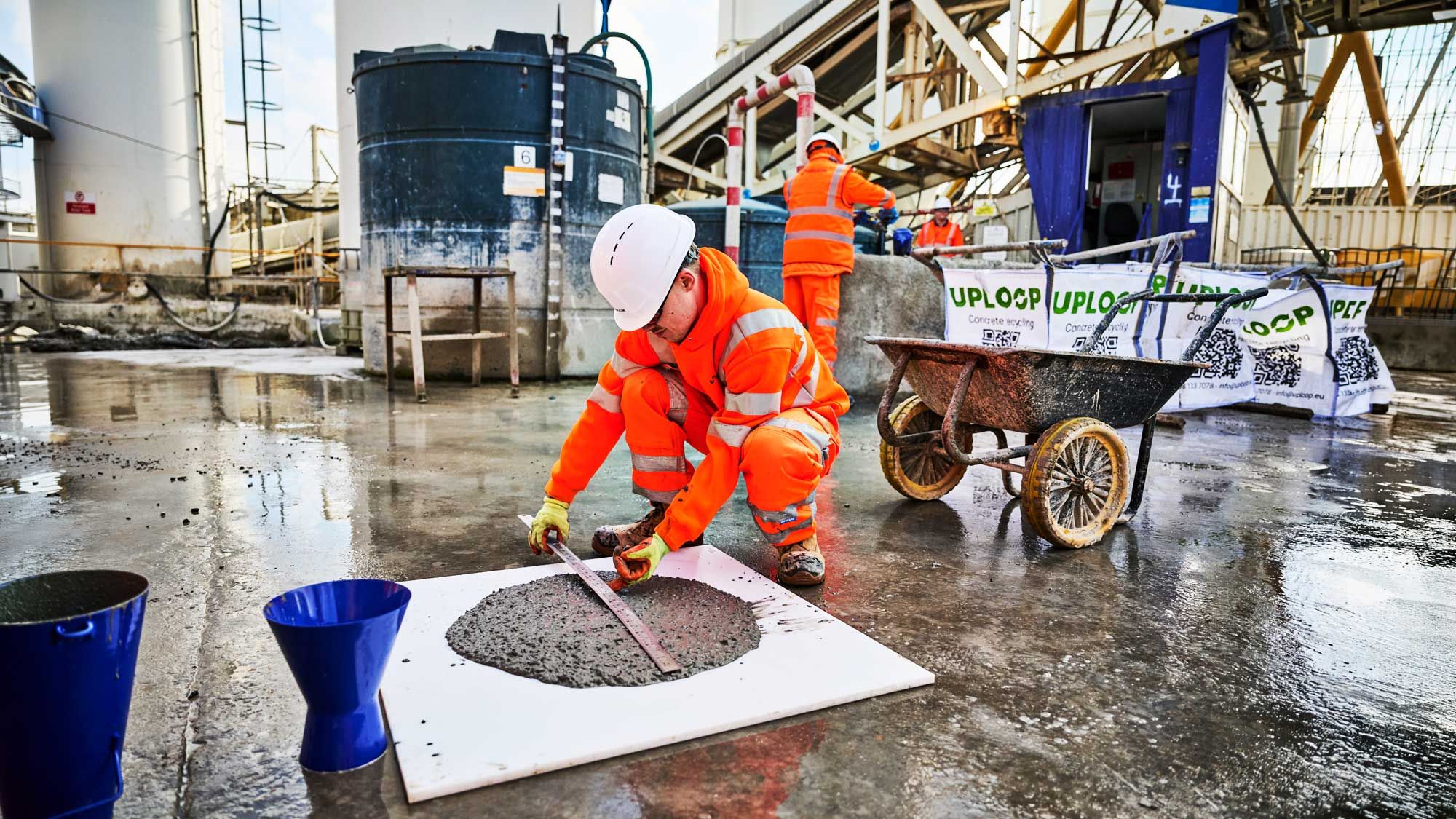
Holcim UK and Canary Wharf Group (CWG) have produced what they describe as the UK’s first net zero concrete, using biochar derived from spent coffee grounds and coppiced hardwood to lock carbon into the fabric of buildings.
The concrete, poured in September 2025 as two-metre-deep raft slabs on CWG’s Bank Street development site, recorded a projected net global warming potential, or GWP, of -14 kgCO₂e/m³ across the raw materials, transport and manufacturing stages of production (known in lifecycle assessment as modules A1–A3). That figure accounts for both fossil emissions and biogenic carbon storage together, and represents a first for Holcim globally.
The result came after six months of development in which Holcim and CWG tested a series of ultra low-carbon and circular concrete mixes on live Canary Wharf construction projects. The programme brought together site contractors O’Halloran & O’Brien and a group of structural and civil engineering consultancies including Arup, Ramboll, B&GE, Thornton Tomasetti, Walsh Associates and Robert Bird Group, alongside researchers from Queen’s University Belfast and the University of Cambridge.
The biochar-coffee mix was developed with Holcim’s Innovation Centre in Lyon. When biochar produced from waste biomass is added to concrete, the carbon absorbed by the source trees and coffee plants during growth is locked into the material itself. The concrete functions as a carbon sink for the lifespan of the structure and beyond, owing to the long-term stability of carbon within biochar.
Cafes and restaurants across the Canary Wharf estate supplied the spent coffee grounds, with the estate typically producing around 190 tonnes of used grounds each year. The coppiced hardwood came from UK forestry residues.
From whale sculpture to raft slabs
The programme’s earliest application came in the form of underwater counterweights for “Whale on the Wharf,” a 10-metre-tall public art sculpture installed at Wood Wharf. That initial biochar-coffee mix achieved an 80 per cent reduction in net GWP across the same A1–A3 modules compared to a traditional CEM I concrete, with a projected combined fossil and biogenic GWP of 69 kgCO₂e/m³.
A full-scale test slab was then poured in April 2025 beneath the new theatre venue at Wood Wharf, before the September pours at Bank Street pushed the mix into negative territory.
A separate trial mix incorporated graphene and recorded a carbon reduction of more than 50 per cent against a CEM I control. The graphene mix also produced higher compressive strength and improved durability, which could reduce the volume of concrete required in certain structural applications.
A third trial compared ECOCEM ACT, a low-carbon alternative to traditional Portland cement, against a standard CEM I control mix to measure how newer binding agents perform under real site conditions.
All materials are now being monitored and tested by CWG’s partner organisations, including Queen’s University Belfast, Skanska and Arup, over a two-year period to generate verified performance data against traditional concrete.
Industry context
Cement production is responsible for around eight per cent of global CO₂ emissions, and the UK concrete and cement sector has reduced its emissions by 63 per cent since 1990. The industry’s roadmap to net zero relies on a combination of lower-carbon cements, fuel switching and carbon capture technology, but alternative materials such as biochar remain at an early stage of commercial adoption.
Jasen Gauld, national readymix product development director for Holcim UK, said: “The aim of these trials was to show that next-generation concrete mixes can perform as well as, or better than, standard concretes, giving contractors and the wider supply chain confidence to adopt them.”
He added that the biochar is locked into the concrete permanently, “allowing buildings to fulfil a new role as long-term carbon stores, keeping CO₂ safely out of the atmosphere.”
Jonathan Ly, director of structures at CWG, said: “As both developer and main contractor, CWG occupies a unique position in the industry where we can validate next-generation materials on live projects at pace. Achieving net-zero concrete with our biochar-coffee mix demonstrates that circular economy principles can deliver measurable environmental and commercial value.”
The fossil and biogenic carbon contributions were quantified separately as part of the assessment, in line with current best practice for transparent carbon accounting of carbon-storing materials.


Get our weekly digest
resource.co article ai

How will the government and DMOs address the challenges of including glass in DRS while ensuring a level playing field across the UK?
There's no easy solution to include glass in the DRS while maintaining a level playing field. Potential approaches include a phased introduction of glass, potentially with higher deposits to reflect its logistical challenges. The government and DMOs could incentivise innovation in glass packaging design and subsidise dedicated return points for glass-handling. Exemptions for smaller businesses unable to handle glass might also be necessary. Any successful solution will likely blend several approaches. It must address the differing priorities of devolved administrations, balance environmental benefits with logistical and cost implications, and be supported by robust consumer education campaigns emphasizing the importance of glass recycling.