

EU law stipulates that the member states must set up a separate collection for textiles by January 2025. Finland is leading the way and passed a law in 2021 that required municipalities to separately collect textiles from January this year.
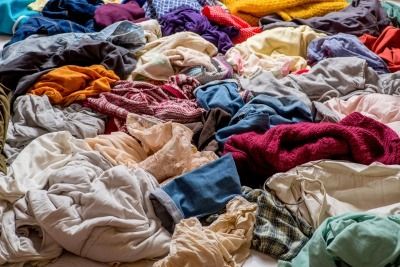
About 40,000 tonnes of used Finnish textiles ended up in mixed waste in 2019 and about 61 per cent of all used textiles were incinerated. In Finland, municipal waste – including textiles – falls under the responsibility of municipalities, as is the case for local authorities in the UK.
Unlike the UK however, the new law makes the provision of textile recycling a mandatory requirement. While some local authorities or retailers may provide drop-off points to consumers in the UK, there is no legal requirement for the service.
The new law dictated from 1 January 2023 that all municipalities in Finland must have arranged for a sufficient number of regional reception points for textile waste. Separately collected waste must be delivered to processing, whereas much of it as possible is prepared for reuse or mechanical recycling of the highest possible quality. The law also stipulates separate collection for businesses producing textile waste.
While the legal requirement is relatively new, some of the municipal waste managers in Finland have been piloting systems for separate collection since the law was announced in 2021. The Helsinki region is the largest metropolitan area in Finland with a population of over one million. In 2021, the average person in the area produced 3.11 kg of textile waste. The Helsinki Region Environmental Services (HSY) started the first of its two collection pilots in 2019. The trial set up collection points for clothing and textiles in good condition that were suitable for reuse and end-of-life textiles for recycling at waste sorting stations called ‘Sortti Stations’ – subject to a charge.
In 2022, the second pilot launched in the form of free drop-off points in ten shopping centres across the region. Textiles such as dry clothing and other household textiles were collected in plastic bags to prevent them from getting dirty or wet during transportation.
The company found that the two pilots delivered very different outcomes: the pay-and-declare system at the Sortti services has a significantly lower recycling rate (after pre-sorting: 16 per cent is reused as clothes; 21 per cent reused as material; 63 per cent ends up in residual waste) in comparison to the free shopping centre points (after pre-sorting: 3 per cent is reused as clothes, 60 per cent reused as material, 37 per cent ends up in residual waste). The higher rate of residual waste for the former is mainly due to contamination with dirt and moisture at Sortti Stations. HSY decided to end the pay-and-declare system this year, ahead of the obligations coming into force, but the free shopping centre collections are continuing.
The collected end-of-life textiles in the HSY trial are first pre-sorted at the Kivikko waste service centre, a service provided by a company based on public tender. After that, the textile waste is subject to a quality check and subsequently sorted according to fibre and recyclable material and sent to the Lounais-Suomen Jätehuolto Oy (LSJH) recycling plant in Turku on the Finnish southwest coast for further sorting and processing.
LSJH mechanically processes end-of-life textiles into recycled fibre and is part of the Telaketju project, a public-private partnership project of the Ministry of Economic Affairs and Employment. The recycling plant can process about 10 per cent of Finnish end-of-life textiles per year.
Despite the success of the HSY trial, there are still some challenges ahead. Helsinki currently has eleven collection points but will need more. HSY is hesitant to expand the infrastructure because of the costs involved and the possible introduction of an Extended Producer Responsibility (EPR) scheme under national and EU law. EPR may mean that the cost of such infrastructure would be absorbed by producers instead of municipalities.
The levels of contamination in collected textile waste also pose a challenge to the system. In addition, volumes of material are lost in the sorting process due to missorting. The quality audit charges the sorting company in case of poor sorting which leads to sorters classifying fewer textiles as recyclable if there is uncertainty.
On the recycling side, given that the current system only recycles a fraction of the total textile waste, recycling capacity has to be increased – there are already plans for more recycling plants with the aim ‘to create enough capacity for Finland’s entire post-consumer end-of-life textile processing needs and…providing processing services for other areas in the Baltic Sea region.’ However, the market for recycled material is still very small and there are questions about the economic viability of the project.


Get our weekly digest
resource.co article ai

How will the government and DMOs address the challenges of including glass in DRS while ensuring a level playing field across the UK?
There's no easy solution to include glass in the DRS while maintaining a level playing field. Potential approaches include a phased introduction of glass, potentially with higher deposits to reflect its logistical challenges. The government and DMOs could incentivise innovation in glass packaging design and subsidise dedicated return points for glass-handling. Exemptions for smaller businesses unable to handle glass might also be necessary. Any successful solution will likely blend several approaches. It must address the differing priorities of devolved administrations, balance environmental benefits with logistical and cost implications, and be supported by robust consumer education campaigns emphasizing the importance of glass recycling.