

Havant Borough Council, alongside Norse South East (NSE), has agreed to introduce large ‘10,700 litre enclosed’ skips which are nine times larger than current glass collection bins.
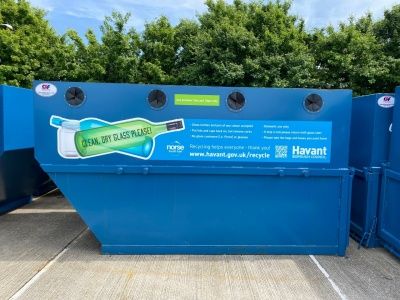
The glass recycling banks are fitted with a sensor device which will allow for remote monitoring of capacity available before emptying is required, reducing the ‘environmental impact of unnecessarily repeated collections’.
According to the Council, installation of the banks will begin at locations across the borough throughout the next couple of weeks. It is hoped that they will make it easy for residents to recycle ‘more of their bottles and jars quickly and easily’.
Councillor Lulu Bowerman, Cabinet lead for Environmental Services at Havant Borough Council, said: “I am very pleased for the introduction of these new larger glass banks that will allow residents to recycle even more glass.
"The new technology combined with the increase in size will prevent unsightly and overflowing areas in the borough. It will also reduce the number of trips made to empty the banks, reducing our carbon footprint – in line with the council’s corporate strategy.
"The new method of collection, by a skip carrying vehicle, will also reduce the risks to collection crews and the concerning sound levels identified with smashing glass when emptied."


Get our weekly digest
resource.co article ai

How will the government and DMOs address the challenges of including glass in DRS while ensuring a level playing field across the UK?
There's no easy solution to include glass in the DRS while maintaining a level playing field. Potential approaches include a phased introduction of glass, potentially with higher deposits to reflect its logistical challenges. The government and DMOs could incentivise innovation in glass packaging design and subsidise dedicated return points for glass-handling. Exemptions for smaller businesses unable to handle glass might also be necessary. Any successful solution will likely blend several approaches. It must address the differing priorities of devolved administrations, balance environmental benefits with logistical and cost implications, and be supported by robust consumer education campaigns emphasizing the importance of glass recycling.