

London-based Greyparrot has launched Deepnest, the world's first AI platform designed to bridge the information gap between brand owners and waste management systems, providing real-time insights into packaging recyclability performance.
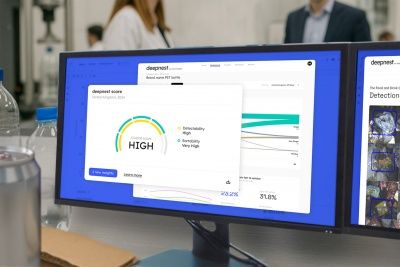
London-based AI waste analytics company Greyparrot has launched Deepnest, ‘the world's first artificial intelligence platform designed to connect brand owners with real-world data on how their packaging performs in waste management systems’. The platform aims to address a critical information gap, with less than one per cent of waste currently audited manually.
Deepnest aggregates data from Greyparrot's AI camera systems deployed across more than 20 countries, which detected over 40 billion waste objects last year. Global brands including Unilever, Asahi and Amcor are trialling the platform to optimise their packaging design and improve recyclability and recovery rates.
The launch comes as Extended Producer Responsibility regulations place increasing pressure on packaging producers to demonstrate recyclability. Under UK EPR rules that came into force in January 2025, large producers must conduct recyclability assessments of household packaging and report results by October 2025. Global brands are also assessing Deepnest to better respond to fast-approaching regulations including virgin plastic taxes and EPR schemes across multiple markets.
"Too often, packaging that's theoretically recyclable never makes it through the system as intended. Either it can't be correctly identified by the sorting machines, or it's made from materials with no viable end market," said Gaspard Duthilleul, COO at Greyparrot. "That's why we built Deepnest, not just for brands, but to take a systemic approach that supports the entire value chain. Waste managers need packaging to be designed for recovery, and brands need to understand what works and what doesn't in real-world conditions, and at scale. Deepnest helps close that loop."
Addressing the data gap in waste intelligence
The platform transforms large-scale waste data into actionable insights for brands and packaging producers. With anonymised and aggregated data at national or global level, brands can use Deepnest to benchmark packaging recycling performance against competitors and category standards, test and compare packaging formats within sub-brands before scaling across full portfolios, identify specific design elements that reduce recyclability in priority markets, and quantify the impact of R&D efforts, packaging innovations, and circularity interventions.
For waste management companies, by giving upstream stakeholders access to aggregated, global waste data, Deepnest enables improvements that boost material recovery, cut contamination, and enhance sorting efficiency and profitability, ultimately benefiting the entire waste value chain. Greyparrot's collaboration with major waste management firms like Biffa demonstrates the value of bridging the information divide between brands and waste operators.
Amy Hooper, Head of Innovation at Biffa, said: "Improving valuable material recovery outcomes requires a collective effort across the entire value chain. We're always looking for ways to strengthen the connection between what happens in our facilities and the decisions being made upstream.
“Collaborating with Greyparrot on the introduction of Deepnest in our facilities, allows our sector to support the surfacing of new layers of insight for the broader value chain into material recovery - insight that has the potential to inform more effective packaging and product design, policy, and investment. Initiatives like this have the potential to help close the gap between ambition and action on circularity."
Recent Eurostat data shows packaging waste generation in EU member states increased by nearly 80 million tonnes between 2009-2019, highlighting the scale of the challenge facing the sector. With upcoming EU Packaging and Packaging Waste Regulation requirements mandating all packaging be recyclable by 2030, access to real-world performance data becomes increasingly crucial.
Industry response to data-driven design
The packaging industry has traditionally relied on laboratory-scale testing and software models to predict recyclability, but real-world data from operating facilities has been largely missing due to resource constraints. Greyparrot's AI-powered waste intelligence addresses this gap by providing actual performance metrics from sorting and recycling operations.
Mark Roberts, Circular Economy Director at Amcor, said: "The packaging industry relies on lab-scale testing and software models to predict recyclability of packaging solutions, but actual real-life data is missing. With Greyparrot's AI-powered waste intelligence, Deepnest is unlocking real-world recyclability data that the packaging data chain has been missing."
Asahi Beverages has already deployed Greyparrot Analyzers to improve operational data quality. Sandra Gibbs, Chief Supply Chain Officer at Asahi Beverages, commented: "Asahi Beverages has made big strides in sustainable packaging, including switching to 100 per cent recycled plastic bottles for brands like Pepsi Max, Solo, Schweppes, and Sunkist. We also operate Australia's largest PET recycling facility—a joint venture with Coca-Cola Europacific Partners—and we've been looking for real-time data to help maximise its impact. That's why we installed Greyparrot Analyzers to unlock operational data to improve recycling quality and output.
“Deepnest can transform that data into insights to guide smarter packaging design from the outset. We're exploring how this technology can help us embed a data-driven approach across the entire packaging lifecycle, moving us closer to 100 per cent circular packaging."
The initiative aligns with broader industry automation trends, as material recovery facilities increasingly adopt AI-powered systems to address labour shortages and improve sorting efficiency. Greyparrot's technology has been deployed in sorting and recycling facilities across more than 20 countries, creating a substantial global dataset of waste flows.
Dr Liz Smith, Global R&D Head of Deodorants at Unilever, added: "AI-enabled waste intelligence tools have great potential to provide new visibility into how packaging is actually being sorted and processed in real-world recycling systems. Our goal is to reduce our virgin plastic use and make our plastic packaging reusable, recyclable or compostable - and insights like these could critically help to inform future packaging design, enable recyclability in practice and at scale, and increase the supply of high-quality recycled materials."


Get our weekly digest
resource.co article ai

How will the government and DMOs address the challenges of including glass in DRS while ensuring a level playing field across the UK?
There's no easy solution to include glass in the DRS while maintaining a level playing field. Potential approaches include a phased introduction of glass, potentially with higher deposits to reflect its logistical challenges. The government and DMOs could incentivise innovation in glass packaging design and subsidise dedicated return points for glass-handling. Exemptions for smaller businesses unable to handle glass might also be necessary. Any successful solution will likely blend several approaches. It must address the differing priorities of devolved administrations, balance environmental benefits with logistical and cost implications, and be supported by robust consumer education campaigns emphasizing the importance of glass recycling.