

The Public Accounts Committee (PAC) has today (19 October) released a report showing that Defra and the Environment Agency’s progress on implementing the 2018 Resources and Waste Strategy is ‘slow and piecemeal’.
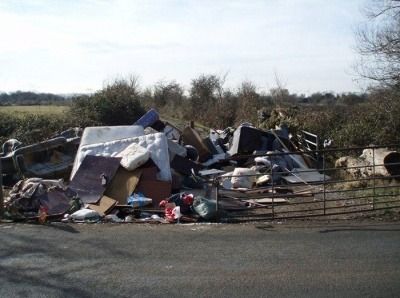
There is currently no strategy to achieve the target of eliminating waste crime by 2043. The PAC says that necessary measures are ‘not even at the pilot stage’.
Deputy Chair of the PAC, Sir Geoffrey Clifton-Brown, will lead a statement and discussion on the report in the House of Commons tomorrow morning (20 October).
Currently, waste crime – such as flytipping and the miscategorisation of waste for disposal – costs the economy around £1 billion annually, a figure which is said to be underestimated. The number of incidents of waste crime and associated costs has risen in recent years.
The PAC noted in its report that ‘waste crime is not getting the local or national attention needed to effectively tackle it, despite it being on the rise and increasingly dominated by organised criminal gangs’ and that the continued rise in the cost of living could further increase ‘incentives for people to get rid of waste inappropriately’.
The Committee also expressed concern about the rate of illegal waste exports, which it said the ‘Environment Agency is not doing enough to prevent’. By the Agency’s own admission, most of these illegal exports end up in non-OECD countries where there are fewer controls on the harms they may cause and less capacity to reverse them.
Dame Meg Hillier MP, Chair of the Public Accounts Committee, said: “Another day, another policy headline with no plan or demonstrable progress towards achieving it, despite years of resources put in.
“The result is property and countryside blighted by flytipping, toxic leaks into our soil, and tonnes of waste illegally exported by the UK to developing countries even less able to cope with its indefinite negative effects.
“With the growing involvement of criminal gangs, adept at evading detection and who regard the fines if they are caught as merely a business expense, a much more serious approach to enforcement is required.
“Currently the Department’s approach to large parts of waste crime is closer to decriminalisation. Targets become meaningless – rubbish, you might say – when there isn’t even a strategy for achieving them, much less any indication or measurement of progress.
“Sadly, all the signs four years into a 25-year target period are that the problem is getting worse.”
Jacob Hayler, Executive Director of the Environmental Services Association, said: “The damning PAC inquiry report sets out a depressingly familiar analysis of the impact of waste crime and the lack of progress made to tackle it, while also highlighting that current approaches appear to be failing.
"Waste crime is increasing, enforcement is decreasing and, in this ‘evolutionary arms race’, the criminals appear to be winning – viewing paltry sanctions as little more than a business expense and brazenly
operating undeterred by under-resourced enforcement agencies.
"ESA agrees with the PAC report’s helpful recommendations, which largely mirror those we made in our 2021 Counting Cost of Waste Crime Report. These recommendations advocate fast-tracking of regulatory reforms to tackle waste crime; drastically improving data and metrics to properly capture the impact and better benchmark enforcement progress; as well as stronger enforcement and tougher sanctions, so that the fine fits the crime.
"In particular, we would like to see stronger application of Duty of Care requirements on waste producers and better use being made of the landfill tax illegal disposals regulations, alongside much more urgent reform of the carriers, brokers and dealers regime and the rapid introduction of digital waste tracking.”


Get our weekly digest
resource.co article ai

How will the government and DMOs address the challenges of including glass in DRS while ensuring a level playing field across the UK?
There's no easy solution to include glass in the DRS while maintaining a level playing field. Potential approaches include a phased introduction of glass, potentially with higher deposits to reflect its logistical challenges. The government and DMOs could incentivise innovation in glass packaging design and subsidise dedicated return points for glass-handling. Exemptions for smaller businesses unable to handle glass might also be necessary. Any successful solution will likely blend several approaches. It must address the differing priorities of devolved administrations, balance environmental benefits with logistical and cost implications, and be supported by robust consumer education campaigns emphasizing the importance of glass recycling.