

The third edition of the World Bank's What a Waste series reveals that global waste volumes have already surpassed projections made in 2018, with 30 per cent of all waste still openly dumped or left uncollected.
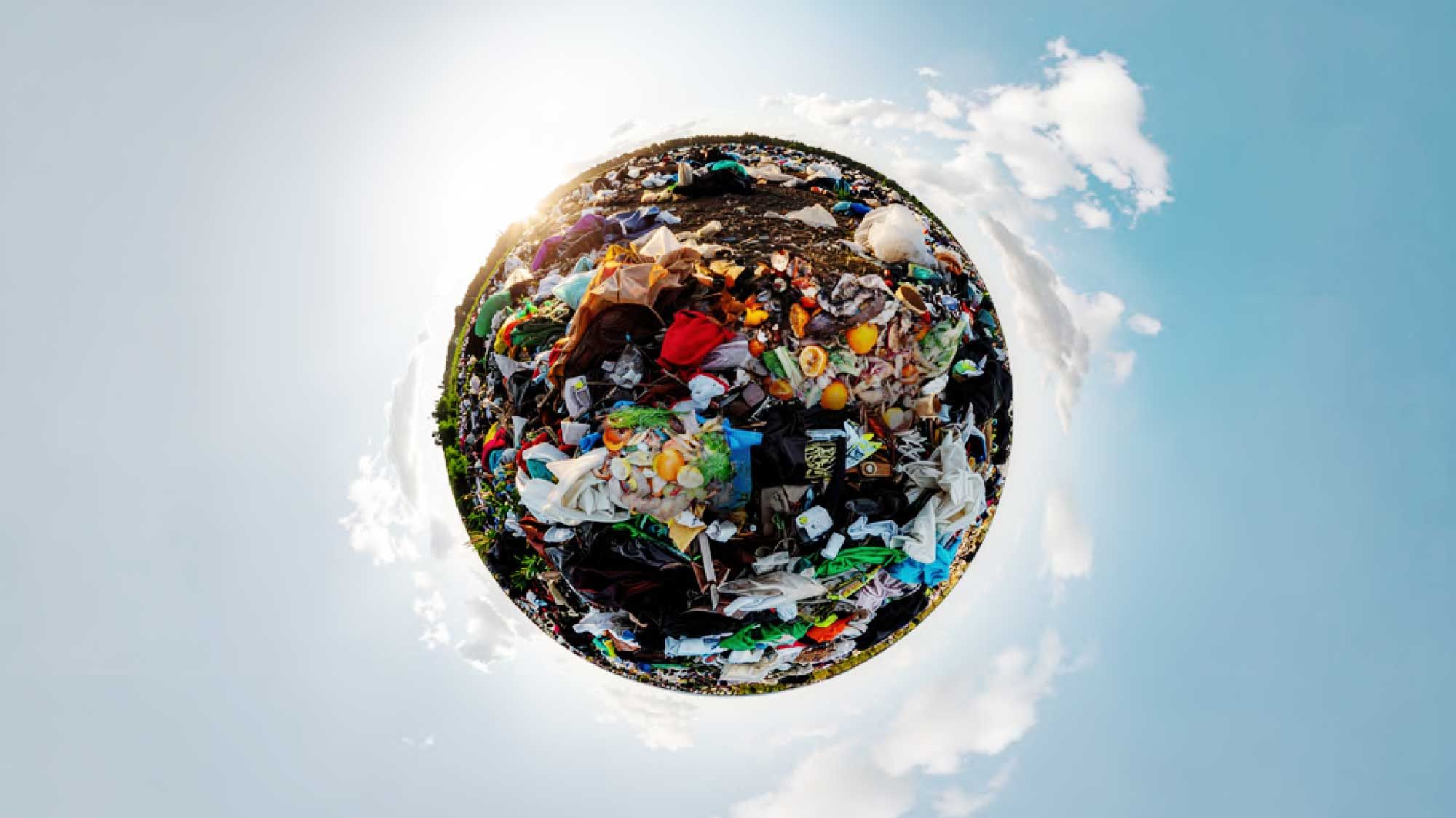
The world generated 2.56 billion tonnes of municipal solid waste in 2022, a figure the World Bank's previous assessment had not expected to be reached until 2030, according to a new report published on 24 March.
What a Waste 3.0, the third edition of the World Bank Group's series on global solid waste management, projects that waste volumes will rise to 3.86 billion tonnes by 2050 under a business-as-usual scenario. That is a 50 per cent increase, with the fastest growth expected in Sub-Saharan Africa (124 per cent) and South Asia (99 per cent).
Although the share of mismanaged waste is projected to fall from around 30 per cent to 20 per cent by 2050, the total volume of waste that is either openly dumped or uncollected will remain at roughly 760 million tonnes per year. Approximately two billion people currently lack access to adequate waste services, according to the report, and that number is unlikely to change without increased investment.
The report draws on data from 217 countries and 262 cities, making it the largest publicly accessible global dataset on municipal solid waste. It is the first edition to include data on self-managed waste, plastics composition and waste management financing.
Financing gap
The global cost of municipal waste management already exceeds US$250 billion annually and is projected to rise to US$426 billion by 2050 if existing practices continue. Basic waste systems in low-income countries cost at least US$40-45 per tonne, rising to US$70-80 in middle-income countries and more than US$200 in high-income countries.
Achieving universal waste collection and management would require low-income countries to spend approximately 0.8 per cent of GDP on the sector, and middle-income countries between 0.3 and 0.5 per cent. Reported public spending on solid waste management is below 0.15 per cent of GDP in about three-quarters of low- and middle-income countries.
Between 2003 and 2021, official development finance committed to the waste sector totalled US$14.5 billion, including US$1 billion for low-income countries and US$5.9 billion for lower-middle-income countries. Under a business-as-usual scenario, low- and lower-middle-income countries face investment needs of US$556 billion between 2022 and 2050.
Waste collection rates reflect these disparities. High-income countries collect 99 per cent of their waste. Low-income countries collect 28 per cent. Landfills remain the most common management method globally, accounting for 29 per cent of all waste, followed by recycling, composting and anaerobic digestion at 21 per cent and incineration with energy recovery at 20 per cent.
Plastics and climate
Plastics make up 12.5 per cent of municipal solid waste globally, with single-use plastics accounting for an estimated 65 per cent of all plastic in the waste stream. Nearly 29 per cent of all plastic waste, some 93 million tonnes per year, is mismanaged. Middle-income countries are the largest source of unmanaged plastic waste, generating 87 per cent of the global total.
Greenhouse gas emissions from solid waste management were estimated at 1.28 billion tonnes of carbon dioxide equivalent in 2022. Under current practices, that figure is projected to reach 1.84 billion tonnes by 2050, a 43 per cent increase. Some 156 countries have included the waste sector in their Nationally Determined Contributions under the Paris Agreement, though financing and regulatory constraints limit implementation.
The report models two alternative scenarios alongside the business-as-usual projection. A high-ambition scenario, in which waste generation is capped at current levels and collection and treatment are expanded, would reduce global GHG emissions from the waste sector to 0.91 billion tonnes of CO2 equivalent by 2050. A low-ambition scenario, achieving half the high-ambition reduction, would bring emissions to 1.33 billion tonnes.
Food and garden waste accounts for 38 per cent of municipal solid waste globally, and 52 per cent in low-income countries. Only six per cent of waste worldwide is composted or processed through anaerobic digestion, falling to less than one per cent in low-income countries.
The sector employs an estimated 18 million urban waste workers worldwide, equivalent to 0.3 per cent of the global urban population. In low-income countries, informal workers are concentrated in waste collection and sorting, but systematic employment data remains confined largely to high-income countries.
Ming Zhang, World Bank Group Director for Urban, Subnational Finance, Tourism and Disaster Management, wrote in the report's foreword that the costs of inaction, from pollution to declining property values and missed economic opportunities, "are far higher" than the investment required. "With strategic action, countries can cap total waste generation even as economies grow; expand collection coverage and improve service quality; reduce system costs relative to business as usual; and unlock millions of good jobs across the value chain," he said.


Get our weekly digest
resource.co article ai

How will the government and DMOs address the challenges of including glass in DRS while ensuring a level playing field across the UK?
There's no easy solution to include glass in the DRS while maintaining a level playing field. Potential approaches include a phased introduction of glass, potentially with higher deposits to reflect its logistical challenges. The government and DMOs could incentivise innovation in glass packaging design and subsidise dedicated return points for glass-handling. Exemptions for smaller businesses unable to handle glass might also be necessary. Any successful solution will likely blend several approaches. It must address the differing priorities of devolved administrations, balance environmental benefits with logistical and cost implications, and be supported by robust consumer education campaigns emphasizing the importance of glass recycling.