

Cré, the composting and anaerobic digestion association of Ireland, has published a report showing that, despite ‘recent growth and improvements in food waste collection’, Ireland has limited local recycling, causing it to fall behind on ‘delivering true climate benefits’.
Data from the association shows that over 100,000 tonnes of the 300,000 tonnes of municipal food and garden waste collected in Ireland in 2020 was exported to facilities in Northern Ireland.
Not only do these exports to Northern Ireland contribute over one million road truck kilometres a year, the report warns, organic recycling facilities in Ireland are already being ‘pushed to the brink’.
Ireland generates approximately one million tonnes of food waste, the Environmental Protection Agency report had estimated. According to Cré, Ireland currently collects under a third of this waste and recycles less than half locally into quality compost and digestate.
Compost and digestate can be used in agriculture as a soil improver, fertiliser replacement or as a peat replacement in the horticultural sector. It is for this reason the report aligns Ireland's lack of local recycling with a ‘stunted opportunity primed for growth’, as well as restricting ‘true climate benefits’.
Tony Breton, Chair of Cré, said: “Ireland has to recognise the economic and environmental opportunities which are thrown away everyday as garden and food wastes. It is [a] failure of common sense when organic waste, which can be transformed locally, is transported hundred[s] of kilometres to save someone a few euro[s] with complete disregard for the pollution, local job losses and creation of barriers to local investment.
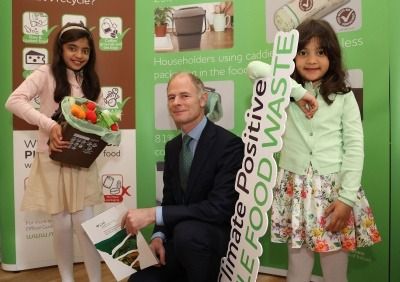
“We call on everyone to support National Food Waste Recycling Week and to separate correctly their food and garden waste into their brown bin but equally we call on government to take the opportunity of the Circular Economy Bill to enable investable local solutions to create the high value, high quality organic fertilisers and soil improvers demanded by Irish farmers.”
As stated in the report, quality composts and digestates are available today to supply nutrients and organic matter, which benefit soils whilst helping farmers avoid the costs of expensive fossil fuel based chemical fertilisers.
Keith Swan, from the conservation agriculture farming group BASE Ireland, added: "As the beginning and end of the compost and digestate chain, we feel it would be [a] huge advantage to Irish farmers and their soils, to have food and garden wastes recycled locally. This would assist in closing the nutrient loop in agriculture and build carbon content in Irish soils"


Get our weekly digest
resource.co article ai

How will the government and DMOs address the challenges of including glass in DRS while ensuring a level playing field across the UK?
There's no easy solution to include glass in the DRS while maintaining a level playing field. Potential approaches include a phased introduction of glass, potentially with higher deposits to reflect its logistical challenges. The government and DMOs could incentivise innovation in glass packaging design and subsidise dedicated return points for glass-handling. Exemptions for smaller businesses unable to handle glass might also be necessary. Any successful solution will likely blend several approaches. It must address the differing priorities of devolved administrations, balance environmental benefits with logistical and cost implications, and be supported by robust consumer education campaigns emphasizing the importance of glass recycling.