

The WRAP-convened Food Pact Network that brings together ten national and regional voluntary agreements across nine countries has published its first global food report.
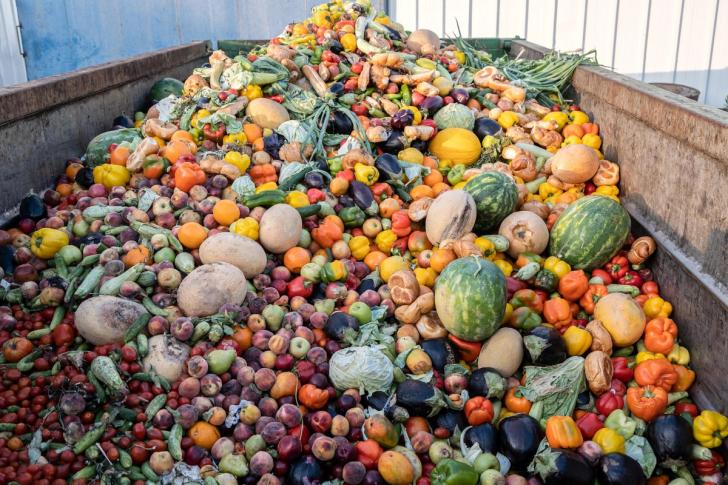
Ten national and regional voluntary agreements spanning nine countries have collectively reduced food waste by 220,000 tonnes between 2019 and 2024, according to the first global report from the Food Pact Network published today (7 November).
The network, convened by the Waste and Resources Action Programme (WRAP), brings together food waste reduction programmes in Australia, Brazil, Indonesia, Mexico, Netherlands, New Zealand, South Africa, the United Kingdom and the United States. Countries that represent 14 per cent of global population, around 20 per cent of global food waste, and 38 per cent of global GDP.
Between 2019 and 2024, the network redistributed 2.7 million tonnes of surplus food equivalent to seven billion meals, according to the report. Food waste reduction actions prevented an estimated 680,000 tonnes CO2e, equivalent to removing 240,000 cars from roads for one year.
"The Food Pact Network is on a roll and making strong inroads - achieving real reductions in food waste, realising cost savings for businesses and citizens, and benefitting the environment," said Catherine David, CEO WRAP. "The model works - wherever you put it - and by operating across the supply chain is helping to make businesses better and more future proof, and our food system more efficient, reliable and sustainable."
Global food waste challenge
Food loss and waste is responsible for 8-10 per cent of global greenhouse gas emissions and costs the global economy over $1 trillion annually, according to the report. WRAP states that more than one billion tonnes of food is lost or wasted each year, equivalent to 90 truckloads every minute.
The network applies a Target-Measure-Act framework whereby signatories set reduction targets, measure and report food loss and waste data, and implement interventions based on insights. Member initiatives work through four core activities: data measurement and evaluation, business recruitment and engagement, citizen campaigns, and policy development in partnership with governments.
"Countries with Food Pacts are making significant progress towards the United Nations Sustainable Development Goal 12.3 – to halve global food waste by 2030," said David Rogers, Director of International Development, WRAP. "We know the model works, as these numbers prove, and we need to dramatically scale up activity. This requires increased business participation, funding and technical expertise from WRAP and our partners around the world."
Around 920 organisations including 550 food businesses have committed to pacts across the network, according to the report. Approximately two-thirds of pact food and drink businesses now report food waste data, with 24 multinational food businesses committed to more than one pact.
Regional progress
Individual pacts report varying levels of maturity and impact. The UK Food and Drink Pact established in 2005 (previously known as the Courtauld Commitment), represents the network's longest-running initiative. This has contributed to the UK achieving a 22 per cent per capita reduction in food waste between 2007 and 2021/22, with surplus food redistribution totalling 1.6 billion meals UK-wide between 2015 and 2023.
The Pacific Coast Food Waste Commitment in the United States, operating since 2019, reports that grocery retail signatories have prevented more than 174,000 tonnes of food from disposal, cutting unsold food rates by 30 per cent. Pilot projects across dairy, grain, fruit, and hospitality sectors have delivered reductions from 50 to 70 per cent in manufacturing plants through employee-led innovation, with a 60 per cent reduction in a major hospitality trial.
In Australia, the Food Pact was launched in October 2021 with seed funding from the Federal Government. Between 2022 and 2024, pact members reduced food waste by 16,000 tonnes, avoided 505,545 tonnes of GHG emissions, and saved $57m according to the organisation. End Food Waste Australia has raised over $8 million to date from business contributions, project funding and philanthropy.
The Netherlands' Samen Tegen Voedselverspilling, established in 2018, contributed towards a 17 per cent nationwide reduction in food waste between 2015 and 2023, with the retail sector achieving a 33 per cent reduction in food waste between 2018 and 2024, with 103,500 tonnes of surplus food redistributed to food banks countrywide between 2020 and 2023.
South Africa's Food Loss and Waste Agreement, launched in 2020, has grown from 16 signatories to 135 to represent approximately 44 per cent of the formal food value chain.
Newer initiatives include Brasil Sem Desperdício, launched in October 2025 with initial funding of R$ 4.75 million. Eleven companies signed a letter of intent to become signatories, with support from the United Nations Environment Programme, Ministry of Social Development, and Ellen MacArthur Foundation.
Funding requirements
The network has secured $35 million in funding to date across all member initiatives. The Rainier Climate Group provided $15 million in catalytic funding to WRAP in 2024 to address food loss and waste through the network and direct support for five country pacts.
The report calls for increased investment from funders and philanthropy to deepen impact in countries with existing pacts and enable expansion to new countries. National governments are urged to integrate food loss and waste reduction into climate plans, review policy barriers to redistribution, and fund or partner with country pacts. Food and drink businesses are called upon to become signatories, set reduction targets, track and measure data, and act on insights to prevent loss and waste in supply chains.
"What is urgently needed now is the sustained funding to scale this work across the world," said David Rogers. "The commitment and expertise are in place, but to turn ambition into lasting change we need donors and partners willing to be the catalysts. Investment in this area delivers benefits many times greater than costs."


Get our weekly digest
resource.co article ai

How will the government and DMOs address the challenges of including glass in DRS while ensuring a level playing field across the UK?
There's no easy solution to include glass in the DRS while maintaining a level playing field. Potential approaches include a phased introduction of glass, potentially with higher deposits to reflect its logistical challenges. The government and DMOs could incentivise innovation in glass packaging design and subsidise dedicated return points for glass-handling. Exemptions for smaller businesses unable to handle glass might also be necessary. Any successful solution will likely blend several approaches. It must address the differing priorities of devolved administrations, balance environmental benefits with logistical and cost implications, and be supported by robust consumer education campaigns emphasizing the importance of glass recycling.