

A former Ward Recycling plant will see £25 million invested to develop a plastic recycling facility for post-consumer and post-industrial flexible plastics. The plant was purchased by Sterling Polymers Ltd, and is currently undergoing the planning application process for site development with Hartlepool Borough Council.
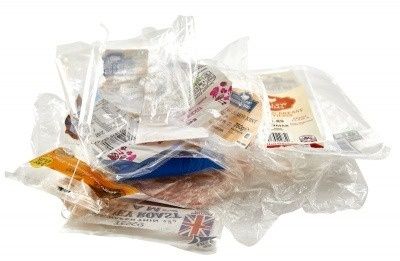
The company told Resource that the plant will process low density polyethylene (LDPE), oriented polypropylene (OPP) and Biaxially-Oriented Polypropylene (BOPP), and that the presentation of the material will ‘likely be mixed’.
Polymer and colour types will be identified through ‘optical sortation lines’, with the material then sorted into bays accordingly. In its finished form, the PET will be a rigid plastic, not a flexible one.
The plant will be capable of processing 13 tonnes of material per hour, with a range of optical sorting, metal detection, screening, and washing processes, with the final product extruded into a granule that can be used in manufacturing.
The proposed recycling facility aims to encourage local authorities – ‘put off’ by exporting flexible plastics outside of the UK to be recycled and the ‘added carbon footprint’ – to introduce collection schemes for the material whilst gaining revenue. Sterling Polymers ‘welcomes’ the Government’s plans for the collection of flexible plastics at kerbside, something the company asserts ‘has been needed for a long time’.
Although acknowledging the potential ‘quality issues’ associated with flexible plastics collection, the company emphasised that it is ‘building a facility that is able to deal with mixed flexible plastics and segregate into colour and polymer type’.
For this reason, ‘education is the key’ – because the feedstock’s quality will be representative of the rebates offered, ‘the cleaner the feed the better’. “If the Local Authorities can get that element right, there is a good revenue stream for them,” Sterling Polymers said.
The company told Resource that it has organised partners for the finished product, which will be ‘of a quality that will be as good as virgin pellet’, able to be used ‘directly [in] manufacturing extrusion processes to produce further flexible plastics products’.
“Feedstock of material can come from within the UK,” said Sterling Polymers. The facility is aiming to keep its carbon footprint low, with Sterling noting that its location is well-placed to cover both the North of England and Scotland.
Councillor Shane Moore, the Leader of the Hartlepool Borough Council, commented: “I recently had the chance to visit the Sterling Polymers site and learn more about their exciting plans for Hartlepool.
“This will be the UK’s first flexible packaging and reprocessing plant of this type and I’m really looking forward to seeing facilities on the site expand and learn more about the exciting plans for Hartlepool.
Tim Croxford, Operations and Compliance Director at Sterling Polymers Ltd, added: “Our management team has over 40 years’ experience within the industry and this level of investment highlights our commitment to sustainability and also to the local area.
“We’ve been working with the Council’s Economic Growth Team and look forward to further developing this relationship.”
Tees Valley Mayor, Ben Houchen, also commented: “This massive £25m investment will allow Sterling Polymers to deliver on their ambitious plans to expand their Hartlepool base and very importantly create 100 new roles locally.
“This latest commitment represents a very welcome vote of confidence in Hartlepool and the wider region and I look forward to seeing Sterling POlymers continuing to grow, invest and create better quality jobs."


Get our weekly digest
resource.co article ai

How will the government and DMOs address the challenges of including glass in DRS while ensuring a level playing field across the UK?
There's no easy solution to include glass in the DRS while maintaining a level playing field. Potential approaches include a phased introduction of glass, potentially with higher deposits to reflect its logistical challenges. The government and DMOs could incentivise innovation in glass packaging design and subsidise dedicated return points for glass-handling. Exemptions for smaller businesses unable to handle glass might also be necessary. Any successful solution will likely blend several approaches. It must address the differing priorities of devolved administrations, balance environmental benefits with logistical and cost implications, and be supported by robust consumer education campaigns emphasizing the importance of glass recycling.