

In its new manifesto, the UK Food and Drink Federation (FDF) says government support is critical in enabling the food and drink industry to meet key environmental ambitions.
The FDF is the membership body that represents and advises UK food and drink manufacturers. Its recently-published manifesto, titled Powering Our Nation Into the Next Decade, sets out the organisation’s vision for the food and drink sector over the next ten years.
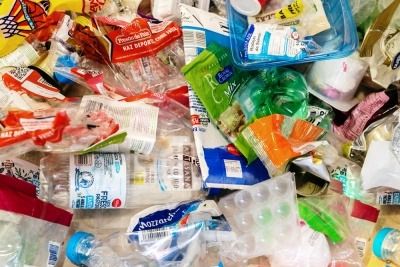
Amongst other goals, the FDF wants the UK food and drink industry to become more ‘green and adaptive’, focusing on circular economy, net zero and food waste targets.
Specifically, the document urges the Government to establish a ‘world-beating, producer-led’ Extended Producer Responsibility (EPR) policy to increase plastic recycling and ensure circularity in packaging. Further, EPR fees should be ‘ring-fence[d]... to ensure that local authorities use the additional funding to improve the UK’s recycling infrastructure’, the manifesto argues.
The FDF highlights that despite the UK food and drink sector being the nation’s largest manufacturing sector, recent data from the Office for National Statistics shows that investment in the industry fell by a third in 2023 compared to 2019, while investment in manufacturing overall increased in the same period.
The manifesto explains: “Government investment in advanced manufacturing has often been about capital-intensive industries such as car-manufacturing, aerospace, shipbuilding and steel production. But the next government must support innovation in our sector.”
Karen Betts, Chief Executive of the Food and Drink Federation, further stressed the importance of government support: “Our manifesto sets out an exciting vision for the next decade, and we can onlyachieve this in a productive and ambitious partnership with the next government.”
“We want a joined-up approach to food policy across Whitehall, the Devolved Administrations, regulators, the industry and NGOs, to ensure that together we build the resilient, sustainable, innovative and growing food and drink manufacturing sector of tomorrow that the UK needs and deserves.”
The manifesto also calls for a unified UK-wide Deposit Return Scheme (DRS) for drinks containers to enable manufacturers to turn recyclable, food-grade packaging back into new packaging, which they cannot currently do.
Regarding food waste, the manifesto recommends that the Government ensures food waste reporting requirements align with current practices so they are not burdensome for businesses. Authorities should also work with businesses, local communities and charities to redistribute surplus food, the document claims.
According to the FDF, since 2007, the food and drink sector has reduced food waste by over 34 per cent per capita. This is an important step towards meeting the UN’s Sustainable Development Goal of reducing food waste by 50 per cent per capita by 2030.


Get our weekly digest
resource.co article ai

How will the government and DMOs address the challenges of including glass in DRS while ensuring a level playing field across the UK?
There's no easy solution to include glass in the DRS while maintaining a level playing field. Potential approaches include a phased introduction of glass, potentially with higher deposits to reflect its logistical challenges. The government and DMOs could incentivise innovation in glass packaging design and subsidise dedicated return points for glass-handling. Exemptions for smaller businesses unable to handle glass might also be necessary. Any successful solution will likely blend several approaches. It must address the differing priorities of devolved administrations, balance environmental benefits with logistical and cost implications, and be supported by robust consumer education campaigns emphasizing the importance of glass recycling.