

Veolia and automotive supplier Faurecia, a company of the Group FORVIA, have signed a Cooperation and Research Agreement to jointly develop new compounds for automotive interior modules, aiming to achieve an average of 30 per cent of recycled content by 2025.
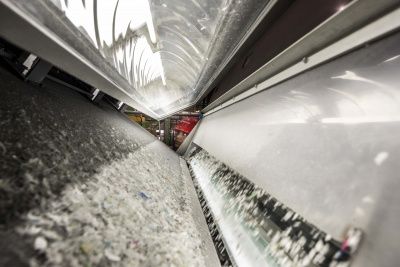
The use of recycled plastics, Veolia says, is one of the “key challenges” for the ecological transformation of the automotive industry as it plays an important role in reducing CO2 emissions and improving the environmental performance of the car.
Today, automotive interiors are mostly made of virgin material – the partnership between Veolia and Faurecia hopes to deploy ‘sustainable interior solutions’, using secondary raw materials in instrument panels, door panels and centre consoles in Europe. Veolia has announced it will start the production of these secondary materials at its existing recycling sites in France, starting from 2023.
Patrick Koller, Chief Executive Officer at Faurecia, said: “As an automotive supplier with an industry-leading portfolio in sustainable materials, we are uniquely positioned to provide innovative solutions to carmakers and their customers.
“By combining our innovation and industrial forces with Veolia, we will accelerate the introduction of breakthrough sustainable materials and their time-to-market, as well as contributing to reducing plastic waste and strengthening the circular economy. This agreement will also strongly contribute to Faurecia’s roadmap towards CO2 neutrality for scope three, based on the principles of using less, using better and using longer.”
Estelle Brachlianoff, Group Chief Operating Officer at Veolia, added: “As demand for recycled plastic increases across all sectors in the context of resource scarcity, there is a need to recycle more plastic waste streams.
“The collaboration with Faurecia allows us to increase our supply of secondary raw materials to the automotive industry through the development of high value-added compounds. These sustainable interior solutions will also be a strong contributor to sustainable mobility, which is at the heart of the ecological transformation.
“Active alongside the entire recycling value chain, Veolia is growing its plastic recycling capacities with continuous investment in the industrialisation and expansion of our existing recycling sites in France and globally, with the objective to reach 1 billion Euros turnover by 2025.”


Get our weekly digest
resource.co article ai

How will the government and DMOs address the challenges of including glass in DRS while ensuring a level playing field across the UK?
There's no easy solution to include glass in the DRS while maintaining a level playing field. Potential approaches include a phased introduction of glass, potentially with higher deposits to reflect its logistical challenges. The government and DMOs could incentivise innovation in glass packaging design and subsidise dedicated return points for glass-handling. Exemptions for smaller businesses unable to handle glass might also be necessary. Any successful solution will likely blend several approaches. It must address the differing priorities of devolved administrations, balance environmental benefits with logistical and cost implications, and be supported by robust consumer education campaigns emphasizing the importance of glass recycling.