

The European Commission has been urged to implement new regulations to curb the growing number of lithium battery incidents in recycling facilities across the continent.
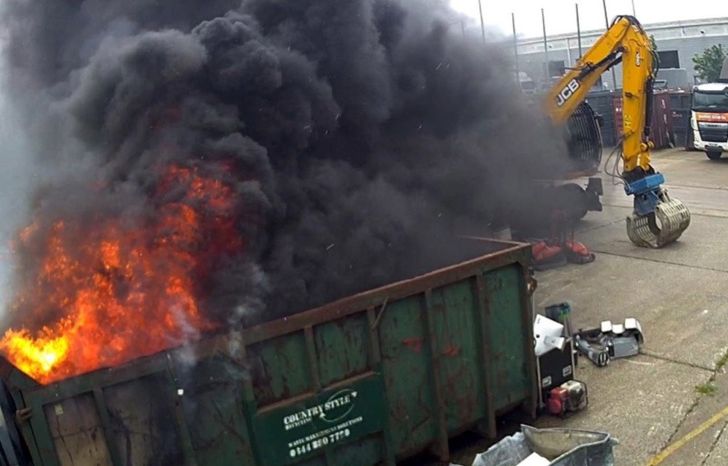
Eight waste management trade bodies have issued a joint statement urging the European Commission to implement stronger regulatory measures to tackle the growing problem of lithium battery fires.
The groups - representing public and private waste operators, extended producer responsibility organisations, and public service unions - warn that misplaced lithium batteries are causing a “significant increase in fire incidents” that threaten worker safety, damage infrastructure, and undermine Europe’s circular economy goals.
In a joint statement they have called for “decisive regulatory action to mitigate these risks and protect Europe's waste management infrastructure and workers."
Battery fires rapidly escalating across Europe
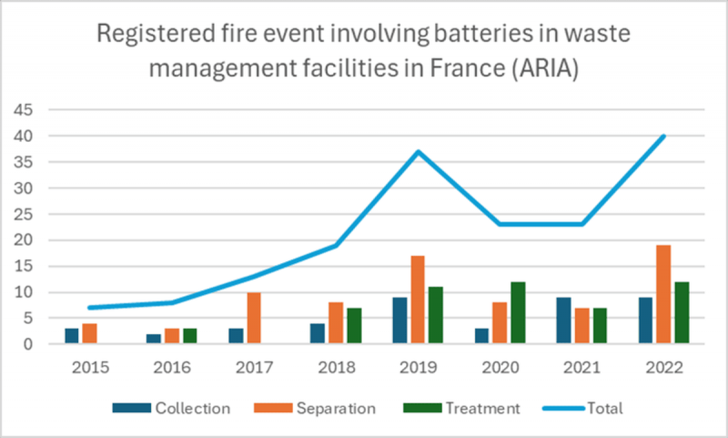
Data provided by the organisations demonstrates a rapid escalation in fire incidents across multiple European countries. In France, the number of fires in waste treatment facilities linked to lithium batteries doubled between 2019 and 2023.
The problem extends across Europe, with Austria experiencing an estimated 180 to 240 battery-caused fires annually in waste facilities. In Germany, up to 30 fire incidents occur daily in waste collection vehicles and treatment facilities, with 80 per cent attributed to lithium batteries.
The organisations note that the problem affects the entire waste management chain, with misplaced batteries ending up in the wrong waste streams causing fires during collection, separation, and treatment processes.
"These misplaced batteries and storage cells, often discarded in residual or recyclable waste bins, are a real challenge for sorting/transit center operators as they are very difficult to find among other wastes," the statement explains, adding that "facilities are not well equipped to manage the risks posed by these misplaced batteries."
This echoes the experience of the UK, which has seen a particularly sharp increase, with over 1,200 battery-related fires reported in 2023 in refuse collection vehicles and at waste sites, marking a 71 per cent increase from 2022.
The Environmental Services Association (ESA), recently called on the UK Government to implement universal kerbside collection for batteries and small waste electricals, following research showing it could prevent hundreds of fires each year.
What causes battery fires?
The joint statement identifies several key causes of the fire incidents. Critically, it notes that "the risk of a battery fire is a matter of unit, not tons: a single mishandled or misplaced battery can cause a fire incident."
Consumer behaviour is a significant factor, with many people unaware of proper battery disposal methods. The problem is compounded by the growing prevalence of embedded batteries in electronic devices, textiles, and items like gift cards, where consumers may not even be aware that a battery is present.
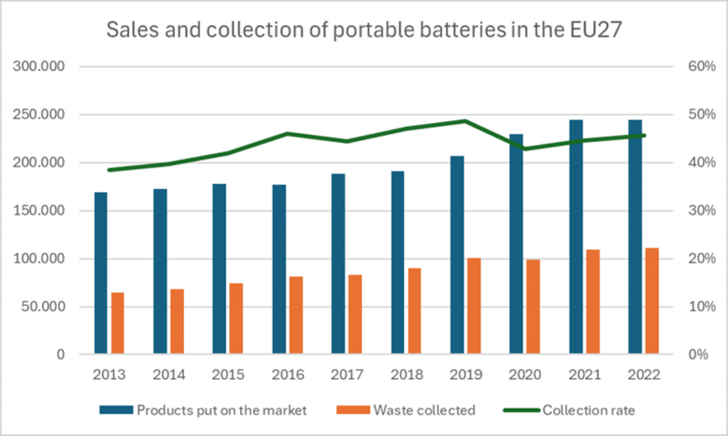
The rapid growth of the lithium battery market is further exacerbating the problem, suggests the statement, with the below graph showing the increase in products placed on the market.
Proposed solutions
The trade bodies have proposed three key actions to address the issue:
- Setting up a Battery Fire Prevention and Recovery Fund through the expanded scope of Extended Producer Responsibility for batteries and electronics devices. The fund would finance fire prevention technologies and improved infrastructure, as well as compensate affected facilities.
- Creation of a Deposit Return System for portable lithium batteries, including those embedded in electronic devices. The financial incentive aims to make citizens aware of the value of waste batteries for the circular economy.
- A ban on disposable products with batteries, such as disposable e-cigarettes, textiles and shoes with unnecessary batteries, and gift cards with batteries.
The statement concludes with an urgent appeal, stating that "without immediate action, waste batteries fire-related incidents will continue to endanger workers, damage infrastructure and disrupt essential waste treatment processes."


Get our weekly digest
resource.co article ai

How will the government and DMOs address the challenges of including glass in DRS while ensuring a level playing field across the UK?
There's no easy solution to include glass in the DRS while maintaining a level playing field. Potential approaches include a phased introduction of glass, potentially with higher deposits to reflect its logistical challenges. The government and DMOs could incentivise innovation in glass packaging design and subsidise dedicated return points for glass-handling. Exemptions for smaller businesses unable to handle glass might also be necessary. Any successful solution will likely blend several approaches. It must address the differing priorities of devolved administrations, balance environmental benefits with logistical and cost implications, and be supported by robust consumer education campaigns emphasizing the importance of glass recycling.