

European Commission's bioeconomy framework establishes investment coordination mechanisms, regulatory simplification and voluntary purchasing commitments to address structural barriers preventing bio-based materials from reaching industrial scale.
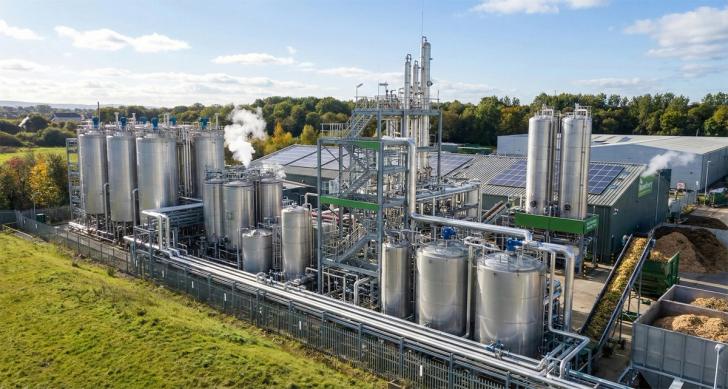
The European Commission has published a bioeconomy strategy identifying a €121.8 billion annual investment gap that prevents bio-based innovations from reaching commercial scale. The framework, published today (27 November), targets a €2.7 trillion sector employing 17.1 million people across agriculture, forestry, manufacturing and biotechnology.
The strategy responds to analysis by the European Investment Bank Group showing that bio-based industries face two "valleys of death" where technologies fail to progress from laboratory demonstration to industrial production. The first occurs between demonstration and initial commercial production, where high capital costs and perceived market risks deter private financing. The second arises after market entry, when companies attempting to reach industrial scale require substantial growth capital and long-term purchase agreements.
The Commission's approach centres around three mechanisms: a Bioeconomy Investment Deployment Group bringing together the Commission, EIB, national promotional banks and private investors; a voluntary Bio-based Europe Alliance targeting €10 billion in corporate purchases by 2030; and Biotech Acts scheduled for adoption in the third quarter of 2026 to streamline regulatory procedures.
Investment mechanisms and regulatory reform
The EIB Group identified investment gaps particularly affecting the scaling of biomanufacturing facilities, advanced bio-based materials production, and circular bioeconomy infrastructure. These sectors require capital-intensive facilities with extended payback periods, creating risk profiles that conventional venture finance typically considers unattractive. Companies must prove both technical viability and market readiness before securing commercial-scale funding, yet demonstration facilities that could provide this proof remain scarce.
The Commission's proposed European Competitiveness Fund under the 2028-2034 Multiannual Financial Framework (MFF) will increase bioeconomy funding, operating alongside a Horizon Europe policy window covering health, biotechnology, agriculture and bioeconomy sectors. The Bioeconomy Investment Deployment Group will bring together the Commission, EIB, national banks and private investors to create pipelines of bankable projects. This coordinated approach aims to share risk more effectively between public and private capital sources, addressing the gap where individual investors consider projects too risky whilst collectively the financing exists.
From 2026, the Commission plans to improve access to finance for bioeconomy start-ups and scale-ups via the Scale-up Europe Fund and European Innovation Council instruments. To do this, the Commission will work with industry to review the Circular Bio-Based Europe Joint Undertaking between 2026 and 2028 to determine collaboration formats for the next MFF period.
The Biotech Acts will introduce fast-track authorisation procedures for microbial solutions in industrial bioeconomy applications and streamlined permitting for biomanufacturing projects. These measures aim to respond to industry concerns that regulatory complexity and different national interpretations create market fragmentation, increasing costs, especially for small and medium-sized enterprises attempting cross-border operations.
A European Bioeconomy Regulators and Innovators' Forum planned for the first quarter of 2026 will coordinate national and EU actions to accelerate authorisations. The forum will bring together the European Food Safety Authority, European Chemicals Agency and European Medicines Agency to reduce fragmentation where new bio-based solutions do not fit existing regulatory categories. The Commission will establish a single online entry point for product submissions, allowing companies to submit information once rather than navigating multiple national systems. Technical support will be available for SMEs developing products based on advanced fermentation, including for food and feed applications where regulatory pathways prove particularly complex.
The Commission will promote regulatory sandboxes to allow bioeconomy innovators to test concepts whilst gathering evidence for regulatory frameworks. Standards development will accelerate, with the Commission strengthening investment in pre-normative activities under the current MFF.
Lead markets and demand creation
The Strategy identifies lead markets where bio-based solutions demonstrate their potential for industrial deployment and capacity to deliver measurable environmental and economic benefit. Priority is given to sectors where existing value chains could support faster uptake and where bio-based materials offer performance advantages or address specific sustainability challenges.
The voluntary Bio-based Europe Alliance, launching in the fourth quarter of 2026 under a Competitiveness Coordination Tool pilot, will bring together companies committed to purchasing bio-based materials, products and applications worth €10 billion by 2030. This mechanism addresses a barrier where companies building capital-intensive production facilities struggle to secure long-term purchase agreements, limiting their ability to attract project finance. By pooling corporate purchasing commitments, the alliance aims to provide the demand certainty needed to justify substantial capital expenditure on first-of-a-kind facilities.
The upcoming revision of Public Procurement Directives will promote bio-based solutions, while the EC plans to support public buyers considering these materials in procurement processes. The Product Environmental Footprint methods review will address biogenic carbon accounting, add biodiversity and microplastics indicators, and refine circularity assessment methods.
Bio-based plastics and polymers use renewable feedstocks including starch, lignin and algae rather than fossil resources, spanning packaging materials, automotive components and industrial products.
The Packaging and Packaging Waste Regulation (PPWR) will recognise bio-based plastics alongside existing recycled content targets. The Strategy says the EC will establish specific criteria and targets for bio-based content in 2027, creating a framework where bio-based materials have defined standards separate from but complementary to recycled content requirements. The exact process for how these parallel frameworks will interact remains to be determined when the criteria are finalised.
The absence of standardised EU-wide definitions currently creates barriers to certification and market scaling. The Commission will assess whether harmonised definitions across member states could reduce compliance complexity and support cross-border trade in bio-based packaging. This addresses concerns that differing national interpretations increase costs particularly for small and medium-sized enterprises.
Natural fibres including cotton, flax, hemp and wool, alongside man-made cellulosic fibres derived from sustainably managed forests, offer traceable supply chains that can support regional textile industries. The Ecodesign for Sustainable Products Regulation will establish performance and durability requirements for textiles between 2027 and 2028, applying standards to bio-based materials that allow direct comparison with synthetic alternatives. These requirements will operate alongside revised Product Environmental Footprint methods incorporating indicators for fibre performance, microfibre release and environmental impact. The Product Environmental Footprint revision responds to research showing that existing Life Cycle Assessment standards can penalise materials designed for biodegradation. A CAP Network focus group will separately examine how to strengthen EU wool processing capacity, addressing the underutilisation of domestic wool production.
Bio-based chemicals derived from plants, wood, algae and agricultural residues can achieve 30-50 per cent lower process emissions depending on production pathway, with microbial and enzymatic processes requiring less energy than conventional fossil-based materials. The EC sees the need to support the scale-up of industrial biotechnology for bio-based chemical production, including whether to introduce bio-based content requirements for certain products placed on the EU market, creating demand signals that could support investment in production facilities.
Bio-based construction products including wood, hemp, straw, mycelium and fibre-based composites can reduce the embodied carbon and energy demand in buildings by approximately 40 per cent. This presents opportunities in a sector accounting for over 35 per cent of EU waste generation and 5-12 per cent of national greenhouse gas emissions, where materials used during construction create environmental impacts before buildings become operational.
The revised Construction Products Regulation addresses a barrier where diverging national approaches for fire safety testing create market fragmentation for bio-based products not yet covered by consistent standards. To address this, the EC aims tol issue standardisation requests in 2026 for doors, windows, structural timber products, wood-based panels and thermal insulation products, ensuring these materials can be assessed using the same test methods applied to conventional alternatives. This standardisation work aims to enable fair comparison between materials whilst respecting that building-level fire safety requirements remain under national competence.
Beyond regulatory measures, the Commission will support market uptake through the Carbon Removal and Carbon Farming Certification Framework, which will develop a methodology in 2026 for certifying long-lasting biogenic carbon storage in buildings. The forthcoming Strategy for Construction in 2026 will address industrialised and modular building methods using bio-based materials.
Bio-based fertilising products including microorganisms, recycled nutrients and bio-based compounds can affect soil fertility whilst reducing dependence on synthetic inputs. Bio-based plant protection products use microorganisms and natural substances for plant health management. These sectors also face regulatory complexity where authorisation timelines can delay market entry.
The EC says it will streamline these processes through multiple approaches. The simplification omnibus for chemicals will reduce assessment procedures for certain microorganisms in fertilising products, whilst the Food and Feed Safety simplification package will propose measures to accelerate market access for bio-pesticides. By July 2026, the Commission will evaluate whether the Fertilising Products Regulation achieves its objectives for promoting organic and recovered materials, potentially proposing targeted measures such as dedicated guidance or streamlined risk assessments for microbial strains.
Biorefineries convert woody biomass, agricultural residues, biowaste and processing side-streams into products ranging from food ingredients and feed to biofuels, biochemicals and biomaterials. Some facilities can produce bio-based battery components as alternatives to critical raw materials. Advanced fermentation represents a parallel technology path, using micro-organisms to convert sugar residues and secondary biomass into high-value compounds.
Both technologies require substantial capital investment where conventional financing proves difficult to secure. The Commission and EIB Group will deploy blended-finance instruments specifically designed to support first-of-a-kind biorefinery facilities, where technical and commercial risk deters private capital. The Commission will facilitate Industrial Symbiosis Valleys that coordinate feedstocks, infrastructure and investment planning at territorial level, enabling facilities to share resources and reduce waste streams. For advanced fermentation businesses attempting to scale, the Commission will improve access to pilot and demonstration infrastructure, addressing the gap between laboratory-scale proof of concept and commercial production volumes.
On biogenic carbon capture, use and storage, the EU ETS review will explore potential pathways to recognise biogenic permanent removals certified under the Carbon Removal and Carbon Farming Certification Framework, with the Innovation Fund continuing to support Bio-CCUS projects.
Biomass supply and circularity
The EU maintains approximately 90 per cent self-sufficiency in biomass supply, drawing primarily on domestic agricultural production, forestry and aquatic resources. Current biomass use comprises animal feed (38 per cent), energy (29 per cent), materials (24 per cent) and food (9 per cent). Over the past decade, biomass use for energy increased 14 per cent as Member States pursued renewable energy targets, whilst material use grew 11 per cent as bio-based industries expanded. These trends indicate growing competition for biomass feedstocks across different applications.
The EU's circularity rate has remained at 11.8 per cent since 2015, suggesting opportunities to increase secondary biomass use and reduce pressure on primary production systems.
The strategy establishes a cascading use hierarchy where food and nutrition security takes priority whilst maintaining ecosystem services. Where feasible, biomass should be directed toward higher-value products and materials that store carbon for extended periods, creating economic value whilst keeping carbon out of the atmosphere. Residual and secondary streams can be used for energy where no decarbonisation alternatives exist or where energy security and affordability requirements justify their use.
This hierarchy will guide policy and investment decisions rather than operating as a rigid mandate. Assessment factors include biomass quality, feedstock type, availability over time, alternative supply pathways, sustainability and environmental impacts, circularity considerations, infrastructure and processing capacity, and local context. The Commission will improve transparency of biomass flows under existing reporting mechanisms, providing Member States and market actors with data to guide future decisions.
In addition, the Commission will design the Energy Union package for the decade ahead in 2026, incorporating experience from implementing the Renewable Energy Directive including sustainability and greenhouse gas emissions saving criteria. By 2027, the strategy says the EC will publish a report on the impact of Member States' support schemes for biomass, including effects on biodiversity, climate, environment and possible market distortions.
The Circular Economy Act will support bio-waste collection and valorisation, addressing the underutilisation of organic waste streams. A tripartite agreement scheduled for 2026 will connect biogas and biomethane production from bio-waste and residues with the use of digestate as bio-based fertilising products, creating closed loops where waste becomes feedstock. The Commission will work toward minimum recycling and reuse targets for phosphorus recovered from wastewater and sludge, reducing dependence on mined phosphate rock.
For products containing biological resources, the Ecodesign for Sustainable Products Regulation will set requirements increasing longevity, reusability and recyclability for textiles and furniture. This operates alongside the RENURE Delegated Act, which enables the use of Recovered Nitrogen from Manure under defined conditions, supporting nutrient circularity in agricultural systems.
Industry responses diverge on strategy priorities
Environmental organisations have raised concerns about the strategy's approach to resource consumption and ecosystem protection. The European Environmental Bureau states the framework "lacks the ambition needed to align Europe's resource use with the ecological boundaries of our planet".
"Instead of setting a strategy that confronts Europe's excessive demand for resources, the Commission clings to the illusion that we can simply replace our current consumption with bio-based inputs, overlooking the serious and immediate harm this will inflict on people and nature," said Eva Bille, Head of Circular Economy at the EEB.
The Brussels-based NGO argues the strategy fails to prioritise material uses of biomass over energy applications or phase out subsidies for bioenergy. The EEB notes that EU animal farming depends on imported feed for more than 70 per cent of production, raising questions about the strategy's claim of biomass self-sufficiency.
Zero Waste Europe welcomed the strategy's emphasis on material production over bioenergy but called for stronger safeguards. "The EU Bioeconomy Strategy sets ambitious goals, but achieving a circular bioeconomy requires careful design within planetary boundaries. For example, promoting bio-based packaging without tackling environmental pressures from intensive forestry and agriculture is a no-go," said Aline Maigret, Head of Policy at Zero Waste Europe.
The organisation identified six priorities including rules on chemical safety for bio-based materials, protection of recycled content targets in packaging, and measures to ensure bio-based products do not replicate the environmental impacts of fossil-based alternatives. Zero Waste Europe states that natural origin does not guarantee non-toxicity, requiring stronger product regulations.
The waste management sector expressed support for the strategy's approach to residual biomass streams. ESWET, representing waste-to-energy technology suppliers, stated the framework "rightly highlights the relevance of biomass-based energy for energy security, particularly when derived from residual streams".
"Waste-to-Energy ensures that every unavoidable biogenic waste fraction serves a purpose. By treating non-recyclable waste in a safe and responsible way, WtE plants support Europe's energy, environmental and climate ambitions whilst contributing to a more circular and resilient bioeconomy," said Patrick Clerens, ESWET Secretary General.
ESWET highlighted the potential for bioenergy with carbon capture and storage at waste treatment facilities to generate verifiable biogenic carbon removals, supporting the Industrial Carbon Management Strategy objectives.
International dimension and UK comparison
The strategy positions the bioeconomy within broader efforts to reduce dependence on fossil-based materials and imported raw materials, addressing supply chain vulnerabilities exposed during recent geopolitical disruptions.
Global Gateway investments will connect financing with knowledge exchange and innovation cooperation, particularly in Africa where the East African Community adopted a Circular Economy Action Plan and Regional Bioeconomy Strategy. This approach aims to build local value addition and sustainable supply systems in partner countries rather than creating extraction relationships. The Commission launched a Group of Friends of the Bioeconomy with Brazil through the UN Food and Agriculture Organisation on 17 October 2025, establishing a forum for international cooperation on bioeconomy development.
For regions neighbouring the EU, the Commission plans a research and innovation initiative covering BIOEAST countries, Moldova, Ukraine and the Western Balkans. This will mobilise capital and strengthen industrial ecosystems beyond EU borders whilst maintaining environmental and social safeguards, creating regional bioeconomy hubs that can support both Member States and accession countries.
The UK bioeconomy contributes £220 billion annually and supports over 5 million jobs, according to research by the Bio-based and Biodegradable Industries Association. Its research highlights the potential for the UK to generate £204 billion in annual revenue from transitioning to bio-based and biodegradable solutions, though policy fragmentation creates barriers to realising this potential.
With mutliple government departments involved in bioeconomy regulation, conflicting priorities have emerged. The Department for Environment, Food and Rural Affairs emphasises ecological boundaries and environmental protection. The Department for Science, Innovation and Technology focuses on biotechnology and scientific innovation. The Department for Energy Security and Net Zero approaches the sector through biomass use for energy and manufacturing. These divergent perspectives create contradictory policies that contrast with the EU strategy's coordinated framework. UK government R\&D investment reached £450 million over five years alongside £517 million in private investment, yet regulatory complexity limits how effectively this funding translates to commercial deployment.
Regulatory assessment standards create additional barriers. BB-REG-NET research identified systematic bias in Life Cycle Assessment standards that penalise bio-based materials designed for composting, biodegradation and carbon sequestration. When identical data was sent to four LCA specialists, results varied sufficiently to undermine comparative assessments. The European standard EN 18027:2025, published in April 2025, provides methodology designed to eliminate bias when comparing fossil and bio-based materials, addressing concerns that existing frameworks systematically favour incumbent fossil-based industries.
The EC will report on strategy implementation by 2028, assessing progress across financing mechanisms, regulatory simplification and market development measures. Key regulatory milestones include Biotech Acts and standardisation requests in 2026, Ecodesign for Sustainable Products Regulation delegated acts and Packaging and Packaging Waste Regulation criteria in 2027, and the Renewable Energy Directive impact report examining Member States' biomass support schemes in 2027.
Member States are encouraged to define national bioeconomy strategic profiles reflecting their biomass availability, industrial capacity and regional strengths. This could include positioning as primary biomass producers, high-value processors, blue bioeconomy frontrunners or bio-based innovation hubs. These profiles should integrate into National and Regional Partnership Plans and National Energy and Climate Plans, ensuring coherence between national priorities and EU-level frameworks.


Get our weekly digest
resource.co article ai

How will the government and DMOs address the challenges of including glass in DRS while ensuring a level playing field across the UK?
There's no easy solution to include glass in the DRS while maintaining a level playing field. Potential approaches include a phased introduction of glass, potentially with higher deposits to reflect its logistical challenges. The government and DMOs could incentivise innovation in glass packaging design and subsidise dedicated return points for glass-handling. Exemptions for smaller businesses unable to handle glass might also be necessary. Any successful solution will likely blend several approaches. It must address the differing priorities of devolved administrations, balance environmental benefits with logistical and cost implications, and be supported by robust consumer education campaigns emphasizing the importance of glass recycling.