

Aluminium beverage can recycling volumes and rates both increased across Europe in 2023, with deposit return schemes driving gains in several member states.
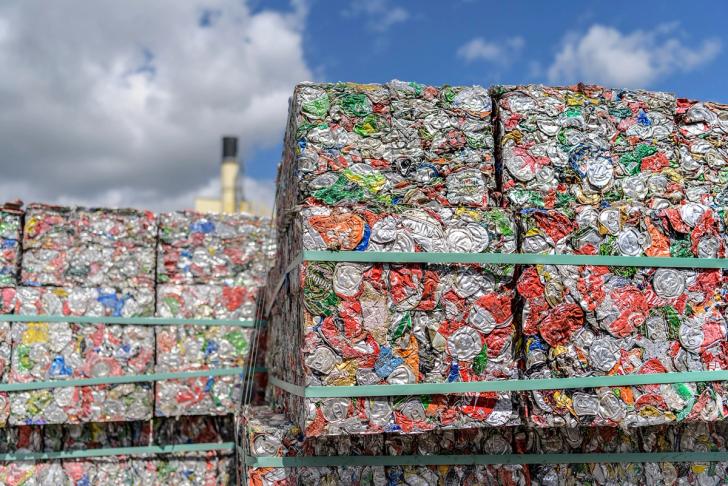
The recycling rate for aluminium beverage cans across the European Union, United Kingdom, Switzerland, Norway and Iceland reached a record 76.3 per cent in 2023, according to data from Metal Packaging Europe (MPE), the trade body for Europe's rigid metal packaging industry, and European Aluminium (EA), which represents the aluminium sector across 30 European countries.
This level represents a greenhouse gas saving of 5.7 million tonnes of CO₂ equivalent, which is equivalent to the annual emissions of a European city of more than half a million inhabitants.
DRS linked to increases
The report links part of the increase to the expansion of deposit return schemes (DRS) across Europe. Malta introduced a DRS in 2023, and its aluminium beverage can recycling rate rose from 50 to 80 per cent in the same year. Latvia and the Slovak Republic, which both implemented DRS in 2022, reported double-digit year-on-year growth in 2023. Latvia's rate went from 60 to 74 per cent, while the Slovak Republic's rose from 58 to 91 per cent.
By 2023, 12 EU member states had implemented deposit return schemes for aluminium beverage cans. National recycling rates varied widely, from 26 per cent in the Czech Republic to 99 per cent in Finland and Germany.
The data comes as the EU's Packaging and Packaging Waste Regulation (PPWR), which entered into force last February, approaches introduction in August this year. The regulation requires member states to establish DRS for single-use metal beverage containers by 2029 or demonstrate they can achieve a 90 per cent separate collection rate without one.
"Year on year the evidence builds that well designed deposit return schemes offer consumers the additional incentive to return high value aluminium beverage cans for high quality recycling, at the same time creating the opportunity for closed product loop, circular economy solutions within Europe," comments Andy Doran, Director of the Packaging Group at European Aluminium. "Full member state implementation is still needed of the Packaging and Packaging Waste Regulation national requirements for DRS, so that all EU citizens can now experience this simple and effective collection solution."
Domestic investment is growing. In the UK, Novelis is expanding its Latchford plant near Warrington following a £69 million investment announced in 2024, aiming to more than double its beverage can recycling capacity to 85,000 tonnes per year by the end of this year. The expansion is timed to align with the UK's proposed DRS, currently scheduled to launch in October 2027.
Separately, UK aluminium packaging recycling volumes increased three per cent year on year in the second quarter of 2024, with 84,222 tonnes collected in the first half of that year, according to Alupro, the aluminium packaging recycling organisation.
Krassimira Kazashka, CEO of Metal Packaging Europe, said the industry is on a long-term path towards full circularity. "Aluminium is a permanent material and a circular resource whose inherent properties do not change, regardless of the number of times it goes through a recycling process," she said. "This growing momentum demonstrates that the pathway towards fully circular, can-to-can recycling for aluminium beverage cans is taking shape across Europe."
Both organisations have set a target of 100 per cent circularity for aluminium beverage cans by 2050. Globally, the International Aluminium Institute reported a 75 per cent recycling rate for aluminium beverage cans in 2023.


Get our weekly digest
resource.co article ai

How will the government and DMOs address the challenges of including glass in DRS while ensuring a level playing field across the UK?
There's no easy solution to include glass in the DRS while maintaining a level playing field. Potential approaches include a phased introduction of glass, potentially with higher deposits to reflect its logistical challenges. The government and DMOs could incentivise innovation in glass packaging design and subsidise dedicated return points for glass-handling. Exemptions for smaller businesses unable to handle glass might also be necessary. Any successful solution will likely blend several approaches. It must address the differing priorities of devolved administrations, balance environmental benefits with logistical and cost implications, and be supported by robust consumer education campaigns emphasizing the importance of glass recycling.