

Kyungpook National University researchers discover new biocatalyst that can break down PET under industrial conditions as part of a study of 2,000 enzymes.
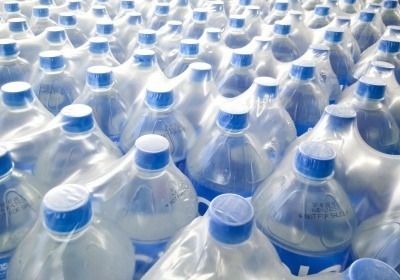
Research from Kyungpook National University in South Korea has discovered a new biocatalyst that can break down polyethylene terephthalate (PET) plastics into their base materials.
The developed enzyme, called Kubu-PM12, was successfully engineered during a study of approximately 2,000 enzymes that were being screened for their potential to break down PET.
The team, which was led by Kyung-Jin Kim, Professor of Life Science and Biotechnology and Head of KNU Institute for Microorganisms, came up with a profiling method to determine which enzymes could degrade PET plastics. The study, which was published in Science on 3 January 2025, used various techniques, from landscaping of genetic sequences to screening and engineering high-fitness enzymes.
Commenting on the properties of the enzyme, Professor Kim said: “We were particularly excited to observe that Kubu-PM12 thrives under industrial conditions. Its ability to handle high PET loads and withstand elevated temperatures, coupled with its impressive activity at lower temperatures, is highly advantageous. This makes it a promising candidate for real-world applications.”
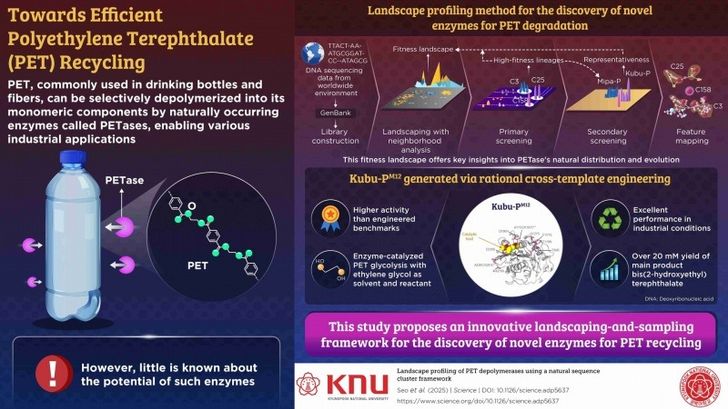
PET stands apart from other polymers in the waste stream due to its ability to be enzymatically broken down to its constituent monomers by PETases. Given its dominance in the packaging and textile sectors, this route to decomposition offers an opportunity for recovery that isn't available with other plastics.
A number of PETases have been found in nature, including from bacteria and leaf-compost cutinase, which have been modified for industrial use. Ensuring that this process can occur under mild conditions and produce high-purity monomers has been of critical importance to plastic recycling.
Professor Kim added: “The novel enzymes discovered through this method will enable the continuous recycling process of PET at lower temperatures and higher productivity.
“As biocatalytic recycling becomes industrially viable, it will be possible to offset the growing demand for virgin PET from crude oil through fully closed PET recycling.”
Enzyme technology has also been used in the textiles industry to break down synthetic fibres. Companies such as CARBIOS and Samsara Eco have begun using enzymes to address the problem of textile waste.


Get our weekly digest
resource.co article ai

How will the government and DMOs address the challenges of including glass in DRS while ensuring a level playing field across the UK?
There's no easy solution to include glass in the DRS while maintaining a level playing field. Potential approaches include a phased introduction of glass, potentially with higher deposits to reflect its logistical challenges. The government and DMOs could incentivise innovation in glass packaging design and subsidise dedicated return points for glass-handling. Exemptions for smaller businesses unable to handle glass might also be necessary. Any successful solution will likely blend several approaches. It must address the differing priorities of devolved administrations, balance environmental benefits with logistical and cost implications, and be supported by robust consumer education campaigns emphasizing the importance of glass recycling.