

Scrap metal recycler European Metal Recycling (EMR) has announced the launch of a new giant material handler in Alexandra Dock, Liverpool.
The new handler, which cost £2.3 million, is capable of grabbing up to 15 tonnes of bulk scrap at once.
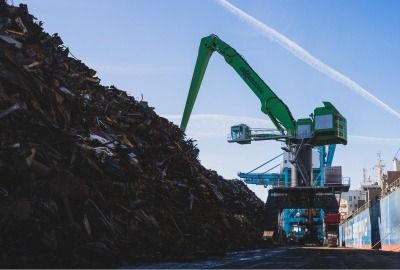
Manufactured by German company Sennebogen, the new Sennebogen 895e Hybrid weighs around 400 tonnes, 170 tonnes more than each of the three Sennebogen 880 Hybrid material handlers EMR operates in Amsterdam.
EMR expects the new material handler to increase the energy efficiency of the recycling process by up to 55 per cent, thanks to its higher loading rates and the fact that energy is recovered on the down movement of the grab.
The material handler uses electric drive motors, linked to a diesel generator.
However, once the Alexandra Dock site can be cabled with a permanent power supply to the quaysides, the material handler can switch to renewable power and operate without fossil fuels.
This will fit into EMR’s ‘Our Decade of Action’ sustainability strategy, which will see all of its sites become net-zero by 2040.
EMR will spend the next few months conducting performance analyses as well as time and motion studies of the new material handler before potentially rolling it out across the UK, EU and US.
Scott Bamborough, Area General Manager, said: “Liverpool Alexandra Docks is one of EMR’s flagship UK sites and I am incredibly proud that we are the first site to trial this new innovative and sustainable technology.
:As EMR looks to achieve net-zero by 2040 as part of ‘Our Decade of Action’ strategy, this investment will help our site transition to using 100 percent green energy over its lifespan.
“The hard work now begins as we understand how this new crane will operate in practice and our team evaluates how its hybrid capabilities and energy efficiency can help reduce the cost-per-tonne handled for scrap in our yard."


Get our weekly digest
resource.co article ai

How will the government and DMOs address the challenges of including glass in DRS while ensuring a level playing field across the UK?
There's no easy solution to include glass in the DRS while maintaining a level playing field. Potential approaches include a phased introduction of glass, potentially with higher deposits to reflect its logistical challenges. The government and DMOs could incentivise innovation in glass packaging design and subsidise dedicated return points for glass-handling. Exemptions for smaller businesses unable to handle glass might also be necessary. Any successful solution will likely blend several approaches. It must address the differing priorities of devolved administrations, balance environmental benefits with logistical and cost implications, and be supported by robust consumer education campaigns emphasizing the importance of glass recycling.