

Seven north London primary schools engaged in NLWA's 'In The Know' recycling programme achieve 45 per cent waste reduction
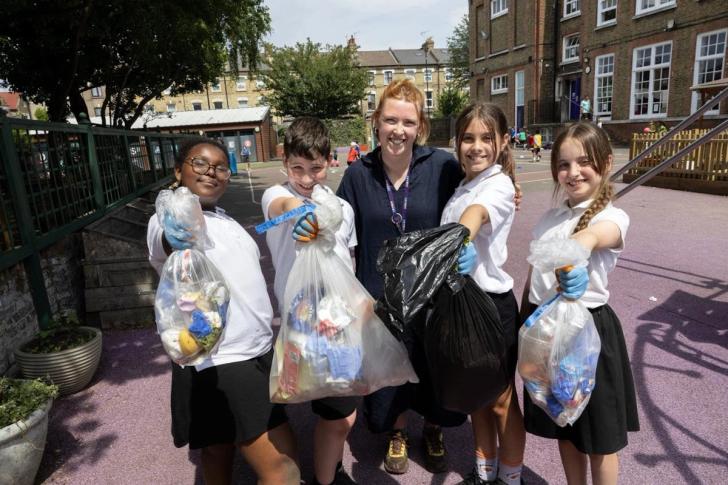
North London Waste Authority's (NLWA) 'In the Know' education programme has delivered substantial waste reduction, with seven participating primary schools almost halving their waste output across one academic year.
The programme, which engaged nearly 3,000 pupils, staff, governors and parents, resulted in waste savings at a rate equivalent to 124 tonnes annually.
Students led much of the transformation themselves, devising and implementing classroom recycling campaigns. They were directed by teachers who received tailored resources to embed sustainability into everyday learning. NLWA officers conducted infrastructure assessments, providing guidance to optimise recycling participation and resolve operational challenges.
Schools with existing food waste recycling services reduced their food waste by 50 per cent. This outcome addresses a significant challenge for the sector, as schools alone generate approximately 80,000 tonnes of food waste per year, costing around £250 million.
Sophie Ooi, a teacher from Parkside Primary School in Waltham Forest, said: "The In the Know project has really helped us begin to become more sustainable as a school. Both children and staff have become more conscious of waste and the powerful impact that small changes can have on our environment."
NLWA Chair, Cllr Clyde Loakes MBE, emphasised the broader significance of the scheme: "The results of In the Know, after its first year of running, are inspirational. It's clear that entire school communities have got behind the waste reduction message, understanding its importance in tackling the climate emergency."
Preparing for new recycling legislation
This achievement comes as the education sector faces new legislative pressures, with primary schools generating around 45kg of waste per pupil each academic year.
From March, ‘Simpler Recycling’ legislation has required mandatory collections for dry recyclables and separate food waste from all educational establishments in England.
Schools must now arrange separate collections of glass, paper, cardboard, metals, plastics and food waste, with plastic film packaging and bags to be included by March 2027.
The education sector produces nearly 700,000 tonnes of waste annually, with food, paper and cards comprising 70 per cent of school waste.
Paper waste presents a particular challenge, with each school using up to one million sheets of paper per year and spending £60,000 on photocopying.
NLWA plans to expand the programme to additional schools from September 2025, incorporating professional development for teachers and a partnership with Chefs in Schools to integrate food waste education and sustainable cooking practices.
Cllr Loakes concluded: "While it can be tempting to look to recycling rates to measure impact, it is through reuse, repair and avoiding over-consumption that we can really make a difference. NLWA has been proudly pushing this agenda for well over ten years, and we will continue to do so."
Schools interested in participating can register at https://www.nlwa.gov.uk/InTheKnow.


Get our weekly digest
resource.co article ai

How will the government and DMOs address the challenges of including glass in DRS while ensuring a level playing field across the UK?
There's no easy solution to include glass in the DRS while maintaining a level playing field. Potential approaches include a phased introduction of glass, potentially with higher deposits to reflect its logistical challenges. The government and DMOs could incentivise innovation in glass packaging design and subsidise dedicated return points for glass-handling. Exemptions for smaller businesses unable to handle glass might also be necessary. Any successful solution will likely blend several approaches. It must address the differing priorities of devolved administrations, balance environmental benefits with logistical and cost implications, and be supported by robust consumer education campaigns emphasizing the importance of glass recycling.