

The second round of the Exploration Fund is being launched today (8 June) by UK producer compliance scheme Ecosurety.
Ecosurety launched the Exploration Fund, the first round of which launched in 2019, to help support the resources and waste sector in its transition to a circular economy.
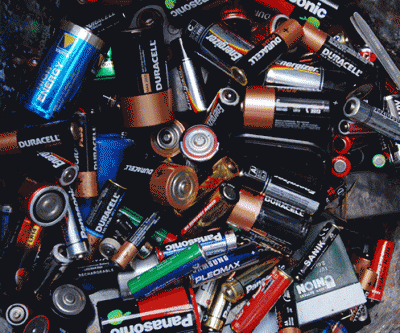
The second round of funding is available to projects run by academic institutions, businesses, charities, nonprofits and the public sector that aim to tackle the negative impacts of packaging, batteries or electronic waste on the environment.
The first round of funding worth £500,000 was divided up between four UK-based innovation and research projects.
This second round will offer a maximum of £150,000 per project.
Will Ghali, CEO of Ecosurety, commented: “Over the last few years, we’ve witnessed a fantastic increase in awareness of the negative impacts that packaging, batteries and waste electronics have on the environment.
“However, financial support for projects seeking to innovate, rethink or redesign existing systems for the better is still in woefully short supply. Without funding, solutions simply can’t flourish.
“The launch of our second Ecosurety Exploration Fund will act as a vital springboard for original research and innovation projects tackling some of the most pressing environmental issues caused by packaging, batteries and electronic waste.
“As we learnt in our first Exploration Fund, it is sometimes the simplest ideas that offer the biggest potential impact. Ecosurety encourages all eligible organisations to apply to the 2021 Exploration Fund. We very much look forward to reviewing the entries.”
Applications for the second round of the Ecosurety Exploration Fund are being accepted until 24 August 2021 through the Ecosurety website.


Get our weekly digest
resource.co article ai

How will the government and DMOs address the challenges of including glass in DRS while ensuring a level playing field across the UK?
There's no easy solution to include glass in the DRS while maintaining a level playing field. Potential approaches include a phased introduction of glass, potentially with higher deposits to reflect its logistical challenges. The government and DMOs could incentivise innovation in glass packaging design and subsidise dedicated return points for glass-handling. Exemptions for smaller businesses unable to handle glass might also be necessary. Any successful solution will likely blend several approaches. It must address the differing priorities of devolved administrations, balance environmental benefits with logistical and cost implications, and be supported by robust consumer education campaigns emphasizing the importance of glass recycling.