

New plant to process food waste near Ashington, Newcastle, will recycle existing to minimise waste during development.
The development of a £35 million anaerobic digestion facility, which will process food waste into renewable energy, is underway near Ashington in Newcastle. The project, led by SUEZ recycling and recovery UK, involves the conversion of a former landfill, composting, and wood shredding site on Ellington Road.
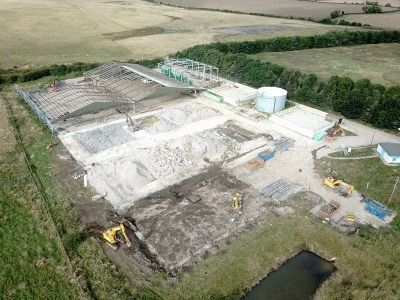
Approved in July, the facility aims to transform local food waste into renewable energy capable of powering approximately 5,500 homes and producing biofertilizer. A key aspect of this project is the waste minimisation approach taken during the construction phase, with particular focus on reusing material from existing structures at the site.
Thorntons, a contract services provider based in Ashington, has been tasked with dismantling and reassembling the old buildings from the site. Will Higson, Contracts Manager for Thorntons, described the process: “We opted for careful deconstruction and proposed rebuilding elsewhere rather than demolition as when we assessed the condition of buildings on site, we were confident we could find new homes for them.
“The dismantling work has been more intensive as much of it had to be done by hand and has obviously been more time-consuming than demolition. But, by doing it this way, we have avoided sending tonnes of steel to the “scrap man” by ensuring the buildings can be reused/repurposed.”
So far, the recovery efforts have seen various uses for the old buildings. One has been converted into a cattle shed on a local farm, another retained by Thorntons, and two more have been acquired by local farmers.
According to Suez the project has saved over 10,500 tonnes of concrete from the old structures, which will be repurposed for the new plant's foundations. Additionally, approximately 300 tonnes of steel have been reclaimed for use in construction.
Steve Patterson, Regional Director in the North for SUEZ, commented on the initiative: "We are delighted with the solution that Thorntons have provided for us. Whilst we work very hard to promote the need to recycle, reusing materials is even more sustainable from an environmental point of view, and we would always look to work with partners who can match our ambitions to consistently reduce our impact on the planet."
The new anaerobic digestion facility is expected to be operational by 2025, coming online to meet increased demand as separate food waste collection from households becomes mandatory from 2026. The facility will produce both electricity and gas to the local distribution network.


Get our weekly digest
resource.co article ai

How will the government and DMOs address the challenges of including glass in DRS while ensuring a level playing field across the UK?
There's no easy solution to include glass in the DRS while maintaining a level playing field. Potential approaches include a phased introduction of glass, potentially with higher deposits to reflect its logistical challenges. The government and DMOs could incentivise innovation in glass packaging design and subsidise dedicated return points for glass-handling. Exemptions for smaller businesses unable to handle glass might also be necessary. Any successful solution will likely blend several approaches. It must address the differing priorities of devolved administrations, balance environmental benefits with logistical and cost implications, and be supported by robust consumer education campaigns emphasizing the importance of glass recycling.