

New legislation for England and Northern Ireland will require consumers to pay deposits on plastic and metal drinks containers from October 2027.
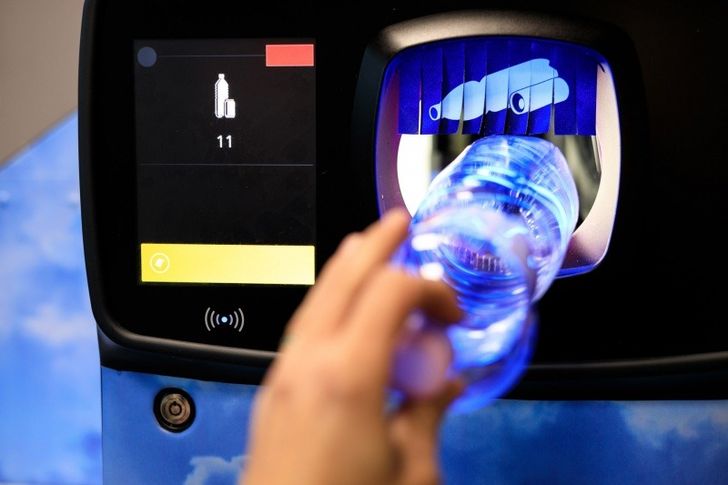
Parliament has approved wide-ranging legislation to establish a deposit return scheme (DRS) for drinks containers in England and Northern Ireland following a debate yesterday (21 January 2025).
The scheme, set to launch in October 2027, will require consumers to pay a deposit when purchasing drinks in plastic and metal containers, which can be reclaimed when the empty containers are returned through designated collection points.
Speaking in Parliament, Environment Minister Mary Creagh emphasised the urgency of addressing waste: "Keep Britain Tidy estimates that two waste streams, plastic bottles and drinks cans, make up 55 per cent of all litter across the UK. When it comes to addressing waste, this Government will not waste time."
Creagh outlined how the scheme would impact communities and the environment, saying it will "end the epidemic of litter on our streets and restore pride in our communities. It will improve the countryside, preserve our wildlife and protect our beaches and marine environment."
The scheme is aiming to collect 70 per cent of containers by 2028, increasing to 90 per cent by 2030. By the third year, this must include at least 85 per cent of containers made from PET plastic and 85 per cent from other in-scope materials, such as aluminium and steel.
A spokesperson from Biffa Waste Management highlighted the next steps towards DRS implementation: "We are pleased to see the House of Commons approval today of the regulations to establish a Deposit Return Scheme in England and Northern Ireland, a key step forward in the UK's journey towards a circular economy. Cross Government and industry collaboration will be vital as the focus now turns to implementation, supported by public awareness and education campaigns to drive participation and compliance."
Retailer obligations
Under the new legislation, drinks producers and importers will be required to register with a central deposit management organisation (DMO), which will be appointed in April 2025. The DMO will be responsible for setting deposit levels, prescribing labelling requirements, and managing interactions with other schemes.
The scheme places responsibility on retailers to charge deposits, provide return points, and display scheme information to consumers. However, recognising the potential burden on small businesses, the legislation includes an exemption for shops under 100 square metres in urban areas.
David Gudgeon, Head of External Affairs at Reconomy brand, Reconomy Connect, commented on the benefits of this scheme for businesses: “For grocery retailers, hospitality and other businesses that will be obligated to act as a return point for the scheme, it has the potential to drive footfall to their sites.”
Opposition and concerns
Shadow Minister Andrew Griffith warned about the cost of the scheme for businesses, citing government impact assessments showing "a £288 million net cost imposed on business every year.”
Local authority funding emerged as a key issue, with Conservative MP David Simmonds suggesting the scheme could "risk pushing up the council tax needed to subsidise recycling services for all" by removing valuable recyclable materials from doorstep recycling.
Concern about the position of glass also arose, following Creagh’s announcement that the material would be excluded from the scheme in October 2024.
Green MP Carla Denyer expressed dissatisfaction with the decision, stating: “I am disappointed to see a deposit return scheme that does not include glass. Implementing a deposit return scheme that includes glass is really not unprecedented; it is absolutely possible.”
Deposit return scheme in Scotland, Wales, and Northern Ireland
While Scotland plans to implement a compatible scheme simultaneously, Wales has withdrawn to pursue its own DRS, citing concerns that the proposed system could undermine the nation’s world-leading recycling performance.
The legislation allows for cooperation with other schemes, including the Republic of Ireland's existing DRS, though specific arrangements for cross-border coordination remain to be determined.
Implementation challenges in Northern Ireland drew scrutiny from DUP MP Jim Shannon, who criticised the lack of consultation with the Northern Ireland Assembly, stating: "our colleagues who are Members of the Legislative Assembly do not know about the scheme either, so we have a very vague system before us."
The legislation passed with 352 votes in favour and 75 against. Concluding the debate, Creagh characterised the decision as "not the end of litter, but the beginning of the end of litter in this country."


Get our weekly digest
resource.co article ai

How will the government and DMOs address the challenges of including glass in DRS while ensuring a level playing field across the UK?
There's no easy solution to include glass in the DRS while maintaining a level playing field. Potential approaches include a phased introduction of glass, potentially with higher deposits to reflect its logistical challenges. The government and DMOs could incentivise innovation in glass packaging design and subsidise dedicated return points for glass-handling. Exemptions for smaller businesses unable to handle glass might also be necessary. Any successful solution will likely blend several approaches. It must address the differing priorities of devolved administrations, balance environmental benefits with logistical and cost implications, and be supported by robust consumer education campaigns emphasizing the importance of glass recycling.