

The Department for the Environment, Farming, and Rural Affairs (Defra) has today (21 January) unveiled plans to ‘crack down’ on waste crime and support people and businesses to manage waste correctly.
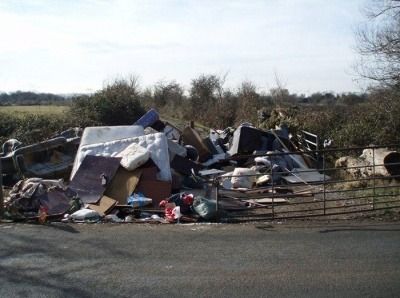
Environment Minister Jo Churchill outlined proposals in two new consultations, which would see an increase in background checks for firms who move or trade waste, and regulators across the UK better able to take action against rogue operators.
Waste carrier, broker, and dealer system
The waste carrier, broker, and dealer (CBD) system reform consultation is seeking views from the waste industry and other stakeholders on the move from a registration to a permit-based system, which would mean those transporting or making decisions about waste ‘must demonstrate they are competent to make those decisions’.
As these proposals extend to all operators in the waste transportation industry, Defra says, this consultation will also be of interest to all businesses across England that hold an environmental permit for waste operations or who operate under a registered exemption from the permitting system.
Defra says that waste is often handled by ‘intermediaries who conceal their identities to commit serious and organised waste crime’, maintaining that reforming the system according to its proposals would ensure waste is managed by authorised persons only and in a safe manner, making it harder for unregistered operators to find work in the sector.
Digital waste tracking
The implementation of mandatory digital waste tracking consultation seeks views from ‘all interested parties’ on the practical aspects of introducing such a service, to ensure that ‘what we deliver will meet the needs of all those who will either be required to enter information onto it or who will draw information from it, including; businesses across all sectors, government, regulators, academia and the general public’.
Defra’s proposals would see the operationalisation of powers in the Environment Act, requiring that information is recorded from the point waste is produced to the stage it is disposed of, recycled and reused. This, the department says, will enable regulators to better detect illegal activity and tackle waste crime, including fly-tipping, illegal waste sites, and illegal waste exports.
Environment Minister Jo Churchill said: “Waste criminals show complete disregard for our communities, the environment and the taxpayer.
“We have disrupted these rogue operators by giving extra powers to the Environment Agency, with nearly 1,000 illegal waste sites now being shut down each year, while our new Joint Unit for Waste Crime is successfully disrupting criminal gangs, for example, prosecuting fly-tippers illegally dumping hundreds of tonnes of hazardous waste across the countryside.
“But there is more to do. Reforming the licensing system will clamp down on abuse of the system and new mandatory digital waste tracking will greatly improve transparency in the sector and make it easier for householders to check that their waste is being disposed of legally.
“Together, these reforms will stop criminals abusing the waste system and make it easier to prosecute offenders successfully.”
Sarah Poulter, CEO of the Chartered Institute of Wastes Management (CIWM), added: “For many years, CIWM has worked with the UK waste and resource management sector to highlight the damaging effects of waste crime on local communities, the environment and the industry it represents. As such, we warmly welcome today’s announcement and share the Government’s ambition to crack down on illegal waste activity.
“The launch of these consultations provides a valuable opportunity for the UK waste and resource management sector to influence its future direction and help eradicate practices which have tarnished its reputation and deterred much-needed investment.
“Correctly implemented, these developments will provide assurance for both waste producers and managers that they are dealing with responsible collectors while directly reducing the impact of waste crime on society and the environment. They will also help to support CIWM and its members in delivering more sustainable resource management practices and help us move to a world beyond waste.”
Jacob Hayler, Executive Director at the Environmental Services Association (ESA), also commented: “This could be a pivotal moment in the fight against waste crime, a scourge which severely undermines confidence and investment at a crucial time for our sector. ESA is very supportive of the policy proposals outlined which should help to make life difficult for criminals infiltrating our sector and making a fast buck at the expense of legitimate operators and the environment.”
The scale of waste crime
Last year, research by Material Focus estimated that 1.82 million tonnes of waste was fly-tipped on public land, or taken to illegal waste sites, costing the UK £176 million each year in lost landfill tax.
The report, entitled ‘An Independent Study into Fly-tipping and Unregistered Waste Carriers in England’, examined who was advertising waste collection services online in ten UK areas and compared over 4,700 business names to entries in the CBD system. The research also sought the views of an expert panel of stakeholders from academia, the waste industry, and former Government and regulatory officials.
The report found that the existing CBD regime failed to function effectively and was being misused, estimating that nearly two-thirds (63 per cent) of businesses, 238,741 individuals or organisations in England, were offering to handle waste that appear to be unregistered when advertising their services.
Some appeared to be spending as much as £150,000 per annum on advertising for each trader in multiple locations across England. The researchers estimated that a single typical network of operators could generate a profit from landfill tax evasion of between £5.4 million and £13.2 million each year.
Commenting on the research in 2021, Scott Butler, Executive Director of Material Focus said: “This research has revealed for the first time the scale and type of the unlicensed waste carrier activity and the ways this might be contributing to the extreme number of fly-tipping incidents in the UK.
“The fact that there are high numbers of unregistered carriers in practice is clearly a significant issue which means that waste electricals and other forms of waste aren’t being properly recycled.”


Get our weekly digest
resource.co article ai

How will the government and DMOs address the challenges of including glass in DRS while ensuring a level playing field across the UK?
There's no easy solution to include glass in the DRS while maintaining a level playing field. Potential approaches include a phased introduction of glass, potentially with higher deposits to reflect its logistical challenges. The government and DMOs could incentivise innovation in glass packaging design and subsidise dedicated return points for glass-handling. Exemptions for smaller businesses unable to handle glass might also be necessary. Any successful solution will likely blend several approaches. It must address the differing priorities of devolved administrations, balance environmental benefits with logistical and cost implications, and be supported by robust consumer education campaigns emphasizing the importance of glass recycling.