

Analysis commissioned by the Local Government Association estimates councils will lose income from high-value recyclables once containers are diverted to the scheme, though freed capacity may accommodate Simpler Recycling requirements.
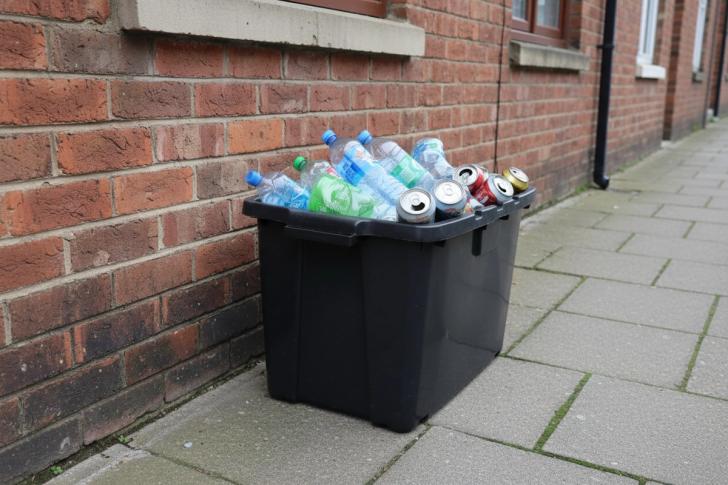
Local authorities in England will lose an estimated £61.4 million per year in net income once the deposit return scheme (DRS) reaches its 90 per cent return rate target, according to analysis by compliance scheme Valpak. The report, commissioned by the Local Government Association, estimates the loss at £242,000 for every 100,000 households, with the financial impact resulting primarily from the diversion of high-value aluminium cans and PET bottles from council waste streams. DRS is scheduled to roll out across the UK in October 2027 and cover single-use PET plastic bottles and aluminium and steel cans between 150ml and three litres. Customers will pay a 20p deposit, refundable when containers are returned.
Materials and revenue impacts
Valpak's modelling suggests the scheme will divert approximately 229,500 tonnes of material annually from council waste streams once the 90 per cent return rate is achieved. This level is the targeted Year 3 performance, with intermediate goals of 70 per cent in Year 1 and 80 per cent in Year 2, though the report suggests these targets may take longer to achieve than anticipated.
Currently, councils receive an estimated £68.2 million in net income from managing these materials (income from recyclate sales minus processing and disposal costs). Of this, aluminium cans contribute £53.9 million, PET bottles £14.4 million, whilst steel cans result in a small net cost of £89,000.
Once DRS captures 90 per cent of these materials, net income would fall to £6.8 million - a reduction of £61.4 million. Although target materials currently make up 3.5 per cent of household dry recycling by weight, once operational and hitting its target, the deposit schemes would remove 3.1 per cent from the council dry recycling collections. This would have a knock on effect of reducing the household recycling rate by 0.7 per cent.
However, financial impacts differ by collection system, driven by variations in material quality and current revenue. Authorities using kerbside sort collections face reductions in net income 25-29 per cent higher than average. These fully segregated systems currently produce higher-quality recyclables and generate greater revenue, making the loss of high-value aluminium and PET more significant.
Councils operating twin-stream collections that separate glass are likely to be the comparatively least affected, with an estimated reduction in revenue 13-16 per cent lower than average (loss of £242k), whilst those with fully commingled collections see reductions approximately 4-5 per cent below average.
Service delivery implications
The reduction in materials could provide capacity in collection vehicles for additional materials mandated under Simpler Recycling requirements, notably cartons, film and foil. Valpak's report states this may enable councils to accommodate new materials "without requiring extra collection rounds."
For a typical urban commingled collection round serving 1,600 households, the DRS would remove approximately 377kg per daily round. For kerbside sort collections serving 850 households, the reduction would be around 200kg per round.
The analysis indicates these reductions are unlikely to enable immediate cuts to round numbers for most authorities, but may help delay the need for additional rounds as household numbers grow.
Irish experience
The report draws on Ireland's experience since launching its DRS in February 2024. Whilst the scheme collected over one billion containers in its first year, achieving a 73 per cent monthly collection rate by August 2024, impacts on litter proved more nuanced.
Surveys by environmental charity An Taisce showed a near-50 per cent reduction in drinks cans and plastic bottles in ground litter. However, overall litter levels remained static in many areas, suggesting resource requirements for litter collection may be unchanged.
At the same time, Irish Railways reported increased costs for new bins designed to prevent scavenging for DRS containers – an issue that has caused additional mess when unwanted items were not placed back in bins.
Wider uncertainties
The report separately models the impact of the inclusion of waste incineration in the Emissions Trading Scheme (ETS) from 2028, which would add an estimated £9.7 million cost for PET bottles currently managed by councils if there was no DRS through burning fossil fuel carbon. Whereas the introduction of DRS will largely eliminate PET bottles from the EfW mix and reduce the total financial hit on councils to £52.7 million.
However, Valpak notes significant questions currently remain around how ETS costs will be allocated and passed to local authorities.
The analysis also acknowledges substantial uncertainties in recyclate pricing. PET bottle values have ranged from £70 to £730 per tonne over the past five years, with a five-year average of £313 used for core modelling.
Valpak warns that removing high-quality food-contact PET to the DRS may suppress prices for remaining council-collected material. The report also identifies data gaps including potential material substitution by manufacturers, consumer behaviour changes, and variations in DRS return rates.
Sensitivity analyses suggest the financial impact could range from £34.1 million to £70.4 million depending on return rates and market conditions.
The modelling assumes no change in consumption patterns following DRS introduction, though the report acknowledges that brands and consumers may switch to non-DRS packaging to avoid the deposit charge.


Get our weekly digest
resource.co article ai

How will the government and DMOs address the challenges of including glass in DRS while ensuring a level playing field across the UK?
There's no easy solution to include glass in the DRS while maintaining a level playing field. Potential approaches include a phased introduction of glass, potentially with higher deposits to reflect its logistical challenges. The government and DMOs could incentivise innovation in glass packaging design and subsidise dedicated return points for glass-handling. Exemptions for smaller businesses unable to handle glass might also be necessary. Any successful solution will likely blend several approaches. It must address the differing priorities of devolved administrations, balance environmental benefits with logistical and cost implications, and be supported by robust consumer education campaigns emphasizing the importance of glass recycling.