

Today (21 July), Cory has urged the Government to better combat the amount of recyclable plastics entering the non-recyclable waste stream, by creating better conditions for plastic processing in the UK.
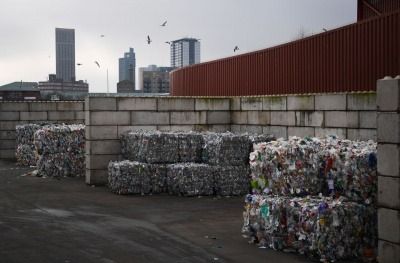
The call is a result of recent findings from an in-depth composition analysis of material the waste management firm receives from the London Borough of Hammersmith and Fulham, Royal Borough of Kensington and Chelsea, London Borough of Lambeth, and London Borough of Wandsworth – those within the Western Riverside Waste Authority (WRWA).
Utilising its most recent survey to understand the recyclable and non-recyclable materials they handle, the findings reveal that recyclable plastics, while making up only 16 per cent of residual waste by weight, create 65 per cent of carbon emissions from the non-recyclable waste stream.
One of the top 10 materials creating the most weight in residual waste streams, according to the company, is soft plastic and packaging film. Only a small amount of these films are recycled, due to complicated collection, sorting, and recycling systems, as well as end markets.
In response to these complications, and a lack of sustainable alternatives to the packaging materials, the Government has set to make kerbside recycling of plastic films widespread, with the cost of this introduction funded by Extended Producer Responsibility (EPR).
A number of UK local authorities have already introduced soft plastic recycling to kerbside collection, including East Dunbartonshire Council and Fife Council, who both commenced the service in March of this year.
Elsewhere, supermarkets such as Tesco and Co-op have launched in-store soft-plastic collection services for consumers to return their food packaging. However, a recent report from Bloomberg reveals challenges in the handling of plastics deposited in Tesco soft plastic collection bins. By placing digital trackers into recycled food packages, the body revealed items were being transported to waste management sites in Turkey and Poland, 700 miles away from the UK supermarket and its depository bins.
Regarding the handling of soft plastics, Cory intends on better promoting this practice to residents in their communities.
Another complicated material entering non-recyclable streams is expanded polystyrene. While this material is being recycled on a small scale, Cory is pushing for the reduction of its use in packaging in order to simplify waste management. They point to the Government’s proposed EPR scheme to do this.
Efforts to increase the recycling of expanded polystyrene have also been taken by local authorities, including the North London Waste Authority (NLWA), who this year have introduced new specialist polystyrene compactors at two of their reuse and recycling centres.
Regarding denser plastics, which again are not yet recyclable on the kerbside, Cory highlights a better system in place. At the Western Riverside facility in Wandsworth and Cringle Dock, residents can deposit these items, such as toys and other household items, which are then sent to a UK plastics re-processor.
Cory’s Head of Sustainability, Helen Murphy, said: “Rampant overconsumption in UK society causes huge volumes of both recyclable waste and non-recyclable waste, exacerbating the climate emergency. As consumers, we can all play our part in adopting more conscientious consumption habits and sorting our waste and recycling responsibly.
“However, we also require systemic change implemented by Government and business to stop the destruction of precious resources, to ensure that more plastic is recycled in the UK, and to make the economy circular. It is time for urgent systemic change to create sustainable supply chains that do not encourage the export of our waste and the offshoring of its environmental consequences to poorer countries.
“The UK Government must step up and provide the incentives and systems for business to help them on their journeys to planet friendly, circular models where waste is designed out, materials are reused, and unethical practices such as inbuilt obsolescence in electrics and white goods are banished.
“Every business must take up the mantle and embrace far less ecologically damaging practices. Whether manufacturing products from, and packaging them in, sustainable and recycled materials, to building carbon neutral supply chains, there is no time left for Government or business to delay.”
Government policies ‘crucial’ to capturing plastics
In March, the Government published its response to its consultation on EPR for packaging, with the scheme’s commencement being pushed back from 2023 until 2024. The document outlined a system that will see manufacturers and businesses taking financial responsibility for the waste their packaging produces.
Initial payments will be introduced based on household packaging waste found in street bins managed by local authorities, before modulated fees based on recyclability would be introduced the following year.
Dougie Sutherland, Cory's CEO, stated: “Until there’s significant systemic change and more of us make changes to greatly reduce our waste, it’s the role of organisations like Cory to manage our huge volumes of waste in the most sustainable, responsible, and pragmatic way possible.
“Businesses must design out waste from the beginning of a product’s concept, use recycled materials in manufacturing and packaging, and make their supply chains carbon neutral. Governments must support business in this purpose, through investment, taxation, and legislation.
“Capturing the plastics is key and UK Government policies that are intended to do this – Consistent Collections, the Deposit Return Scheme, and EPR – will be crucial. We were disappointed to learn that EPR will not include business waste and the introduction of the scheme has been delayed by at least a year. While the timescale was always ambitious, we had hoped that it would have been delivered in accordance with the programme that the Government had originally set out.
“We hope that the Government will take this additional time working with all its stakeholders to deliver a first class EPR packaging scheme that can then be used as a blueprint for other materials – one that adds value, reduces waste, and maximises resource efficiency. Our planet cannot afford for this to be delayed any longer than necessary. We will continue to work with the Government to help deliver a circular economy and thriving natural environment.”


Get our weekly digest
resource.co article ai

How will the government and DMOs address the challenges of including glass in DRS while ensuring a level playing field across the UK?
There's no easy solution to include glass in the DRS while maintaining a level playing field. Potential approaches include a phased introduction of glass, potentially with higher deposits to reflect its logistical challenges. The government and DMOs could incentivise innovation in glass packaging design and subsidise dedicated return points for glass-handling. Exemptions for smaller businesses unable to handle glass might also be necessary. Any successful solution will likely blend several approaches. It must address the differing priorities of devolved administrations, balance environmental benefits with logistical and cost implications, and be supported by robust consumer education campaigns emphasizing the importance of glass recycling.