

Circulor has announced its partnership with energy company TotalEnergies and chemical plastic recycler Recycling Technologies in the development of a blockchain-enabled traceability solution designed for hard-to-recycle plastics.
Financed by government body Innovate UK, provider of carbon dioxide traceability, Circulor, is collaborating with the businesses to produce Project TRACKCYCLE, with the hope of embedding blockchain technology into the advanced recycling value chain. The aim of this is to implement a fully traceable and accurately labelled record of recycled materials, ranging from waste sourcing to the treatment of recycled polymers within new production streams, using the encrypted blockchain database.
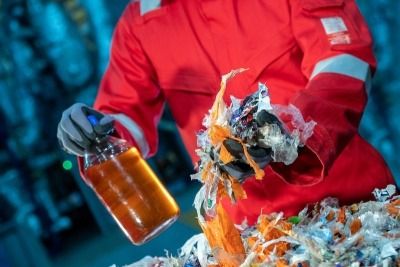
Within the production of recycled polymers, the project will see the companies aiming to improve the traceability of feedstock from post-consumer plastic waste. To do this, the consortium will cooperate with a range of plastic waste suppliers, including a multinational provider of post-industrial waste from fast-moving consumer goods (FMCG).
With this increased traceability, Circular hopes to provide stakeholders within the polymer industry with clarity of both the provenance and quality of the materials circulating their facilities.
The project comes before the introduction of the UK plastic packaging tax that will see a levy applied to packaging that does not contain 30 per cent recycled plastic by April 2022. There seems to be an increasing desire for accurate information within plastic recycling and its use in repurposed materials, as a result of this incoming expense.
Douglas Johnson-Poensgen, CEO of Circulor, commented: “We are on a mission to make the world’s most complex industrial supply chains more transparent in order to prevent the exploitation of our planet. We all contribute to plastic waste on a daily basis and Circulor’s traceability platform will play an important role in introducing visibility where it is currently lacking.”
Valérie Goff, Senior Vice President Polymers at TotalEnergies, highlighted: “This collaboration with Circulor and Recycling Technologies is an excellent example of innovation to develop more traceable recycled polymers. It reinforces our commitment to move advanced recycling forward and contributes to our ambition of producing 30 per cent recycled and renewable polymers by 2030.”
Adrian Griffiths, CEO of Recycling Technologies, said: “We believe this project will bring about the benefits of linking inbound waste provenance with outbound quality and destination for each unit of Plaxx produced. Full transparency is key to gain trust, incentivise sustainable practices and provide stakeholders with an optimised supply and logistics value chain, contributing to increased recycling rates.”


Get our weekly digest
resource.co article ai

How will the government and DMOs address the challenges of including glass in DRS while ensuring a level playing field across the UK?
There's no easy solution to include glass in the DRS while maintaining a level playing field. Potential approaches include a phased introduction of glass, potentially with higher deposits to reflect its logistical challenges. The government and DMOs could incentivise innovation in glass packaging design and subsidise dedicated return points for glass-handling. Exemptions for smaller businesses unable to handle glass might also be necessary. Any successful solution will likely blend several approaches. It must address the differing priorities of devolved administrations, balance environmental benefits with logistical and cost implications, and be supported by robust consumer education campaigns emphasizing the importance of glass recycling.