

University of Sheffield corpus linguistic research for BB-REG-NET finds bioeconomy terminology remains confined to specialists, recommending standardised definitions and behaviourally informed nstructions to tackle public confusion.
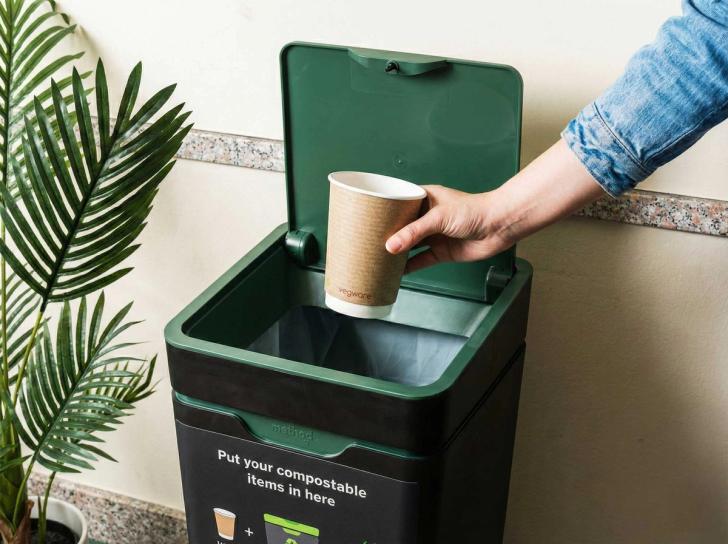
Public confusion about bio-based and biodegradable materials stems from communication that fails to align with how people actually process language, according to new research from BB-REG-NET, the UK's regulatory science network for bio-based and biodegradable materials.
The report, Effective Communication to Advance the Modern Industrial Bioeconomy, identifies this as a form of "hypocognition" – a phenomenon in cognitive linguistics where people lack the conceptual framework to process unfamiliar language. Without consistent systems for labelling and disposal, the public has little opportunity to develop understanding through repeated experience.
"Linguistic research shows that communication is a key factor in advancing the modern industrial bioeconomy," said Professor Joanna Gavins, author of the report from the University of Sheffield. "Consumers want to make more sustainable choices, but they're overwhelmed by confusing language and greenwashing."
Analysis of Oxford English Dictionary frequency data and a 52-billion-word corpus of contemporary English texts found that key terms remain uncommon in everyday discourse. The word "biodegradable" occurs 1.51 times per million words in general English usage, while "compostable" occurs 0.53 times, "bio-based" 0.23 times, and "bioplastic" 0.13 times per million words. Common vocabulary, by comparison, occurs between 100 and 1,000 times per million words.
Under the OED's frequency banding system, only "biodegradable" would be classified as high as Band 5 – words which, while recognisable to most English speakers, are still considered "distinctively erudite" and associated with "educated discourse". The remaining terms fall into bands where words are described as "highly specific, mainly confined to specialist language" or in some cases "uniformly strange or exotic".
Language confined to specialist contexts
Further analysis using the enTenTen21 corpus and the Sketch Engine platform revealed that all four key terms – "bio-based", "biodegradable", "bioplastic", and "compostable" – are predominantly confined to texts about science, health, and economy, finance and business. The research found these terms are not commonly used in language about the home and family, beauty and fashion, or even the environment and nature.
The collocation analysis showed that "biodegradable" and "compostable" most frequently describe plastics, packaging and polymers, with everyday objects such as bags, cups, and paper occurring less than half as often. The term "bio-based" appears even more restricted, with no everyday objects among its most frequent collocates and stronger associations with economic and industrial language.
"It would appear that language about the modern industrial bioeconomy remains concentrated mainly within texts produced by or about the bioeconomy itself and that key terms and ideas from this area of industry have not yet spread significantly into other domains of day-to-day language and experience," the report states.
The research contrasts this with "recyclable", which has a frequency of 1.57 occurrences per million words but appears commonly across news writing, financial texts, texts about the home and family, environment and nature, beauty and fashion, as well as technology and IT. The report attributes this broader reach to decades of consistent systems, legislation, and infrastructure supporting recycling behaviour.
Cognitive barriers to understanding
The report identifies specific linguistic features that contribute to consumer confusion. The "+able" suffix in words like "biodegradable" and "compostable" requires consumers to conceptualise a future, unrealised situation rather than describing current states or giving direct instructions. When someone reads "biodegradable", they must imagine a distant scenario in which the product has broken down, with no information about how this occurs, under what conditions, or what actions are required.
The "bio+" prefix creates additional confusion. In "bioplastic" and "bio-based", this prefix indicates relation to organic substances, but in "biodegradable" it refers to biological degradation processes – a completely different meaning that consumers readily conflate.
A BB-REG-NET survey of more than 2,000 UK consumers found that while 51 per cent trusted compostability claims, only 22 per cent said they knew what happens to waste once collected. Focus groups conducted in October 2025 found the majority of participants would put products marked "compostable" in their garden compost bin, with most assuming "bio-based" products would break down in natural environments.
"The central problem in the bio-based and biodegradable materials industry is that businesses and organisations involved in the sector are using language to describe products and processes that the majority of people lack the frames of knowledge and experience to understand," the report states.
Framework for effective communication
The report provides a framework structured around two purposes: providing information and giving instruction. For informational communication, it recommends consistent definitions across all communications, with "bio-based" describing materials derived wholly or partly from renewable biological sources; "biodegradable" describing materials designed to break down through microbial activity under specific conditions, with claims specifying exact conditions and timeframes; and "compostable" describing a subset of biodegradable materials meeting specific standards, with qualifying information about whether home or industrial composting is required.
The term "bioplastic" is identified as confusing and should be avoided.
For disposal instructions, the report found negatively framed messages more effective than positive alternatives. In focus groups, "do not place in recycling bin" was rated clearest by all but one participant, with "not recyclable" rated second clearest. The research draws on cognitive linguistic theory showing that negation has a "fundamentally foregrounding effect" that draws attention and defeats expectations.
Dr Thomas Baker, Specialist (Plastics) for the Waste Resources Action Programme (WRAP), commented: "With biomaterials it is essential that people are given clear and simple information on how to properly dispose of these items. Proper labelling is very important and must have accurate information and clear, simple instruction to avoid confusing people."
The report recommends that disposal labels assume consumer attention is limited to 10 seconds or less, be placed on the front of packaging, adopt "recipient design" based on what consumers need to know rather than producer knowledge, and state clearly how and where waste should be deposited.
Restorative narratives and extended engagement
Beyond clearer labels, the research calls for "restorative narratives" – positive stories that acknowledge the role consumers play in achieving a circular economy and celebrate their efforts. The report notes that stories about the environment which only portray suffering and destruction can lead to a "collapse of compassion" where audiences suppress emotional responses. Restorative narratives shift focus from loss to recovery, with positive trajectories that audiences perceive will continue beyond where the story ends.
Extended engagement through websites, social media, and advertising can build broader public understanding that labels alone cannot achieve. The report recommends putting customers in an agentive position, recognising the "consumption work" they undertake when choosing sustainable materials, and ensuring claims are supported by evidence and appropriate certifications.
Katherine Manshreck, Senior Sustainability Strategist at compostable packaging company Shellworks, said: "The performance of biomaterials has become so advanced consumers might not notice that our Vivomer packaging is compostable if it were not for the label. This makes clear language essential for communicating the sustainability benefit of biomaterials to consumers, especially as visual cues like green print or leaf icons have become common in greenwashing."
The report follows BB-REG-NET's December white paper, Growing the UK's Modern Industrial Bioeconomy, which identified a £204 billion annual revenue opportunity for the UK but highlighted policy fragmentation across government departments as a barrier to sector growth.
Professor Gavins noted: "It's not so far in the past that recycling systems were completely new to the public, but over time communication about how to use them has improved and recycling is now second nature to most people. Change is possible."


Get our weekly digest
resource.co article ai

How will the government and DMOs address the challenges of including glass in DRS while ensuring a level playing field across the UK?
There's no easy solution to include glass in the DRS while maintaining a level playing field. Potential approaches include a phased introduction of glass, potentially with higher deposits to reflect its logistical challenges. The government and DMOs could incentivise innovation in glass packaging design and subsidise dedicated return points for glass-handling. Exemptions for smaller businesses unable to handle glass might also be necessary. Any successful solution will likely blend several approaches. It must address the differing priorities of devolved administrations, balance environmental benefits with logistical and cost implications, and be supported by robust consumer education campaigns emphasizing the importance of glass recycling.