

Today (1 July), The Competition and Markets Authority (CMA) has announced an extension to its inquiry into the anticipated merger of waste management firms Veolia and Suez.
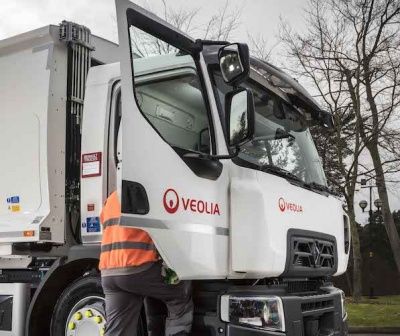
Ahead of the initial expiry date of 17 July, the body has granted an extension on the report’s release for a further eight weeks, taking the new completion date to 11 September.
Crediting the ‘scope and complexity of the inquiry’ as motivation for the extension, the body assures that attention to issues raised by both the main and third parties, and reaching a fully reasoned Final Report in the statutory timeframe, will be achieved under the new deadline.
The investigation was first undertaken by the CMA in December 2021, following a statement from the body expressing concerns that the new partnership could result in higher prices and lower quality services across ‘a range of waste management activities in the UK.’
The merger agreement
A merger agreement was first released in April 2021, expressing that Veolia would purchase the 70.1 per cent of Suez it didn't already own for €20.50 per share. As one unit, they characterised themselves as a ‘global champion of ecological transformation’, with an anticipated annual revenue of around €37 billion. The following May, a signed combination agreement was reached following approval by their respective Boards of Directors.
The CMA said it received ‘a number of complaints’ from customers and other market participants, noting that the agreement could cause councils to pay higher prices, ‘thus having a knock-on effect for the taxpayer’.
Days after the CMA began its investigation, the merger was approved by the European Commission in December 2021, conditional on its compliance with a commitments package which aims to ease competition worries.
In May, the CMA released its Provisional Findings and a Notice of Possible Remedies, affirming its concerns over a ‘substantial lessening of competition’. The findings suggested the merger would reduce options for local councils and businesses when sourcing waste and water management services, leading to ‘more costly and lower quality services, and in turn, to higher council tax bills’.
Earlier this month, Veolia proposed the sale of SUEZ’s UK waste business, a ‘drastic’ measure, it said, in response ‘to the intransigence of the CMA’. In a statement, Veolia stated that it ‘deplores [the CMA’s] lack of shared understanding of the issues related to our sectors of activity’.
Alongside quelling concerns that councils would be left with reduced options, the company asserts that the decision will ‘also [accelerate] the company's debt reduction, making Veolia more agile than ever as it approaches the end of Impact 2023.’


Get our weekly digest
resource.co article ai

How will the government and DMOs address the challenges of including glass in DRS while ensuring a level playing field across the UK?
There's no easy solution to include glass in the DRS while maintaining a level playing field. Potential approaches include a phased introduction of glass, potentially with higher deposits to reflect its logistical challenges. The government and DMOs could incentivise innovation in glass packaging design and subsidise dedicated return points for glass-handling. Exemptions for smaller businesses unable to handle glass might also be necessary. Any successful solution will likely blend several approaches. It must address the differing priorities of devolved administrations, balance environmental benefits with logistical and cost implications, and be supported by robust consumer education campaigns emphasizing the importance of glass recycling.