

Clean Planet Energy has submitted planning permission for a £35 million chemical recycling facility in Sleaford that would convert 25,000 tonnes of mixed plastic waste annually into pyrolysis oil, creating up to 70 permanent jobs as part of the UK's growing advanced recycling infrastructure.
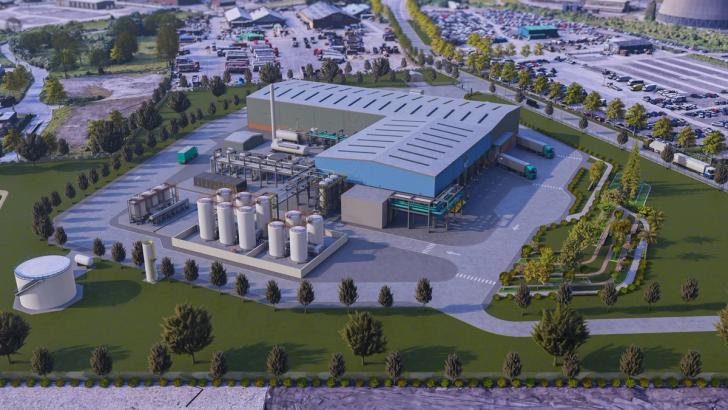
Clean Planet Energy has submitted planning permission to Lincolnshire County Council for a £35 million advanced recycling facility at Sleaford Moor Enterprise Park. The facility would use pyrolysis technology to convert 25,000 tonnes of non-recyclable plastic waste each year into Purified Pyrolysis Oil for use in petrochemical markets.
The 8.5-acre site off Pride Parkway, near the A17, would handle mixed plastics including fast food containers, shopping bags and plastic films that would otherwise be sent to landfill or incineration. The company reports that the facility would create 50 to 70 permanent jobs, with an additional 100 positions during the two-year construction period.
Clean Planet Energy is part of the Clean Planet Group, which develops technologies for plastic waste processing. The Sleaford facility would be the company's second UK plant, following its flagship facility currently under construction in Teesside, which is scheduled to open in 2026.
Commenting on the progress, Tom Field, Director of Expansion and Development at Clean Planet Energy, said: "Our ecoPlant in Sleaford would be a key milestone in Clean Planet Energy's national rollout of facilities to tackle the plastic waste crisis at scale. It also demonstrates Clean Planet's commitment to partnering with local authorities to deliver real environmental change".
The company's parent organisation, Clean Planet Technologies (CPTech), develops proprietary upgrading technologies for pyrolysis oils. In April 2024, CPTech was granted a patent for a two-stage hydroprocessing technique that reduces olefins content in waste plastic-derived oils, improving fuel stability and quality. The technology addresses heat management and safety concerns in converting highly olefinic oils into transport fuels.
CPTech recently announced development of plastics-to-sustainable aviation fuel technology. Dr Andrew Odjo, CEO of CPTech said: "This is the beginning of a very exciting chapter. We're moving rapidly from innovation to implementation, proving how waste plastics can support the UK's SAF ambitions."
Chemical recycling continues to grow in UK
The facility development occurs as the UK faces significant infrastructure requirements to meet recycling policy targets. A joint analysis by WRAP and Defra published in February 2025 identified that plastic packaging processing capacity needs an additional 324,000 tonnes per year by 2035, with plastic packaging available for reprocessing forecast to grow by 52 per cent compared to 2020 levels.
Chemical recycling company Endolys has also submitted plans for a pyrolysis facility in Darlington, with the first phase processing 60,000 tonnes of plastic film waste annually into 40,000 tonnes of pyrolysis oil. That facility has secured £60 million for initial construction, with operations expected to begin at the end of 2026.
However, questions about economic viability remain, with research finding that chemical recycling of polyolefins currently costs more than twice as much as producing virgin materials in Europe.
Site selection
North Kesteven District Council selected Clean Planet Energy for Sleaford Moor Enterprise Park following exchange of contracts. The site provides access to industrial infrastructure, with phase one of the enterprise park including solar panels and electric vehicle charging points.
Councillor Richard Wright, leader of North Kesteven District Council, said earlier this year: "Clean Planet Energy's commitment to bring its second-only ecoPlant in the UK to Sleaford Moor Enterprise Park would be a brilliant boost for our economy and jobs locally, and spell even better news for our environment".
Lincolnshire County Council will determine the planning application. If approved, full operations would begin following completion of the two-year construction programme.


Get our weekly digest
resource.co article ai

How will the government and DMOs address the challenges of including glass in DRS while ensuring a level playing field across the UK?
There's no easy solution to include glass in the DRS while maintaining a level playing field. Potential approaches include a phased introduction of glass, potentially with higher deposits to reflect its logistical challenges. The government and DMOs could incentivise innovation in glass packaging design and subsidise dedicated return points for glass-handling. Exemptions for smaller businesses unable to handle glass might also be necessary. Any successful solution will likely blend several approaches. It must address the differing priorities of devolved administrations, balance environmental benefits with logistical and cost implications, and be supported by robust consumer education campaigns emphasizing the importance of glass recycling.