

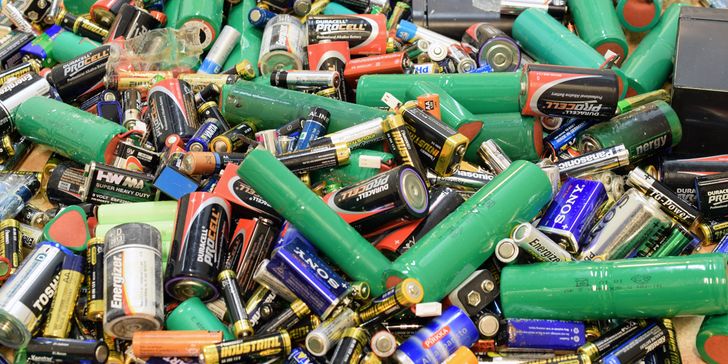
The Chartered Institution of Wastes Management (CIWM) has called for a deposit return scheme (DRS) for batteries and battery-containing products in a new white paper, An EPR of Everything, Starting with Batteries. This comes in response to what CIWM describes as a "crisis" of fires caused by improperly disposed batteries at waste and recycling facilities across the UK.
Citing evidence from Material Focus, CIWM points out that there have been more than 1,200 fires caused by or suspected to have been caused by batteries at UK waste and recycling sites and vehicles in 2023, marking a 71 per cent increase from 2022. The cost of damage and lost time from these fires is estimated at £158 million annually. This is causing a crisis ‘for the resources and waste sector, for taxpayers, for homeowners, and for Government’.
Based on research conducted by Env23, CIWM has put forward several key recommendations:
- Implementing a flat-rate deposit of around £2 on batteries and battery-containing products, focusing on lower-value items that currently pose the biggest risks.
- Introducing chemistry-specific recycling targets as part of updating existing battery producer responsibility legislation. Currently, weight-based targets that were introduced so that the UK could comply with the EU Batteries Directive do not differentiate between different types of battery, resulting in lead-acid batteries, e.g. car batteries, accounting for most of the collected material.
- Urging immediate action from battery manufacturers and retailers to promote safer recycling practices and ensure adequate collection points.
- Supporting the development of domestic rare-earth material circularity and tech circularity businesses.
- Shifting focus from 'cost' to 'value' through right-to-repair and eco-design principles.
CIWM sees the proposed battery DRS as a starting point for broader extended producer responsibility (EPR) policies across more product categories. The organisation advocates for an ‘EPR of Everything’ approach, focusing on materials and products where current regulations have fallen short or failed to keep pace with technological advancements.
To support these recommendations, CIWM commissioned extensive consumer research. The study, involving 2,064 adults and a focus group of 20 participants, revealed variable attitudes towards battery disposal. Key findings include:
- 40 per cent of respondents typically dispose of electric toothbrushes in potentially dangerous ways, while 24 per cent of rechargeable vape users discard them in general rubbish bins
- Higher-value items containing lithium-ion batteries, such as smartphones, are more likely to be traded in or sold.
- There is a general lack of knowledge about proper disposal methods for items containing batteries, particularly smaller electronic devices.
- When shown videos of battery fires at recycling centres, participants reported being "petrified" and immediately reconsidering their disposal habits.
Support for a battery DRS was strong among respondents, with over 80 per cent saying they would be likely to use such a scheme. Of these, 51 per cent said they would use the scheme on all or most occasions. Support was even higher (67 per cent) among those who rate recycling as highly important.
The study also addressed attitudes towards vapes, finding that 14 per cent of UK adults use vapes or e-cigarettes. There is strong public support for restrictions or bans on disposable vapes, even among users themselves, due to both health and environmental concerns.
According to the research report compiled by Env23: "Continuing with 'business as usual' is unacceptable... Change must happen in order to address this urgent crisis for our industry, for taxpayers, and for the Government."
The report highlights successful voluntary initiatives, such as the Bicycle Association's efforts to collect e-bike batteries, as examples of industry-led solutions that could become mandatory under an EPR scheme. It emphasises the importance of clear, impactful information reaching consumers at point-of-sale and disposal, noting that current awareness campaigns, such as the 'Take Charge' campaign, have had limited reach and impact.


Get our weekly digest
resource.co article ai

How will the government and DMOs address the challenges of including glass in DRS while ensuring a level playing field across the UK?
There's no easy solution to include glass in the DRS while maintaining a level playing field. Potential approaches include a phased introduction of glass, potentially with higher deposits to reflect its logistical challenges. The government and DMOs could incentivise innovation in glass packaging design and subsidise dedicated return points for glass-handling. Exemptions for smaller businesses unable to handle glass might also be necessary. Any successful solution will likely blend several approaches. It must address the differing priorities of devolved administrations, balance environmental benefits with logistical and cost implications, and be supported by robust consumer education campaigns emphasizing the importance of glass recycling.