

CIWM and WasteAid report that the Dennakuwo Circular Economy Network in The Gambia has provided training to over 300 members since 2022, with 81 per cent describing their participation as transformational for their business.
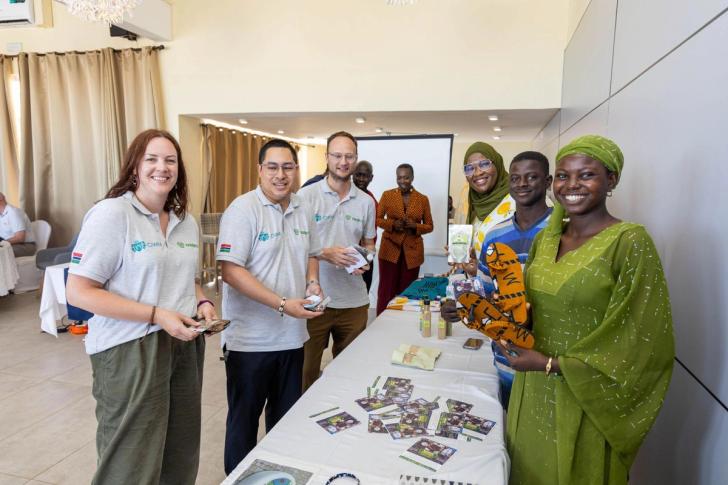
The Chartered Institution of Wastes Management (CIWM) and WasteAid have reported outcomes from a three-year partnership establishing the Dennakuwo Circular Economy Network in The Gambia, which has delivered over 17,000 hours of training to more than 300 members since its launch in early 2022.
The network, operating in the Greater Banjul Area, provides training in business development, finance, customer service, plastic recycling, composting and micro-enterprise development. According to the organisations' impact report, 81 per cent of members describe participation as transformational for their business.
The initiative includes a Waste-to-Use Challenge that has awarded £22,000 in total prize funding across two competitions. In the second challenge, six finalists received business incubation training before three winners each received £4,000 and three runners-up £1,000 to develop circular economy enterprises addressing textiles, plastics and organics.
NAACO Enterprise, a compost production company, used its prize funding to invest in motorised waste collection and processing equipment, increasing monthly compost production from six to ten tonnes. The company has also launched a training service for women farmers.
Precious Plastic Gambia, established in 2023, aims to employ an additional two to three full-time staff and increase production output by 30 per cent over the next year, using specialised machinery to convert plastic waste into home and office décor.
The network has established a Local Authority Working Group bringing together councils from Kanifing, Brikama and Banjul, co-chaired by Trevor Nicholl, former CIWM President and Director of Operations for St. Helens Council, and representatives from the Kanifing Environment Transformation Programme.
"All of us at CIWM are incredibly proud of our partnership with WasteAid, and the work of the ever-growing Gambian Circular Economy Network," said Sarah Poulter, CIWM’s CEO. "This initiative exemplifies how a direct link between the UK and Gambia can facilitate a dynamic exchange of expertise and innovation, ultimately fostering a circular economy that protects the world's environment and resources for future generations."
Ceris Turner-Bailes, CEO of WasteAid, commented: "Dennakuwo means 'Together We Can', and we are truly grateful for CIWM's support in bringing this to life. Thanks to CIWM, this work enables communities to take ownership, creates livelihoods, and reduces pollution through practical, inclusive circular economy solutions."
The network has also established connections through CIWM's virtual knowledge platform Connect, with 35 Dennakuwo members accessing UK expertise. Five CIWM experts have been deployed to support Kanifing Municipal Council through technical site visits.
International development context
The Gambia faces waste management challenges characterised by limited formal collection services. Municipal solid waste generation in the country rose from 0.4 million tonnes in 2011 to 0.6 million tonnes in 2020, with organic waste comprising 51 per cent of total waste, according to a World Bank circular economy diagnostic published in 2025.
CIWM and WasteAid announced the 18-month partnership in November 2021, with the programme later extended through additional funding. WasteAid has been operating in The Gambia since 2015.
The organisations report that the network's leadership has transitioned to a volunteer Secretariat, trained through bespoke governance and leadership sessions, which is now tasked with running the network independently with ongoing technical support from WasteAid.
The Greater Banjul Area hosts approximately 58 per cent of The Gambia's 2.7 million population. Training sessions have included advanced composting, bio-briquette production, sustainable fashion and agribusiness techniques, with 89 per cent of network members participating in at least one training or event.
Two Zero Waste Markets showcased enterprises to the wider public, demonstrating how waste materials can be repurposed into eco-bricks, upcycled textiles and sustainable packaging products.
//standfirst//
CIWM and WasteAid report that the Dennakuwo Circular Economy Network in The Gambia has provided training to over 300 members since 2022, with 81 per cent describing their participation as transformational for their business.


Get our weekly digest
resource.co article ai

How will the government and DMOs address the challenges of including glass in DRS while ensuring a level playing field across the UK?
There's no easy solution to include glass in the DRS while maintaining a level playing field. Potential approaches include a phased introduction of glass, potentially with higher deposits to reflect its logistical challenges. The government and DMOs could incentivise innovation in glass packaging design and subsidise dedicated return points for glass-handling. Exemptions for smaller businesses unable to handle glass might also be necessary. Any successful solution will likely blend several approaches. It must address the differing priorities of devolved administrations, balance environmental benefits with logistical and cost implications, and be supported by robust consumer education campaigns emphasizing the importance of glass recycling.