

The Pallet Loop launch marks construction sector’s first pallet reuse scheme
The launch of The Pallet LOOP will see the introduction of the construction sector’s first ever circular, net zero, pallet reuse scheme.
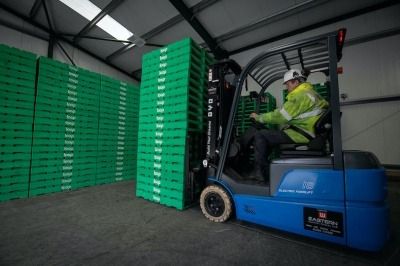
A number of companies have begun considering how to integrate the scheme into their operations, with operational roll-out timetabled for 2022.
The project is a joint venture between Paul and Ryan Lewis and Scott Group and centres around the principles of ‘recover, repair and reuse’. It aims to incentivise pallet returns through implementing a deposit-based system, in which manufacturers will place a down payment per purchased pallet. This is to be returned to the end-user once pallets are given back.
The Pallet LOOP will use 100 per cent Forest Stewardship Council (FSC) certified pallets, with an ISO14040 compliant life cycle assessment (LCA).
Paul Lewis, Founder of The Pallet LOOP, said: “As a business we’re committed to reducing the impact on the planet that comes from pallet use in the construction industry supply chain. We aim to sustainably manage and reduce the cost of pallets for our customers - making palletised logistics greener and leaner.
“At present, the vast majority of pallets circulating in the sector are designed for single use. The current industry specification for pallets works on the assumption that they will be scrapped or skipped once they reach their final destination. We’re turning this outdated, inefficient and linear practice on its head. In a step-change for the sector, we’ve developed a range of standardised pallets, engineered to last and to be used again and again.”
Ocado becomes first supermarket globally to have net-zero head office
Ocado Retail has signed an agreement with Climeworks that will make it the first supermarket globally to have a net-zero head office.
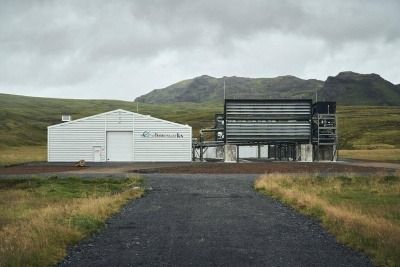
As part of the agreement, the grocery retailer has paid for over 1000 tonnes of carbon dioxide to be removed from the atmosphere, equating to seven years worth of emissions generated by its headquarters. This has been funded, in part, by customers participating in the company’s closed loop recycling scheme – consumers return Ocado bags in exchange for a refund, with unclaimed costs being used to finance the net zero initiative.Climeworks’ technology consists of modular carbon dioxide collectors that capture carbon from the atmosphere, to be permanently stored underground. Air-captured carbon dioxide is contained via the mineralisation in basaltic rock formations, through the use of Carbfix technology. The entire process is powered by renewable energy and does not compete with arable land, the company states.
Daniel Costigan, Sustainability Lead at Ocado Retail, commented: "We are immensely proud to be the first supermarket in the world to have a net zero office. Running a sustainable business is incredibly important to us and our customers and our agreement with Climeworks is a fantastic step as we continue to take strides to reduce our carbon footprint."
Christoph Gebald, co-CEO and co-founder of Climeworks, said: "We are excited and thankful to welcome a new industry leader through the agreement with Ocado. Ocado Retail’s net zero strategy is a great example of how emissions reduction and emissions removal should be combined."
Biffa announces FY22 Half Year results
Biffa has announced its half year results for the 26 weeks ended 24 September 2021. Key takeaways from the financial summary are as follows:
- Adjusted Operating Profit has recovered to FY20 levels, with Group revenues in the first half 14.0 per cent higher than during the equivalent period two years ago.
- Steps have been taken to mitigate the impact of supply chain disruptions and HGV driver shortages.
- £340.8m has been invested since the September 2019 Capital Markets Day across circular economy infrastructure projects within Biffa’s four strategic areas: Reduce, Recycle, Recover and Collect.
- Cash management has been better than expected in the period, resulting in leverage being lower than forecast at the time of the Viridor announcement.
- Key progress areas include improvement of the company’s methane capture rate in its Landfill Gas business to 85 per cent ahead of the recent COP26 commitments around methane reduction; opening of a rail hub for inert waste in East London to further reduce the adverse impacts of road based transportation; retrofitting older trucks with software which could reduce the company’s CO2 emissions by up to 1,500 tonnes per annum; and increasing Board diversity with the appointment for Biffa’s third female Board member, Linda Morant.
- The reintroduction of the interim dividend at 2.20p, (FY21:nil, FY20:2.47p), as well as committing to paying a progressive dividend moving forward.
Overall, the group has reported ‘strong performance’, with profitability restored to pre-pandemic levels, full year expectations reaffirmed, and the reinstatement of the company’s dividend.


Get our weekly digest
resource.co article ai

How will the government and DMOs address the challenges of including glass in DRS while ensuring a level playing field across the UK?
There's no easy solution to include glass in the DRS while maintaining a level playing field. Potential approaches include a phased introduction of glass, potentially with higher deposits to reflect its logistical challenges. The government and DMOs could incentivise innovation in glass packaging design and subsidise dedicated return points for glass-handling. Exemptions for smaller businesses unable to handle glass might also be necessary. Any successful solution will likely blend several approaches. It must address the differing priorities of devolved administrations, balance environmental benefits with logistical and cost implications, and be supported by robust consumer education campaigns emphasizing the importance of glass recycling.