

Budget 2025 reverses controversial landfill tax convergence plans following construction sector warnings that phasing out lower rate could add £24,000 to new home costs, while confirming early 2026 consultations on local authority performance under packaging EPR scheme.
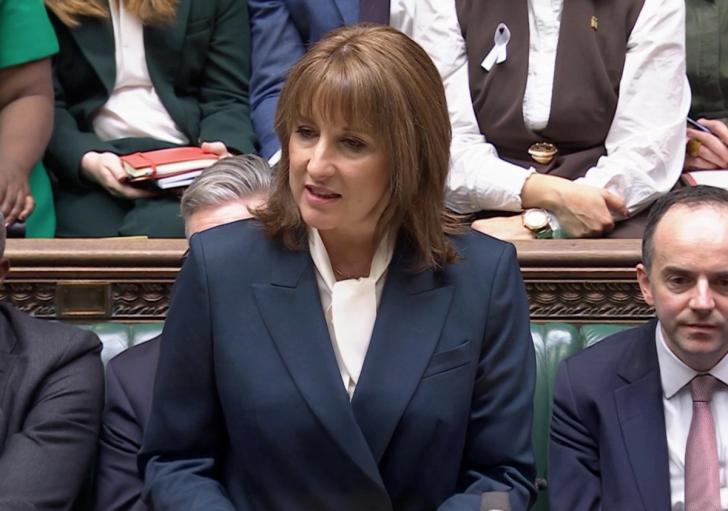
The government will not proceed with converging the two rates of Landfill Tax following strong opposition from the construction sector, Chancellor Rachel Reeves announced in Budget 2025.
The decision abandons plans consulted on earlier this year that would have phased out the lower rate of £4.05 per tonne for inert waste to match the standard rate of £126.15 per tonne by 2030, representing a potential increase of more than 3,000 per cent.
The landfill tax reversal formed part of a package of waste sector measures in today’s Budget (26 November).
The Chancellor also confirmed early 2026 consultations on measuring local authority performance under packaging Extended Producer Responsibility and reforming the Packaging Waste Recycling Note system. The Plastic Packaging Tax rate will increase in line with CPI inflation only for 2026-27, with mandatory certification for mechanically recycled content to be consulted on early next year. From April 2027, chemically recycled plastic using mass balance approaches will count towards recycled content requirements, while pre-consumer waste will be removed as a qualifying source.
Additional measures include introducing VAT relief from next April for business donations of goods to charity to encourage reuse, as well as simplifying VAT for the deposit return scheme, extending tax conditionality to the waste sector, and funding Defra grants to help public bodies remediate contaminated land when landfill tax costs associated with removing soils otherwise makes development uneconomic.
Two tier landfill tax to stay
According to the Budget, the government "will not be proceeding at this time with converging the two rates of Landfill Tax, as consulted on earlier this year".
The original consultation had proposed transitioning to a single rate by 2030, alongside removing the qualifying fines regime from April 2027 and eliminating the exemption for filling quarries. The Treasury and HMRC positioned the reforms as measures to simplify the tax, reduce fraud, and drive more materials out of landfill.
However, the consultation attracted substantial opposition across multiple sectors. The Mineral Products Association warned the reforms would trigger nationwide aggregate shortages and threaten quarry restoration plans and the British Aggregates Association and ground engineering sector flagged that the proposals would create supply constraints and delay infrastructure delivery.
FCC Environment also wrote to the Chancellor warning that the reforms could make nationally significant infrastructure projects unviable. The company calculated that removing 1,000 tonnes of soil from a building site could increase costs from £4,000 under the current lower rate to £126,000 under a single standard rate. Industry estimates suggested the changes could add £24,000 to the cost of building a new home.
The Local Government Association requested either a longer trajectory for phasing out the lower rate, extending the deadline to 2035 or 2040, or consideration of an intermediate rate, warning that convergence without adequate transition time could increase fly-tipping and place additional pressure on council budgets.
In response, the Budget states the government "has listened to stakeholders' arguments made in response to the consultation, and revised its approach to ensure the reforms to Landfill Tax are proportionate, do not impose unavoidable costs on businesses and do not undermine the government's target of building 1.5 million new homes in England".
Instead of convergence, the government "will prevent the gap between the two rates of Landfill Tax getting any wider over the coming years". From April 2026, the lower rate will increase by the same cash amount as the standard rate, maintaining the differential in cash terms rather than as a percentage.
The government will also "retain the tax exemption for backfilling quarries to ensure that housebuilders and the construction sector continue to have access to a low-cost alternative to landfill".
The revised approach will generate additional tax revenue compared to maintaining current policy without any increases. According to Budget Table 4.1, raising the lower rate by the same cash amount as the standard rate will yield £35 million in 2026-27, rising to £60 million in 2027-28, £85 million in 2028-29, £110 million in 2029-30, and £130 million in 2030-31, totalling £420 million across the forecast period to 2030-31.
David Gudgeon, Head of External Affairs at Reconomy Connect, commented: "It's encouraging to see the Government respond to industry concerns by stepping back from converging the two rates of Landfill Tax and instead committing to prevent the gap between them widening in the years ahead.
"However, the planned uplifts to the lower rate – forecast to raise an additional £420 million in revenue over the period to 2030-31 – underline the need for a balanced approach. Policy must continue to drive circularity and reduce incentives for waste crime, while also supporting essential sectors like construction as they transition toward more sustainable models in a challenging economic climate.
"Ultimately, the most robust way for businesses to shield themselves from future tax rises is to accelerate circularity. Keeping materials in use for longer, maximising reuse and recycling, and designing out waste not only strengthens environmental performance but also reduces operating costs and mitigates tax and compliance risks over the long term."
The current standard rate of £126.15 per tonne came into effect in April 2025 following a 21.6 per cent increase announced in Spring Budget 2024. At that time, HM Treasury stated the rates would be "adjusted to better reflect actual RPI" after inflation spikes had eroded the competitiveness of alternative waste treatment facilities.
Packaging EPR improvements
The Budget confirmed a package of improvements to the packaging Extended Producer Responsibility scheme, which launched at the start of the year with PackUK as scheme administrator.
According to the Budget document, the government will "consult in early 2026 on proposals to measure the performance and effectiveness of local authorities' use of pEPR fees". The consultation will address persistent concerns about accountability and transparency in how local authorities deploy the estimated £1.5 billion in annual producer fees.
The government also confirmed it will consult on reforms to the Packaging Waste Recycling Note (PRN) system, which continues to operate alongside packaging EPR, with ongoing concerns about market distortions favouring exports over domestic reprocessing.
Plastic packaging tax adjustments
The Budget confirmed the Plastic Packaging Tax rate for 2026-27 will increase "in line with CPI inflation" only. The current rate stands at £223.69 per tonne from April 2025.
From 1 April 2027, the government will allow a mass balance approach for chemically recycled plastic to count towards recycled content requirements. However, the Budget also confirmed that pre-consumer waste will be removed as a source of recycled content from the same date.
The government will also "consult in early 2026 on the introduction of mandatory certification for mechanically recycled plastic packaging for businesses to claim an exemption from Plastic Packaging Tax".
Industry bodies including the Environmental Services Association have called for more ambitious plastic packaging tax measures, including increasing the rate to £500 per tonne and raising the recycled content threshold from 30 per cent to 50 per cent. The sector argues that current tax levels are insufficient to drive investment in recycling infrastructure and create demand for recycled materials.
Responding to today’s announcement, Dr Adam Read MBE, Chief Sustainability and External Affairs Officer for SUEZ recycling and recovery UK said: "The Chancellor's decision to only raise plastic packaging tax by CPI is a missed opportunity and is unlikely to create the much-needed economic incentive to increase the use of recycled plastic.
“More disappointing however is this has undermined the business case that we need here in the UK to drive investment in reprocessing infrastructure which in itself would create revenue whilst turbo-charging our journey towards a circular economy and net zero."
Campaigners were equally sceptical about the current approach. Sian Sutherland, Co-Founder of A Plastic Planet and Plastic Health Council, commented: "Tinkering with thresholds might raise a few more million for the Treasury but it won't do what a tax like this should: turn off the plastic tap for good. When plastic's impact on global health costs $1.5 trillion every year, a few extra million is meaningless – we need systemic change, not superficial tweaks.
"Recycled content is still fossil content, the last refuge of big oil. And perversely the tax penalises new biobased natural polymers rather than helping them replace plastic.
"Moving from an addiction to virgin plastic to an addiction to recycled plastic is neither here nor there. It's just fiddling while the environment burns.
"And the cost of this blinkered approach will be felt not on balance sheets but in medical records, as plastic continues to harm human health, contributing to cancers and the development of disease."
Additional waste sector measures
From 1 April 2026, the government will introduce a new VAT relief for business donations of goods to charity for distribution to those in need or use in delivering charitable services. The measure aims to incentivise retailers and manufacturers to donate surplus stock for reuse rather than disposing of it, supporting circular economy objectives by keeping products in use for longer.
The Budget announced the government "will simplify administration of the DRS by removing the requirement for individual producers to account for VAT on unreturned deposits". Instead, this will be handled by the Deposit Management Organisation when the deposit return scheme launches in October 2027.
The government confirmed plans to extend tax conditionality requirements to the waste sector, requiring operators to demonstrate tax compliance to obtain or renew waste licenses and permits. The measure aims to tackle illegal operators in the hidden economy who undercut legitimate businesses by avoiding tax obligations. A summary of responses to consultation on the measure was published alongside the Budget, with draft legislation planned for technical consultation in 2026.
Defra will also provide new funding through grants to public bodies for land remediation where landfill tax represents an "unaffordable blocker" to development. The Budget states this is expected to increase land available for development and generate a net increase in remediation-associated landfill tax receipts.


Get our weekly digest
resource.co article ai

How will the government and DMOs address the challenges of including glass in DRS while ensuring a level playing field across the UK?
There's no easy solution to include glass in the DRS while maintaining a level playing field. Potential approaches include a phased introduction of glass, potentially with higher deposits to reflect its logistical challenges. The government and DMOs could incentivise innovation in glass packaging design and subsidise dedicated return points for glass-handling. Exemptions for smaller businesses unable to handle glass might also be necessary. Any successful solution will likely blend several approaches. It must address the differing priorities of devolved administrations, balance environmental benefits with logistical and cost implications, and be supported by robust consumer education campaigns emphasizing the importance of glass recycling.