

British Glass warns of market fragmentation and extra costs as Wales becomes the only UK nation to include glass in its deposit return scheme, with a four-year transitional period before deposits apply.
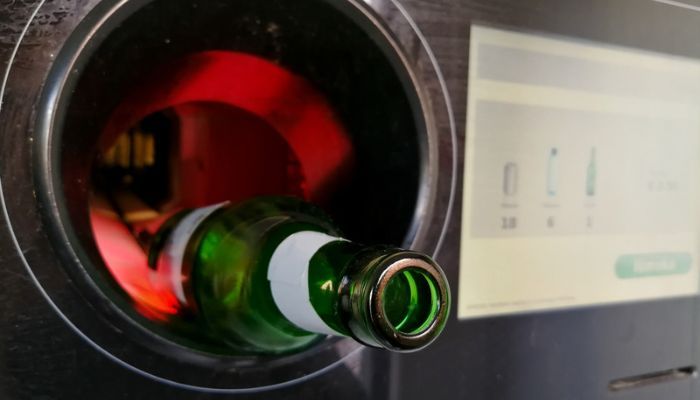
British Glass has raised concerns over the UK Government's decision to grant Wales an exclusion from the Internal Market Act, allowing the Welsh Government to include single-use glass drinks containers in its deposit return scheme.
The decision, announced on 12 February, makes Wales the only UK nation to include glass in its DRS. England, Scotland and Northern Ireland have all opted to exclude glass from their schemes. The Welsh Government laid the Deposit Return Scheme for Drinks Containers (Wales) Regulations 2026 before the Senedd on the same day.
Under the approved scheme, PET plastic bottles, aluminium and steel cans, and glass bottles between 150ml and three litres will be in scope when the Welsh DRS launches on 1 October 2027, in line with the rest of the UK. However, glass containers will be subject to a four-year transitional period during which they will carry a zero-pence deposit and be exempt from labelling requirements. The transition is intended to run until 2031, allowing producers and retailers time to adapt.
British Glass warns that many elements of how the scheme will operate in practice remain unclear, while adding that it plans to work with the Welsh and UK governments to seek clarity on the practical, financial and environmental implications.
"We remain committed to engaging constructively with the Welsh and UK Governments to ensure that the detail of implementation minimises disruption," said Dr Nick Kirk, British Glass Federation Director. "Clarity on operational design, producer obligations, cost impacts, and interaction with Extended Producer Responsibility will be essential."
Managing regulatory divergence
A central concern for British Glass is regulatory divergence. The trade body said businesses operating across the UK will face different frameworks in Wales compared with England and Scotland, adding complexity and cost for producers and the supply chain. Separate systems for glass drinks containers will mean extra expense for companies operating on a UK-wide basis, it argued.
During the decision-making process, British Glass said it had presented evidence that including glass in the Welsh DRS alone would have negative consequences for Welsh consumers and the wider economy. The organisation pointed to the potential for market fragmentation, increased costs, cross-border complications and unintended environmental impacts.
Wales withdrew from the joint UK DRS process in November 2024, with Deputy First Minister Huw Irranca-Davies citing concerns that the UK-wide approach would not serve Welsh interests on glass inclusion and the transition to reuse. The Welsh Government opened applications for a deposit management organisation in November 2025, with the successful applicant to be appointed from March 2026.
Irranca-Davies said the decision reflected Wales's circular economy ambitions. "We have always been clear that we need to progress a scheme which meets Wales' needs and delivers improvement against our high recycling rates, whilst managing interoperability across the UK," he said.
Mixed industry response
Reactions from across the drinks and retail sectors have been mixed. The British Soft Drinks Association called the move "a big step forward" in establishing unified deposit systems for cans and plastic bottles, but cautioned that challenges remain with single-use glass inclusion.
The British Retail Consortium said that while the clarity on PET and can alignment was welcome, including glass without a deposit "will add costs and create potential fraud risks, without clear environmental benefit." The Association of Convenience Stores warned of additional costs and operational burdens for local shops.
The Wine and Spirit Trade Association was critical of the decision, with chief executive Miles Beale calling glass inclusion "a recipe for disaster." The WSTA said feedback from its members indicated that up to 97 per cent of product lines could be withdrawn from the Welsh market due to the economic burden of compliance.
Environmental groups have been mre positive. The Marine Conservation Society said it was encouraging Senedd members to approve the proposals, stating it was "delighted to see Wales able to move ahead" with a scheme covering metal cans, plastic and glass bottles.
Wales currently holds the second-highest household recycling rate globally at 68.4 per cent.
The UK Government rejected a separate Welsh request for an exclusion covering a reusable glass system, though both governments agreed to establish a joint taskforce on implementation. Irranca-Davies said the scheme establishes "a clear pathway towards the roll out of reuse," supported by industry-led pilots.
Of 56 deposit return schemes operating worldwide, 49 include glass.


Get our weekly digest
resource.co article ai

How will the government and DMOs address the challenges of including glass in DRS while ensuring a level playing field across the UK?
There's no easy solution to include glass in the DRS while maintaining a level playing field. Potential approaches include a phased introduction of glass, potentially with higher deposits to reflect its logistical challenges. The government and DMOs could incentivise innovation in glass packaging design and subsidise dedicated return points for glass-handling. Exemptions for smaller businesses unable to handle glass might also be necessary. Any successful solution will likely blend several approaches. It must address the differing priorities of devolved administrations, balance environmental benefits with logistical and cost implications, and be supported by robust consumer education campaigns emphasizing the importance of glass recycling.