

DS Smith, a UK-based manufacturer of sustainable fibre-based packaging solutions, has pioneered plastic-free packaging redesign for Bosch Home Comfort's gas boilers.
Applying its own Circular Design Metrics, DS Smith’s design team collaborated with Bosch to develop a fully recyclable corrugated cardboard solution to replace all plastic components.
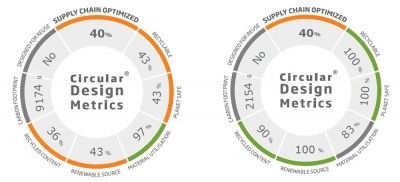
The new packaging format eliminates the previous use of expanded polystyrene (EPS) plastic protective elements, removing all non-recyclable packaging components, enabling Bosh ‘to align with its target to use fully recyclable materials’.
According to DS Smith the redesign will prevent over 100,000 plastic parts from entering waste streams annually. Additionally, increasing use of recyclable materials is projected to reduce the packaging's carbon footprint by 310 tons of CO2 emissions per year.
DS Smith’s eight design metrics aim to improve the durability of packaging, as well as its recyclability and related greenhouse gas emissions. Established in participation with the Ellen MacArthur Foundation, these metrics enable designers to evaluate packaging across eight distinct sustainability aspects including supply chain optimisation, material use, reusability and biodegradability.
Jingjing Huang, Purchasing Engineering Combustion Systems, Bosch Home Comfort Group commented: “We are delighted about the positive impact of this packaging optimisation by the DS Smith team and the value it brings to our businesses, but also to the environment with an improvement of more than 75 per cent decreased CO2 impact.
“More than 2,350 fewer pallets have to be taken out each year, and this new approach significantly reduces the volume of trucks used for delivery logistics by almost 60 per cent, resulting in more than 60 trucks being taken off the road each year."
Stefan Endres, Account Manager, DS Smith, Germany added:
"We are helping our industry clients to become plastic-free, protecting the product right across the supply cycle and are very pleased to be working with Bosch Home Comfort Group.
“After an extensive consultation with the customer, we decided that using our strong expertise in sustainable industrial packaging combined with our proven tools is a recipe for success. Our Circular Design Metrics were utilised in combination with our Value Tool in order to transparently illustrate the benefits of this fully recyclable mono-material packaging to the customer.”


Get our weekly digest
resource.co article ai

How will the government and DMOs address the challenges of including glass in DRS while ensuring a level playing field across the UK?
There's no easy solution to include glass in the DRS while maintaining a level playing field. Potential approaches include a phased introduction of glass, potentially with higher deposits to reflect its logistical challenges. The government and DMOs could incentivise innovation in glass packaging design and subsidise dedicated return points for glass-handling. Exemptions for smaller businesses unable to handle glass might also be necessary. Any successful solution will likely blend several approaches. It must address the differing priorities of devolved administrations, balance environmental benefits with logistical and cost implications, and be supported by robust consumer education campaigns emphasizing the importance of glass recycling.