

Trade body's analysis positions anaerobic digestion as lowest-cost route to engineered carbon removal, with potential to meet up to a quarter of UK's 2050 greenhouse gas removal requirements through bioCO2 capture and storage.
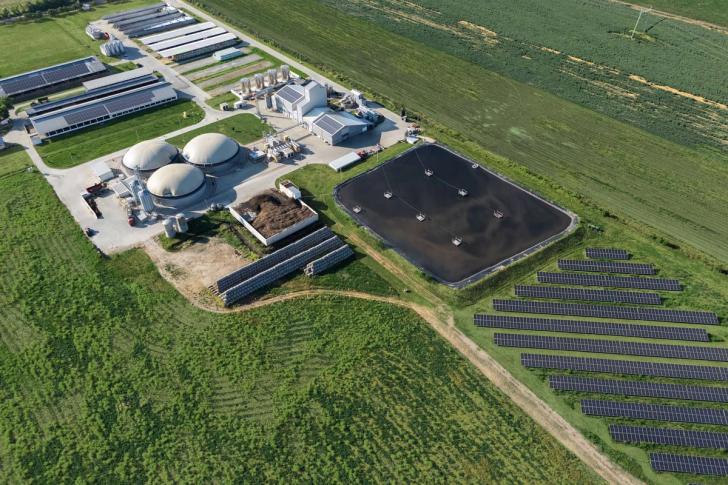
Capturing the carbon dioxide that is routinely separated when biogas is upgraded to biomethane could offer the cheapest form of engineered greenhouse gas removal available, according to a new report from the Anaerobic Digestion and Bioresources Association (ADBA).
The upgrading process – which cleans raw biogas from anaerobic digestion for injection into the gas grid – strips out CO2 that would otherwise be vented into the atmosphere. The report, entitled The World's Cheapest Cleaner, estimates that capturing, transporting and storing this bioCO2 costs between £54 and £123 per tonne. This compares to government estimates of £169 to £739 per tonne for direct air carbon capture and storage (DACCS), and £223 to £334 per tonne for power bioenergy with carbon capture and storage (PowerBECCS).
The analysis comes shortly after the publication of the independent Greenhouse Gas Removals review, led by Dr Alan Whitehead, now Lord Whitehead and a minister at the Department of Energy Security and Net Zero (DESNZ). The review, published in October 2025, concluded that greenhouse gas removals are essential for the UK to meet its net zero targets.
BioCO2 potential
According to the report, bioCO2 from biomethane upgrading could account for 17-22 per cent of the UK government's projected demand for greenhouse gas removals in 2050, estimated at around 81 million tonnes of CO2 per year. An authoritative study cited in the report puts the UK's maximum sustainable biomethane output at 120TWh, which would generate approximately 17-18 million tonnes of bioCO2.
The cost advantage stems from the concentration of CO2 in the biogas stream. ADBA states that other technologies must process much larger volumes of emissions to achieve the same volume of captured CO2, as the gas is more dilute in flue gases from combustion or in ambient air.
"This is a tried and tested process of carbon removal that needs no more laboratory or development work," said Chris Huhne, Chair of ADBA. "The biogas to biomethane process is renewable, reliable and ready."
Virtual pipeline transport
The report addresses concerns about transporting CO2 from geographically distributed AD plants to storage sites. While the UK's primary carbon storage strategy has focused on pipelines fed by industrial cluster point sources, ADBA argues that trucking liquefied CO2 via a "virtual pipeline" provides a viable alternative.
The report challenges a DESNZ consultation estimate of £100-345 per tonne for non-pipeline transport, stating this figure incorrectly included capture costs. ADBA's analysis suggests transport costs would be closer to £25-30 per tonne when only trucking and liquefaction are considered.
SGN has pioneered hub and spoke injection for biomethane, where gas from plants located away from the grid is compressed and trucked to injection hubs. ADBA states this model could work for bioCO2 transport to storage sites.
The UK purportedly has over 70 gigatonnes of CO2 storage capacity in geological structures under the North Sea, according to the report, including retired oil and gas fields and saline aquifers.
International comparisons
The report notes that France has deployed approximately 14TWh of biomethane production capacity as of March 2025, with another 15TWh potentially commissioned by 2028. French gas grid operator GRDF is actively planning to collect and store bioCO2 from this network.
In Denmark, the INEOS Greensand carbon storage project is commissioning with bioCO2 from the Danish biomethane sector. The report states this approach has been driven by the volumes of available bioCO2 and its low cost compared to fossil sources.
By contrast, the UK's biomethane sector has grown at around two per cent of installed capacity per year since the closure of the Renewable Heat Incentive to new projects in 2021. The Green Gas Support Scheme, which replaced it, is due to end in 2028.
The report follows ADBA analysis published in December 2024 that suggested green gas could reduce UK net zero spending by £298 billion, equivalent to more than £400 for each UK household annually.
"Gas has for far too long been seen only as a cause of climate change," Huhne adds. "However, green gas is not part of the problem but a critical part of the solution, offering real hope of meeting ambitious climate goals at low cost."
ADBA's report concludes with a 14-point plan calling for government action including a long-term target for green gas, extension of the Green Gas Support Scheme, proper integration of biomethane into the UK Emissions Trading Scheme, and inclusion of non-pipeline transport in the UK's greenhouse gas removal mechanism from the outset.


Get our weekly digest
resource.co article ai

How will the government and DMOs address the challenges of including glass in DRS while ensuring a level playing field across the UK?
There's no easy solution to include glass in the DRS while maintaining a level playing field. Potential approaches include a phased introduction of glass, potentially with higher deposits to reflect its logistical challenges. The government and DMOs could incentivise innovation in glass packaging design and subsidise dedicated return points for glass-handling. Exemptions for smaller businesses unable to handle glass might also be necessary. Any successful solution will likely blend several approaches. It must address the differing priorities of devolved administrations, balance environmental benefits with logistical and cost implications, and be supported by robust consumer education campaigns emphasizing the importance of glass recycling.