

The Biorenewables Development Centre (BDC), an open-access research and development centre at the University of York, is to take part in two new Hydrogen BECCS (Bioenergy with Carbon Capture and Storage) Innovation Programme projects.
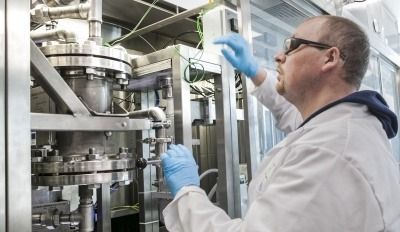
The two projects will research different methods for the production of hydrogen from biofuels, and its potential uses in the UK transport sector. They also align with the BDC’s wider sustainable initiatives, such as offering SMEs access to pre-funded tailored support to develop innovative products and processes via European Regional Development funding.
Supporting the development of technologies to produce hydrogen from biogenic feedstocks while capturing carbon, the programme forms part of phase one the £1 billion Net Zero Innovation Portfolio from the Department for Business, Energy and Industrial Strategy (BEIS).
Aiming to accelerate the commercialisation of clean energy technologies and innovations, partners will have the opportunity to apply for further phase two funding from the portfolio following the completion of these two initial six-month projects.
The first project, ‘Utilisation of Biorefinery Residues for Blue Hydrogen Production’, will investigate the use of biofuels produced through fermentation and digesters. The project will utilise barley, wheat and bagasse to assess the quality of hydrogen production via gasification.
Led by the University of Hull with the BDC, Aston University, Jesmond Engineering, and Teesside University, the project hopes to produce hydrogen through gasification of digester sludges. Additionally, researchers will look at the cost effective treatment of lignin rich biorefinery residues, a byproduct of the biorefinery area, for use as a gasifier feedstock, which will have benefits for process efficiency.
The second project, ‘H2-Boost’, hopes to find the most appropriate waste feedstock to produce hydrogen in a commercially viable way, through a pre-treatment and dark fermentation in anaerobic digestion (AD), with an optimal occulum. Headed by researchers at the University of Leeds, with the BDC, Greenthread Solutions, NNFCC and Aardvark EM, the project will assess a multi-step process to transform these organic compounds into hydrogen gas and other valuable by-products.
Once the process is assembled, a comprehensive feasibility study to assess the potential of this technology will be led by its partners. With phase one coming to term in December 2022, the study aims to produce a business case for a full scale implementation.
Should H2-Boost be successful in securing phase two funding, a commercial scale AD plant and pre-processing facility will be established to produce hydrogen on a much larger scale. Additionally, the project hopes to examine the biology behind the process to further maximise hydrogen output.
Joe Ross, Director at the BDC said: “We are delighted to be part of these phase one projects and work with academic and industry partners to explore how low carbon hydrogen technologies can offer potential solutions for decarbonising the UK transport sector and contribute towards the UK’s net-zero goals.”


Get our weekly digest
resource.co article ai

How will the government and DMOs address the challenges of including glass in DRS while ensuring a level playing field across the UK?
There's no easy solution to include glass in the DRS while maintaining a level playing field. Potential approaches include a phased introduction of glass, potentially with higher deposits to reflect its logistical challenges. The government and DMOs could incentivise innovation in glass packaging design and subsidise dedicated return points for glass-handling. Exemptions for smaller businesses unable to handle glass might also be necessary. Any successful solution will likely blend several approaches. It must address the differing priorities of devolved administrations, balance environmental benefits with logistical and cost implications, and be supported by robust consumer education campaigns emphasizing the importance of glass recycling.